


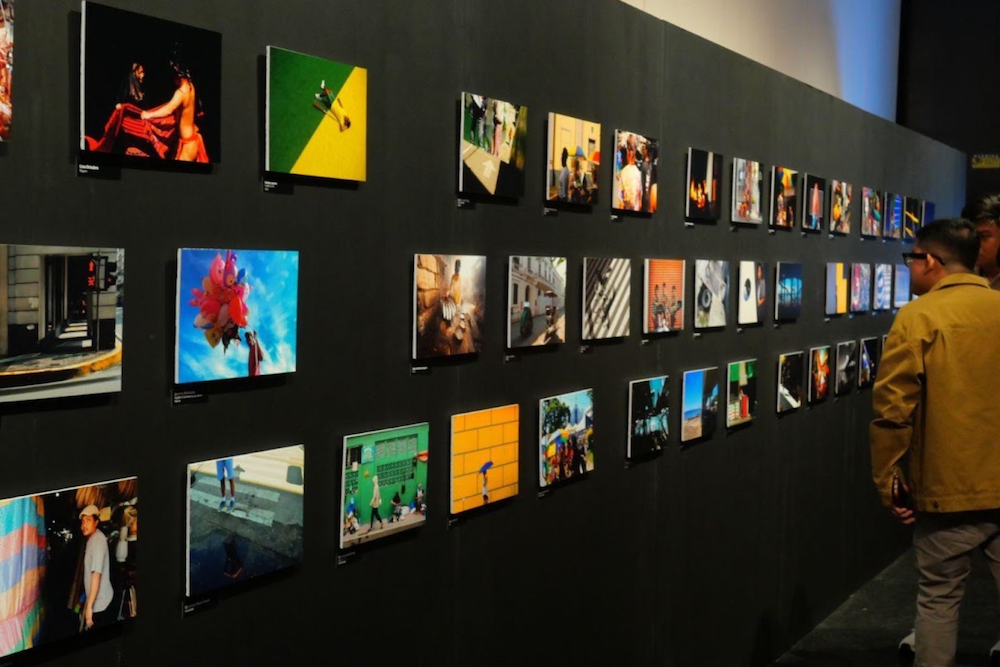
From iridescent street corners to everyday city bustle, Filipino photographers and videographers are turning the familiar into powerful visual stories. What once existed as fleeting moments captured during a walk now comes together in a single space, where these perspectives are given form and meaning.
These images and videos now take center stage at the Nationwide Photo & Video Walk 2025 Exhibition at the Ayala Museum.
Held from March 20 to 22, the exhibition brings together works from over 4,000 participants across 32 cities, all interpreting this year’s theme: “Contrasts.”
More than just a display of images and videos, the exhibit shows what Fujifilm sees as a growing shift in Philippine visual storytelling.
Community, culture, and the tangible
The Nationwide Photo & Video Walk was meant to go beyond just participation, beyond sales, and beyond product pitches. Its intentions were to foster a creative community that culturalizes how stories are told and experienced.
In our interview with Glenn Michael Gatan, marketing manager for imaging solutions at Fujifilm Philippines, he emphasized that initiatives like NPVW are rooted in shared passion rather than promotion.
“Photography is an experience. When it’s shared with people who have the same passion, it becomes deeper and more meaningful,” Gatan said.“For us, the community is the anchor, the product is secondary.”
This community-first approach is shown in the exhibition itself. It provides a platform not only for professionals but also for everyday enthusiasts, many of whom are exhibiting their work publicly for the first time. In doing so, the exhibit becomes a space where audiences can witness the diversity of Filipino communities through both individual perspectives and collective tandems.
That same philosophy also ties into Fujifilm’s efforts to reconnect audiences with photography’s tangible side. In an era where images are quickly consumed online, the decision to mount a physical exhibition underscores the value of print and the processes behind it.
When asked about why the competition results and exhibition was not just done online Gatan said: “Photography doesn’t end on a screen. The journey includes being able to hold your work and experience it in a tangible way.”
Photography remains inherently social, making in-person experiences irreplaceable, and Fujifilm Philippines seems to want to keep that culture alive.
“You meet fellow enthusiasts, compare perspectives, and experience the output together. That’s something digital alone can’t replace,” he said.
A story of “Contrasts“
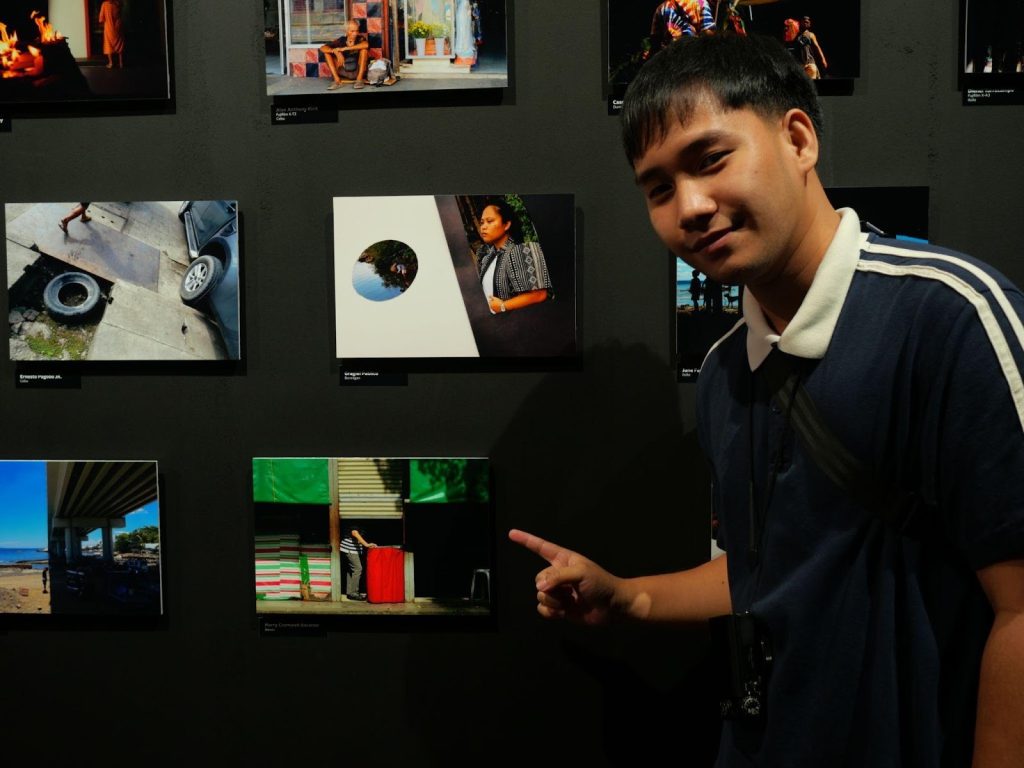
Photo by Danie Bravo/PhilstarTech
While the exhibition highlights a wide range of perspectives, some stories stand out for their simplicity and emotional weight, rather than just pure technicalities.
Among the selected finalists is Harry Cromwell Bacaron, a Davao-based multimedia arts student and active organizer in his local photowalk community. His entry, “Bukas Bukas (Open Tomorrow),” captures both uncertainty and hope through a deceptively simple scene.
The image features a partially opened storefront, half closed, half open. Visually representing what he describes as “50 percent hope.”
“I didn’t want to force the vision,” Bacaron said as he reflected on his process. “When I passed by the stall, the lines were there, the colors were there, the lights and shadows were there. When I took the shot, I knew, ‘This is it.’”
The image was captured within the first 20 minutes of the photowalk.
“I didn’t want to keep shooting anymore because I was sure about it,” he added. “I felt it could make it, and it did! ”
Unlike many entries that leaned heavily on dramatic lighting contrasts, Bacaron took a more restrained approach. His work relies on composition, the right moment, and pure instinct.
Sometimes photography really is that human, and beyond technical settings or themes, some images resonate simply because they feel right.
Joining NPVW 2025 didn’t just feel right for Bacaron. It was very much an opportunity, and one that does not come around often where he comes from.
As a community starter in Davao, he has been working to promote photography as a regular creative activity, not just something tied to events.
“It was a big deal for me. I wanted to represent Davao and prove something not just for myself, but for the community,” he said.
His experience reflects a recurring theme echoed by both organizers and participants, and no, it isn’t “contrasts,” but rather the idea that photography serves as a shared space for connection, growth, and expression.
Seeing routine as worth capturing
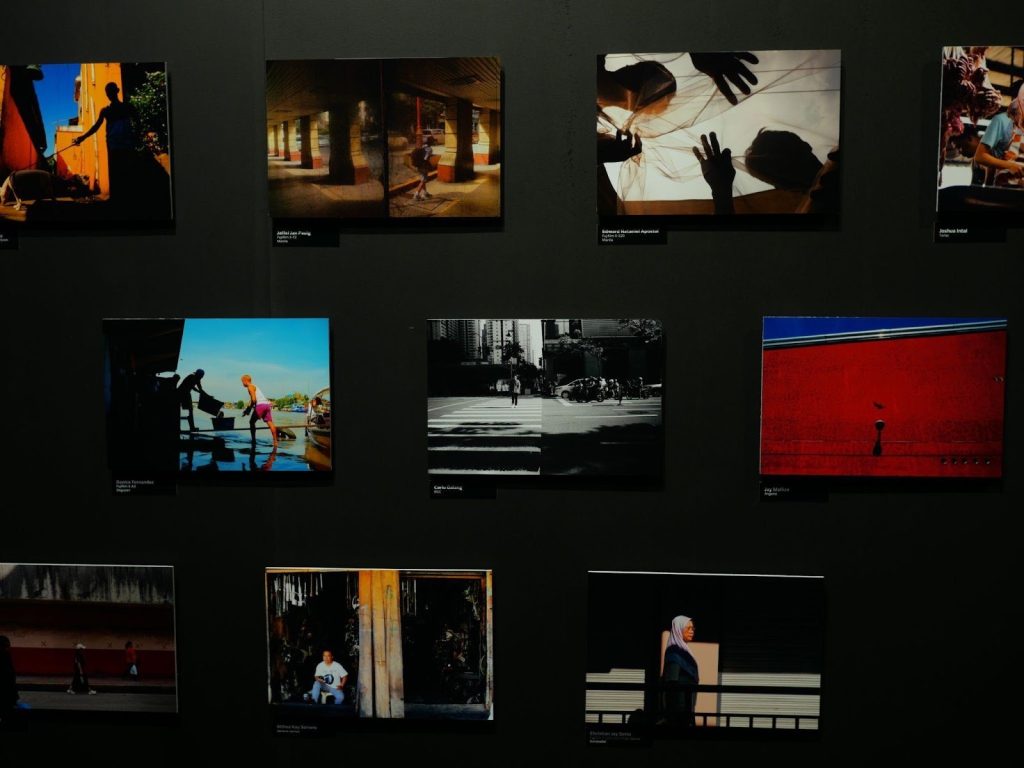
Photo by Danie Bravo/PhilstarTech
Beyond individual stories, Bacaron believes Filipino photographers are set apart by their ability to find meaning in the ordinary.
“The culture finds the shot,” he said. “We don’t force it. Whatever is there—that’s the story.”
He noted that many Filipino creatives naturally gravitate toward candid moments, transforming ordinary scenes into compelling narratives without overcomplicating the process. Even when faced with complete normalcy, local photographers have a unique knack for working the scene to make it visually interesting, ensuring the final image never feels forced.
This instinctive approach to the everyday was curated into the exhibit precisely to celebrate compelling narratives drawn from familiar landscapes. Across the gallery, the showcased works successfully captured the diverse layers of Filipino life, revealing fresh ways of seeing the familiar rather than relying on the extraordinary.
As Masahiro Uehara, president of Fujifilm Philippines noted that participants turned “everyday streets and landmarks into narratives full of meaning and heart,” proving that a nation’s soul is found not just in its landmarks, but in how its people frame it.
More than an exhibition of prints
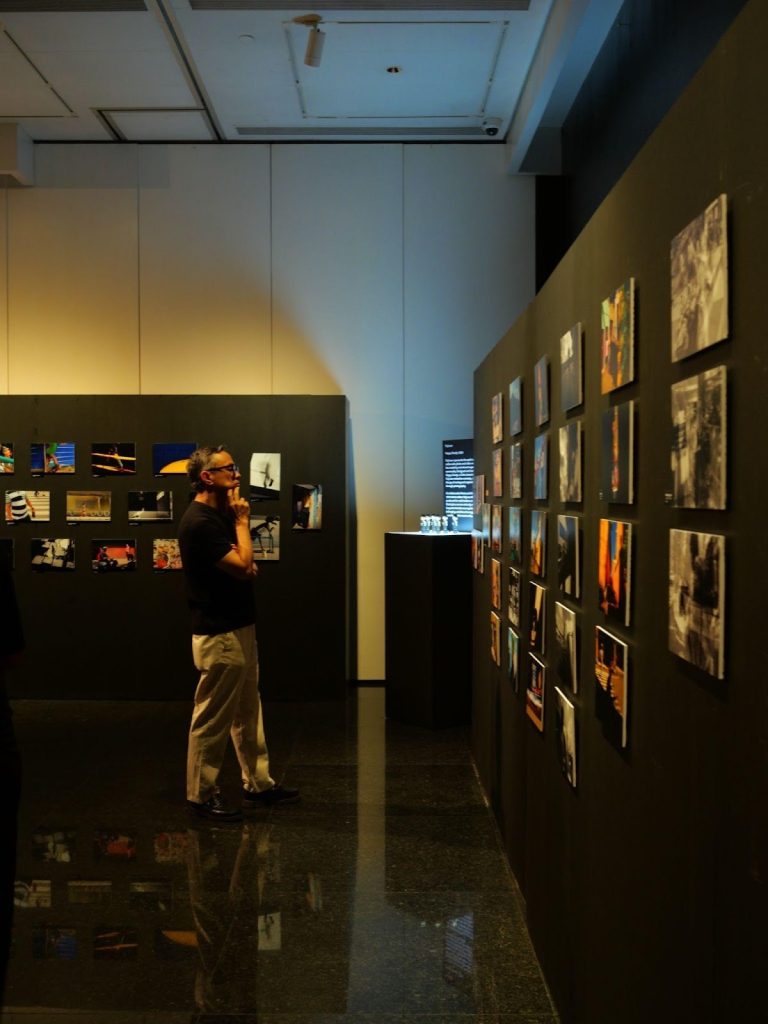
Photo by Danie Bravo/PhilstarTech
Beyond the awards and recognition, the NPVW 2025 Exhibition highlights a broader shift, one where storytelling in the Philippines is no longer confined to professionals or studios.
It instead lives in streets, communities, and everyday experiences captured by those willing to observe, walk, and frame the world around them.
As Fujifilm continues to invest in community-driven initiatives, and as culture surrounding photography and videography continues, the future of visual storytelling in the country continues to expand. An expansion not just driven by technology used to make it, but by people.
And for many, it starts with a simple walk.
