


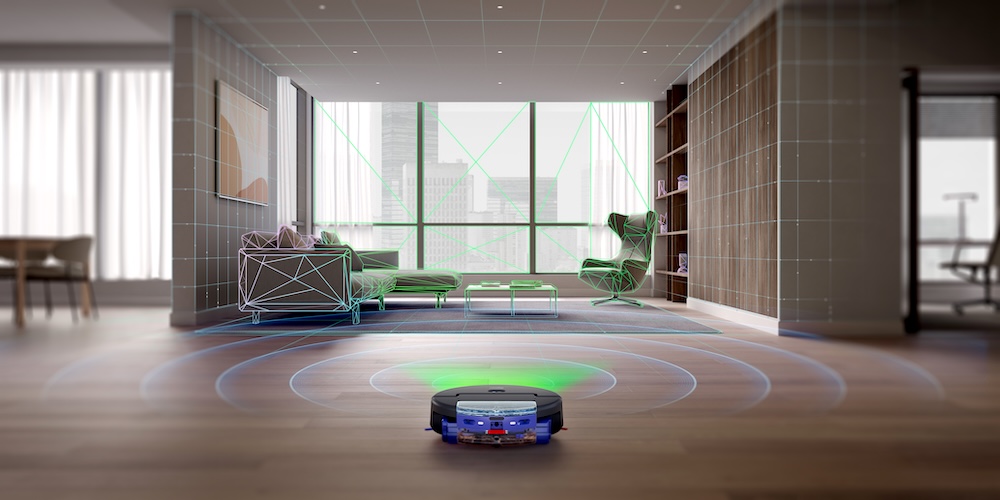
Robot vacuums have gotten very good at moving around your home with the tech to map rooms and dodge cables. What they haven’t been great at is cleaning like a person would.
Dyson’s new Spot+Scrub Ai, now in the Philippines, is an attempt to fix that by focusing on how a machine reacts to actual mess.
What Dyson is changing
Most robot cleaners treat your floor as one uniform surface. Whether it’s dust or crumbs, the response is to just pass over it and move on.
The Spot+Scrub Ai introduces a new layer of detection using onboard vision and illumination that spots even the invisible. It identifies stains and adjusts its behavior by how big the mess is. For example, a light spill might get a single pass, but heavier, or “stubborn” stains (like coffee or soy sauce, a very Filipino situation) trigger multiple passes until it’s cleared. Dyson frames this as a “detect, react, check” system. The robot reassesses and, if needed, cleans again. According to Dyson engineer Jia Ying Teo, the system works by recognizing categories of stains and applying pre-programmed responses.
Dyson engineer Jia Ying Teo demonstrating the capabilities of the Dyson Spot+Scrub Ai during the PH launch
Instead of relying on suction alone, Dyson leaned heavily into wet cleaning. At the center of the system is a self-cleaning microfiber roller that continuously washes itself as it spins, using fresh water instead of spreading dirty water around.
There’s also a 12-point hydration system that distributes water evenly, plus heated washing and drying in the dock to reduce odor and bacteria buildup between runs.
While many robots lift components to avoid friction or transition between surfaces, Dyson keeps the roller pressed firmly against the floor like a traditional mop. It has probably learned from the Asian home philosophy, where mopping is what defines “clean.”
Still, plus points for navigation upgrades
The robot still does everything you’d expect from a premium model. It uses LiDAR and AI vision to label rooms and navigate around obstacles, up to around 190 object types. Through the app, users can set zones and review clean maps that show where it’s been.
It can also reach edges more effectively, thanks to a roller that extends outward to clean along walls and corners where dirt usually builds up unnoticed. And when it’s done, it returns to a dock that empties debris, washes the roller, and dries it automatically.
One of the more interesting things from Dyson’s engineering side is what wasn’t sacrificed. Battery life and suction power, for example, weren’t treated as competing priorities. The robot uses an LFP battery, the same type used in electric vehicles, which allows for longer runtime and safer energy use without compromising performance.
Built for different homes
According to Teo, another challenge in building the Spot+Scrub Ai was scale. The same robot has to work in large homes in the United States, compact apartments in Japan, and Southeast Asian households with different cleaning habits and expectations.
The solution was to allow customization while keeping the core function intact. Users can adjust cleaning behavior through the app, but the foundation remains the same in detecting mess and cleaning it properly.
What are you actually getting
At ₱65,900, the Spot+Scrub Ai sits firmly in the premium category.
You’re getting:
- A robot that detects and responds to stains, not just debris
- A wet-cleaning system that prioritizes scrubbing and hygiene
- Automated maintenance through a self-cleaning dock
- Smart navigation and mapping that’s now standard at this level
But more than that, you’re buying into a different approach to cleaning. Not one where a robot replaces everything, but one where it handles enough that you don’t have to think about it as much.
