
The Philippines has not been the earliest adopter of artificial intelligence (AI) in the workforce, but its use has grown quickly as employees turn to public tools such as ChatGPT and Copilot to make routine tasks easier. Still, that progress has been tempered by anxiety over whether AI could replace jobs as more companies explore how automation can fit into daily operations.
Some skeptics also point to AI becoming another complicated layer in an already digitally convoluted environment. Many companies have yet to build the data infrastructure needed to support their specific use cases and help them navigate the noise of modern work.
At HP Elevate 2026, HP Philippines made a clear case for what should matter in AI adoption through the company’s “For Your Best Work” vision. If AI is already being used at work, the focus should shift to making it useful and simple enough to fit into everyday routines. HP’s approach is to build a more connected workplace ecosystem that brings together devices, software, security, collaboration tools, and IT management platforms instead of forcing employees to jump between disconnected systems.
The company unveiled its latest AI-powered devices and workplace solutions during the event, including HP IQ, HP NearSense, updates to the HP Workforce Experience Platform, HP Wolf Security enhancements, new AI PCs, workstations, gaming laptops, and LaserJet printers.
The hardware carries the message, but the larger goal is to build workplaces where technology removes friction instead of adding to it.
AI is already part of work
HP cited figures showing that more than 92 percent of organizations in the Philippines have already used AI in some capacity, while 86 percent of Filipino knowledge workers already use AI at work.
That puts the Philippines in an interesting position where AI is already within reach, but many companies are still figuring out how to turn it into real business results.
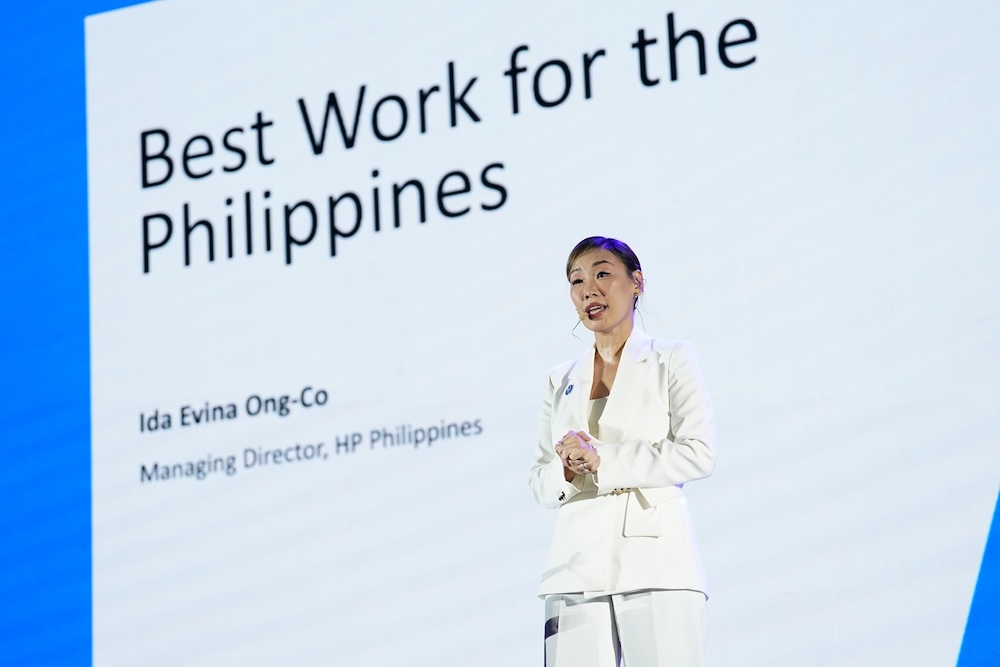
“AI adoption in the Philippines is no longer a question of if, but how organizations can translate it into meaningful outcomes,” said Ida Evina Ong-Co, managing director of HP Philippines. “At HP, we believe technology should help people stay focused on meaningful work by reducing complexity and creating more seamless experiences.”
HP IQ brings AI closer to the employee
One of the key announcements was HP IQ, which HP described as an intelligent ecosystem for select HP AI PCs and workplace devices.
Not every AI task needs to run through the cloud. Some work can happen directly on the PC, which can help reduce delays and keep employees productive even when internet access is limited. Through local, on-device AI, HP IQ can help support faster, more responsive workflows.
HP also highlighted HP NearSense, a feature that allows nearby devices to connect and share content easily. In practical terms, this could mean walking into a meeting room without dealing with cables or multiple setup steps.
For workers, that could mean fewer interruptions. For IT teams, it could mean fewer support tickets. For companies, it could mean less time wasted on problems that should not exist in the first place.
IT teams need better visibility, too
HP also showcased updates to the HP Workforce Experience Platform, or WXP, which helps IT teams monitor devices, applications, and employee technology experience from a central platform.
As hybrid work becomes more common, IT teams are expected to keep everything running even across devices they cannot physically see. HP showed how WXP can help identify issues such as poor device health, software crashes, low employee sentiment, and security gaps. It can also help IT teams act on those insights before small problems affect thousands of employees.
In an interview with PhilSTAR Tech, Ong-Co shared one example from a customer that had to manually check around 30 conference rooms every morning to see if devices were working. With WXP, the team could monitor those devices from a platform instead of physically checking each room.
Security has to move with AI
HP also emphasized that AI adoption must come with stronger security. For companies adopting AI, security cannot be treated as an afterthought. The more AI becomes part of daily work, the more important it becomes to protect the devices and data that power it.
As more work happens through devices and more data moves across endpoints, companies need to protect employees and business information at the device level. HP highlighted HP TPM Guard, which is designed to protect business notebooks against physical TPM bus attacks that can compromise BitLocker drive encryption.
The company also pointed to expanded HP Wolf Security capabilities across its commercial PC portfolio. These protections are meant to help organizations reduce cyber risk while giving IT teams more visibility and control.
New devices for the AI workplace
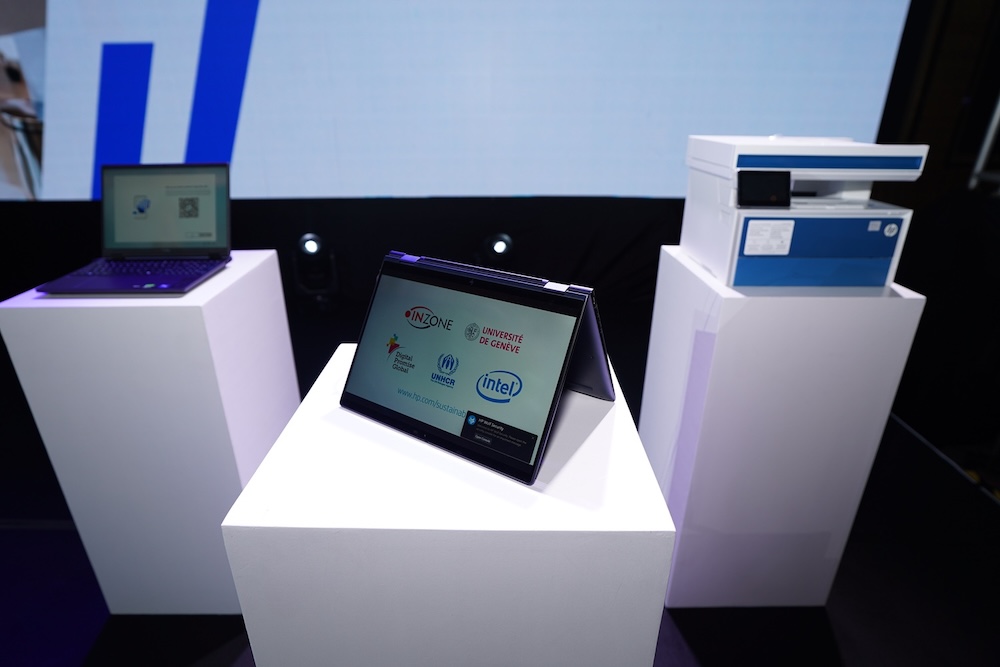
HP’s product lineup at Elevate 2026 included the HP EliteBook X Flip G2i Next Gen AI PC, HP EliteBook X G2i Next Gen AI PC, HP EliteBoard G1a Next Gen AI PC, HP OmniBook Ultra 14-inch Next Gen AI PC, HyperX OMEN 15-inch Gaming Laptop PC, and HP ZBook X G2i 16-inch Mobile Workstation PC.
These devices are designed for different kinds of users, from mobile professionals and enterprise teams to creators, engineers, gamers, and technical workers handling demanding workloads.
HP also introduced new LaserJet solutions for businesses that still depend on fast, secure, and reliable document workflows, including the HP LaserJet Pro 4112fdw Multifunction Printer, HP LaserJet Pro 4006dw Printer, and HP LaserJet Enterprise MFP X53052dn Multifunction Printer.
“Best Work” means fewer low-value tasks
When asked what “best work for Filipino employees” means, Ong-Co described it as being productive while reducing low-value tasks.
Some file-related work that used to take around two hours can now be completed in five to seven minutes through AI and workplace tools. She sees value in speed as much as giving people back the time and mental energy they lose to repetitive work.
Because AI adoption can fail when companies add tools without understanding what employees need, the strongest workplace technology is often the one that feels almost invisible because it supports the work without getting in the way.
“With so many tools around, I will definitely go into more simplifying things,” she told PhilSTAR Tech. “It’s really how the technology can naturally fit into the workflow.”
