


By Maan D’Asis Pamaran
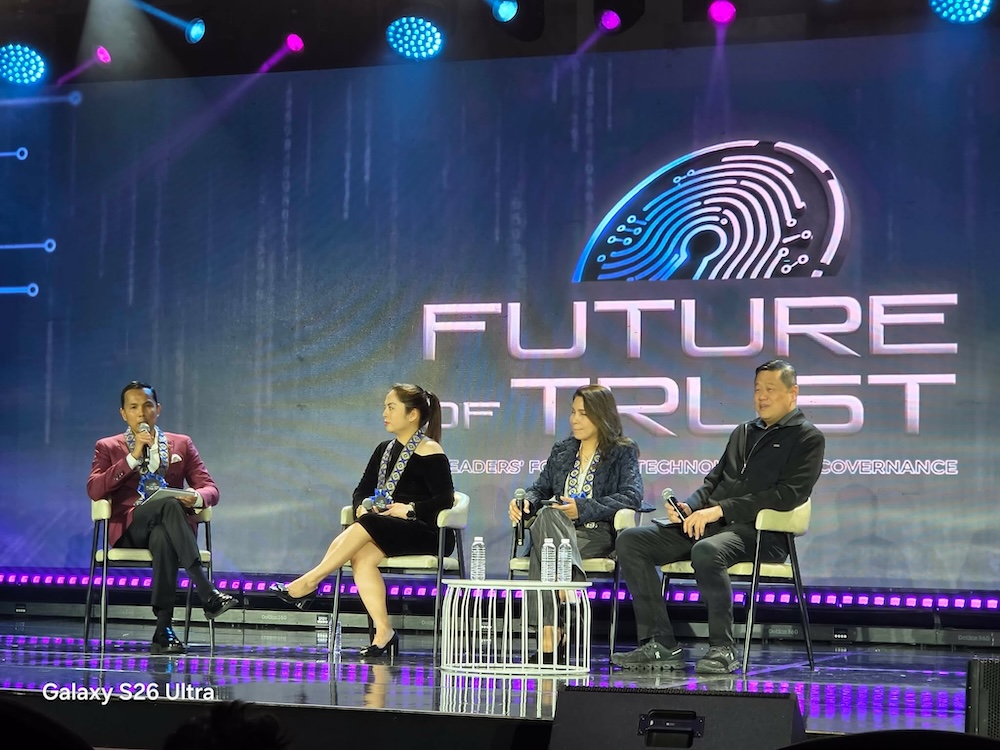
The conversation around blockchain in the Philippines is changing. At the ribbon-cutting ceremony of Philippine Blockchain Week 2026 at the SMX Convention Center, digital transformation advocate Donald Lim discussed the future of blockchain, artificial intelligence (AI), cybersecurity, governance, and the Philippines’ place in the rapidly evolving global digital economy.
“The only way blockchain is successful is when it is not being talked about at all. You don’t talk about AI. You don’t talk about cybersecurity. You’re already using them. That’s success.”
The statement captures the essence of this year’s theme, “Decoded: Deployed.” After years spent explaining blockchain and convincing regulators, businesses, and the public of its potential, the conversation is finally shifting from education to implementation.
Lim, who is the chair of the Blockchain Council of the Philippines, told PhilStar Tech that blockchain is only one piece of a much larger story.
“My advocacy is really moving the Philippines forward digitally and trying to make sure that we’re part of the global conversations,” he said.
Over the past decade, he has championed a range of emerging sectors, from renewable energy and sustainability to fintech, blockchain, and AI. The technologies may have changed, but he says the overarching mission is helping the Philippines prepare for the future.
“You lose when you don’t join the conversation globally. Everything now is cross-border,” he explained.
The new currency
Lim called for the strengthening of the country’s ABCDEF agenda, encompassing Artificial Intelligence, Blockchain, Cybersecurity, Data Use, Education, and Finance Governance. While each pillar addresses a different aspect of digital transformation, they all revolve around a single issue: trust. Lim discussed what he calls “trust currency.”
“Right now, the majority of the events I go to, I’m asked to talk about governance and trust,” he explained.
As technologies become more sophisticated, Lim believes organizations may need to rethink how they govern them. Instead of creating separate frameworks for AI, blockchain, cybersecurity, and the next innovation, he advocates for a common foundation built around trust.
“Why don’t we stop talking about trust on specific technologies and create that governance matrix that establishes trust and then implement it?”
For him, the challenge facing the Philippines is no longer technological capability. It is creating the conditions that allow people, institutions, and governments to trust those technologies enough to use them. That challenge becomes increasingly important as AI accelerates, cyber threats grow more complex, and governments digitize critical services.
Blockchain as building blocks
The evolution of Philippine Blockchain Week reflects the broader maturation of the country’s digital ecosystem. When the first Philippine Blockchain Week was launched five years ago, blockchain was still largely misunderstood. Many associated it solely with cryptocurrency speculation, while others dismissed it as a passing trend, Lim revealed. He went to work advocating for a different perspective.
“When we started, we needed to do a lot of education because the users, primarily the youth, were already there, but the adults in the room still had to be there to watch over everything, and we had to get them to understand blockchain and its potential.”
Today, the landscape looks markedly different, as regulatory frameworks are in place, which is why the conversation has progressed from Decode to Deploy.
“Financial institutions such as the Bangko Sentral ng Pilipinas and the Securities and Exchange Commission have entered the space, and government agencies are exploring applications for public service delivery,” he said. “Tourism Secretary Dita Angara-Mathay wants to explore the use of NFTs (non-fungible tokens) to offer perks to travelers. Conversations that once revolved around possibilities are increasingly focused on implementation. Now we’re deploying. We have the structures, the systems, and the regulations. We have government participation.”
While small and medium enterprises, which compose about 99% of registered businesses in the country, have yet to employ blockchain, he adds that progress matters more than adoption statistics.
“I’m not too worried about adoption. For me, building the right foundation is more important,” Lim said.
Governance and collaboration
A strong foundation, he said, begins with governance. Unlike many blockchain advocates who view regulation as an obstacle, Lim sees it as a necessary step toward legitimacy. The lessons of the early cryptocurrency era remain fresh, as the absence of safeguards created opportunities for fraud, speculation, and abuse, ultimately damaging public trust.
“There were scams. Many people, including me, lost money. That’s why I became a believer that we should build the right foundation first,” he said.
Today, that foundation is beginning to take shape through collaboration between regulators, government agencies, and the private sector. It is also one of the reasons Lim believes the Philippines is uniquely positioned to lead.
While blockchain communities in some countries continue to operate at the margins, Philippine Blockchain Week has become a venue where innovators and policymakers share the same stage. The result is a more practical conversation about how technology can improve governance, strengthen transparency, and modernize public services.
Potential applications range from digital identity systems and land registries to election processes, budget transparency, and public records management. He said, “Anything that requires immutability, that’s where blockchain becomes important.”
Architects of the future
Lim’s concerns extend beyond blockchain. Much of his recent work has focused on AI, particularly through the Global AI Council Philippines, which he helped establish to accelerate ethical AI adoption. The urgency stems from a simple concern.
“The Filipinos will end up being users instead of the architects that we used to be when it came to technology,” he said.
For him, the country’s greatest advantage is not technology itself, but its people. He says a young, highly connected population gives the Philippines an opportunity to become a meaningful participant in the global digital economy.
“But that advantage will only matter if institutions move quickly enough to support innovation. What do we do to break the silos, stop the redundancies, and make the Philippines adopt ethical AI fast? Because unless we adopt it fast, it’s too late. We can lead the world, but we have to get our acts together.”
