


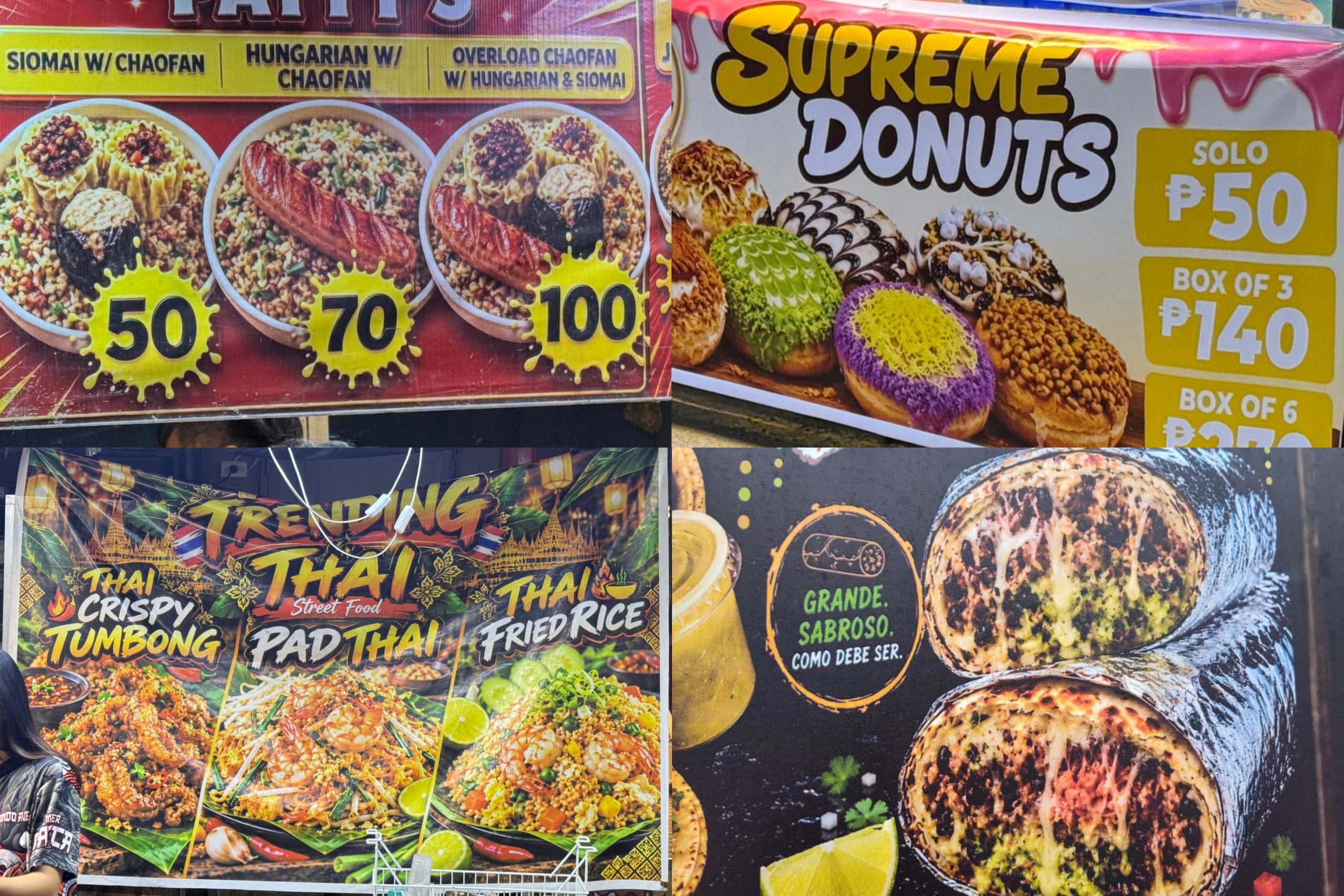
Food sellers are turning to AI to cut advertising costs, but images that look better than the actual meal risk turning customers away.
Divisive design trends have always come and gone, but none have incited such visceral reactions as the recent rise of AI-generated food advertisements.
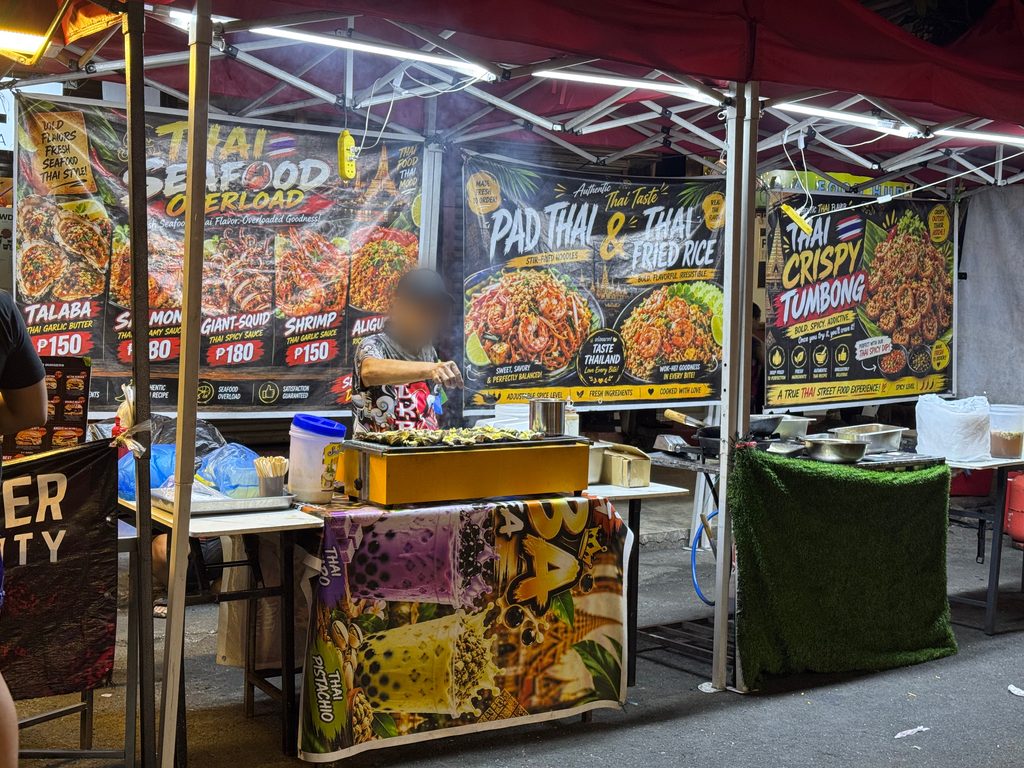
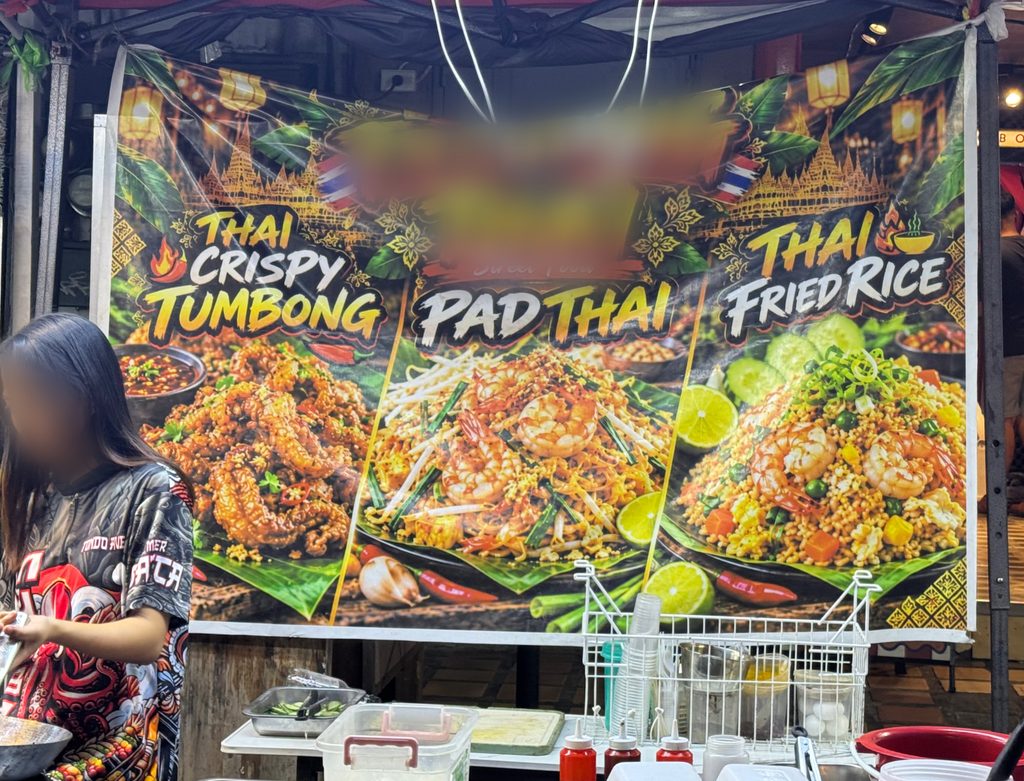
Overly saturated product images, punchy fonts, and quirky graphics are some of the hallmarks of these designs that often line the most popular food markets in the metro. Online, they are scroll-stoppers in the worst way, rarely attracting customers, and instead inviting online users to decry the “AI Slop.”
Contrary to the vendors’ belief that they draw in customers, some onlookers view them as glowing signs to steer clear.
Business owner Julieanne Sioson learned this during a two-week trial of AI in her company’s marketing efforts.
Her food and beverage company turned to the technology as a means “to trim overhead costs without making cuts to employees.” They figured a free or even subscription-based AI tool would be more cost-effective than hiring a graphic artist to polish their food photos for their menus.
But using AI came at a different cost. While Sioson’s company initially saw a surge in new customers, which she attributed to the AI’s enhancements, very few returned after seeing that the actual products did not match their marketed counterparts.
“Even though we kept our AI edits relatively minimal, our customers were still bothered by the mismatch, and our sales decreased,” Sioson told PhilSTAR Tech.
“They noticed the exaggerated level of detail in the photographs. The images looked too perfect, with none of the small, natural flaws you would expect to see in real food. The photos lost that authentic, honest quality, which tipped our customers off that the images had been enhanced.”
She explained that customers also often requested unedited photos, creating additional work.
After the trial, the company reverted to posting its original, unretouched photographs, according to Sioson.
“They valued real, honest shots — even ones with messy framing or dim lighting — over polished, manufactured imagery made only to look visually pleasing,” she said.
Food vendors Marita and Patrick Gadia, who operate a stall at the popular food strip Fusion Alley, opted to display an AI-generated menu in an effort to attract more customers.
They replaced their previous menu, which featured photographs of their food taken by Patrick, believing the AI-generated menu offered a more eye-catching and “cleaner” look.
“Ito ‘yung dati naming menu naman, piniktyuran ‘yung sisig rice. Picture lang po talaga, tapos ipapa-print po namin… Ito po, ganito na po siyang binigay nung AI. Parang maganda po kasi siya sa mata ng mga tao, kasi malinis tingnan,” Patrick told PhilSTAR Tech.
For both of them, using AI means an easier and faster way to advertise. All they have to do is type in their copy or menu, and the AI system will take care of the rest– layout and graphics.
Marita explained that the AI menu is intended to simply show customers the inclusions in each order, including their price, and is not meant to be deceptive, as all menu items are within sight at the stall.
“Alam na siguro nila. Hindi naman sila ano, hindi naman sila nagsasalita. Kapag bumibili naman na, nakikita naman din nila sa harapan. Sisig, ganoon, may kasamang fried rice, tapos siomai. At tinitingnan na lang nila ‘yan diyan. ‘Yung mga combo diyan, ‘yung presyo,” Marita said.
Graphic artist Gian Detera said he has tried buying from stalls with AI posters only to find them lacking compared to what was advertised. This, he says, changes his perception of the quality of the brand’s products.
“I feel bad for the brand na gumagamit niyan. Kasi, parang nalalayo niya ‘yung mga consumer niya na bumibili sa kaniya. Kasi, ‘yung mga products na binibenta, hindi same do’n sa nakikita ng consumers nila,” Detera told PhilSTAR Tech.
Clark, who works as a detailer, believes that over-reliance on AI is indicative of lower effort from users or businesses.
“AI images look fake and generic, as I said in my previous answer. It takes way less effort to make, and it reflects the business owner’s effort with the service they’re selling to us,” he told PhilSTAR Tech.
With the advent of generative AI, Clark, who also draws on the side, has stopped sharing his art online in fear that it would be “fed into a machine and branded as its prompter’s art.”
“It’s quite scary [to be honest] and made me decide to stop doing art for a while. Though I do art just for the fun of it and don’t mind not getting a lot of clients, but what about fellow artists [who] make their art as their livelihood? Authors? Musicians? Actors?” Clark said.
Morality in AI usage
AI systems are able to generate graphics and artwork by learning visual patterns from large datasets to turn prompts or detailed instructions from users into a desired image.
Generative AI can also produce written content using models trained on text.
For photographer Paco Manalo, the issue with AI lies in the way it has been developed in recent years, which he says is through “theft” from artists.
“I’m just tired of AI audio, images, and ads…All these, like, individual artists, these freelance artists, people who don’t even get paid, they just do art for art’s sake, right? Their art is pretty much stolen from them and fed to a machine,” Manalo told PhilSTAR Tech.
Artist Molly Crabapple, in an article for The Guardian, called AI the “greatest art heist in history.”
“AI image generators had scraped my entire body of work off the internet and fed it to their bots, to be excreted out as a product. And it wasn’t just my work; it was everyone’s. Billions of images harvested from the internet without credit, without compensation, without even consent,” she said.
Several artists and even established organizations, such as Getty Images, have sued tech companies over alleged copying and scraping of copyrighted photos and metadata to train their AI models.
In response to the widespread use of AI, some businesses have made it a point to advertise on social media that they are opting out of using the technology.
Often shown in these advertisements are bond papers with the statement “We will not be using AI posters to promote our [insert service or product]. Instead, we will be using this paper and marker.”
Online users respond positively to these posts and commend the establishments for rejecting AI.
Industry regulatory standards
In September, the Ad Standards Council (ASC), a self-regulating organization for advertising materials in the Philippines, issued a circular containing guidelines for AI use in the field.
The circular mandates human oversight, disclosures for AI-generated or AI-assisted content, and adherence to property and privacy rights, emphasizing that advertisers must be accountable for their claims and content.
However, less than a month later, the ASC released a supplemental guide to the circular, which clarified that not all uses of AI in advertisements require disclosure.
It said AI disclosure is required only when the ad content or execution falls under an existing law or government regulation. The guide lists examples involving AI-generated children, celebrities, music and images of existing structures.
“Routine or incidental use of AI for production purposes—including ideation, drafting, editing, enhancement, post-production, compositing, animation, background generation, audio processing, and similar functions—does not require disclosure,” the guideline reads.
