

Editor’s Note: This article was first published in Future Forward, Volume 1, No. 2.
At a glance:
- Students need creativity, sound judgment, and people skills alongside AI knowledge.
- Technology works best when students use it to create, solve problems, and work together.
- Teachers and good teaching methods remain central to learning.
- The iPad and MacBook Neo are tools that support Apple’s approach.
- Schools can remotely set up and manage Apple devices.
Artificial intelligence (AI) may be changing how students learn, but knowing how to use the technology will not be enough to prepare them for the future.
Apple believes schools must continue teaching skills that technology cannot easily replace. These include creativity, critical thinking, communication, teamwork, curiosity, and the ability to make good decisions.
These skills can help students check whether information produced by AI is correct, spot possible mistakes, and decide how it should be used. They can also help young people adjust as jobs and workplaces change.
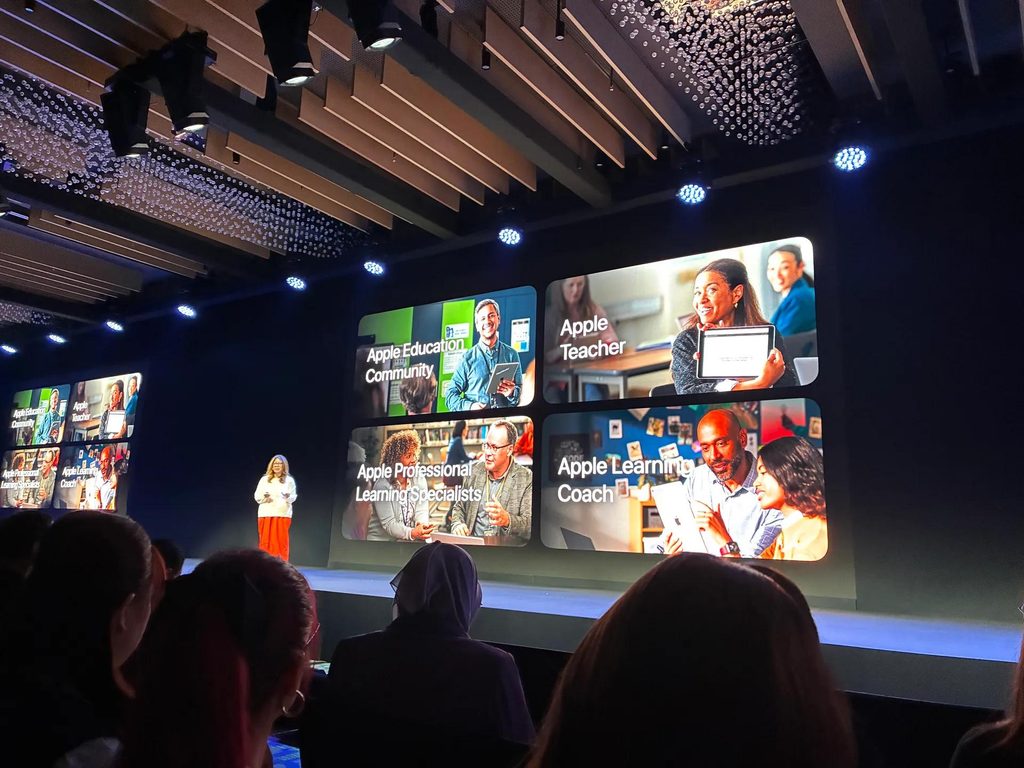
Apple said technology should allow students to become active participants in their education. Instead of using a laptop or tablet only to read lessons and answer questions, students can use it to make videos, draw, write, solve problems, test ideas, and work with classmates.
The company cited a global study involving more than 20,000 teachers from kindergarten to Grade 12. According to Apple, teachers reported that students became more motivated, creative, and willing to participate when technology was used well in the classroom.
The research also carried an important reminder: Simply giving students new devices does not automatically improve learning.
The way teachers use the technology remains important. Students tend to become more interested when they are allowed to build, design, experiment, and work with others. Teachers who are comfortable with the devices are also more likely to plan creative and challenging activities.
Apple said this type of learning gives students more control over their education. They do not just wait for instructions. They ask questions, look for answers, try different approaches, and continue working even when a lesson becomes difficult.
Schools in Southeast Asia are already seeing some of these changes, according to Apple. Teachers in Singapore reported that students using Mac computers became more motivated, responsible, and willing to work with others.
In Thailand, where iPads are used in some schools, teachers said students showed more independence, stronger critical thinking, and greater willingness to try new ways of learning.
Apple uses the iPad and MacBook Neo to show how its products can support this approach. However, the devices remain tools meant to give students more ways to learn and express their ideas.
An iPad, for example, can be used as a notebook, camera, sketchbook, recording device, or tool for viewing augmented reality lessons. A student can use the same device to write a report, record an interview, draw a diagram, or examine a digital model.
The MacBook Neo is designed for everyday schoolwork. It uses Apple’s A18 Pro chip and can run some AI-enabled tasks directly on the device, even without an internet connection. This can help protect personal information because some data does not need to be sent online.
Apple said the laptop can last up to 16 hours on one charge. Selected parts are also easier to repair, which could help schools keep devices in use longer and reduce repair costs.
The company also provides tools for school IT teams. New devices can be set up remotely once they are switched on and connected to the school network. Schools can install apps, block inappropriate websites, update software, and prepare devices for secure exams.
Teachers can guide students to the correct app or temporarily limit what they can open during class. These controls are intended to help schools use screens for lessons without allowing them to become a distraction.
Apple’s message is simple: The future of education is not only about giving every student an AI tool or a new device. It is about helping young people think for themselves, work with others, and use technology responsibly.
AI may become part of everyday learning, but teachers, human judgment, and the ability to create original ideas will remain just as important.
