


ASEAN member states face uneven readiness in adopting artificial intelligence and other technologies as the region seeks to expand its creative industries, according to a regional study presented during the Philippines’ ASEAN chairship.
The ASEAN Creative Industries Research Study found that 67 percent of stakeholders surveyed consider digital transformation the strongest driver of growth and value creation in the region.
However, the study noted differences among member states in digital infrastructure, skills, AI readiness, and governance, with opportunities in the sector growing faster than their capacity to capitalize on them.
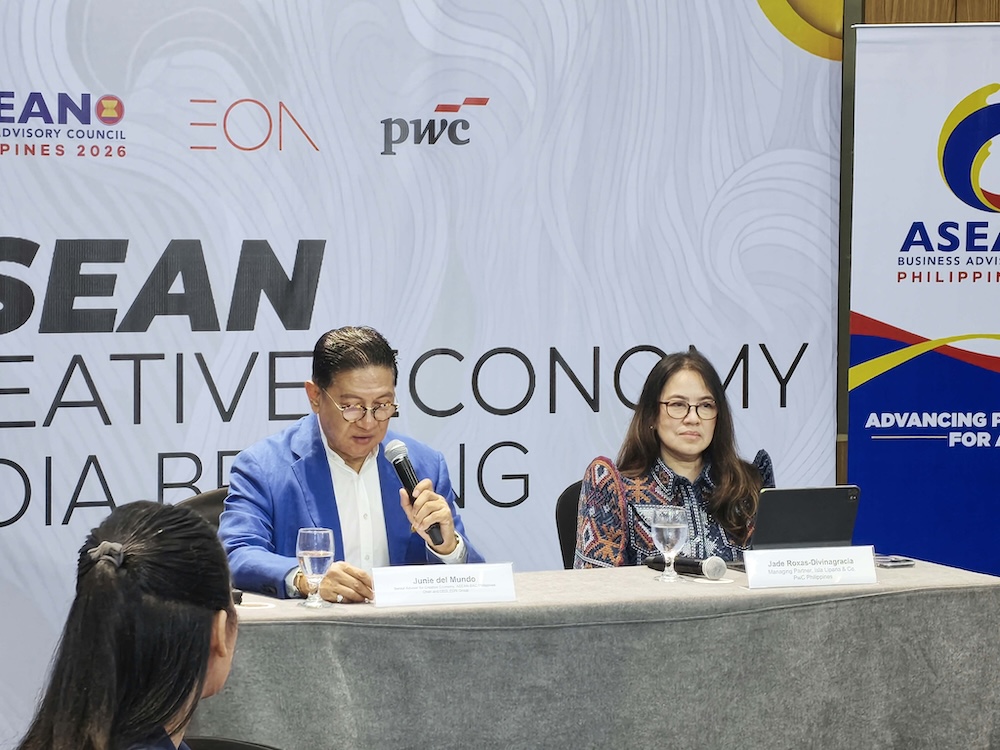
The findings were presented at the ASEAN Creative Economy Media Briefing in Taguig on Sept. 17, alongside discussions on the creative economy agenda under the Philippines’ 2026 ASEAN chairship.
The ASEAN Creative Economy Business Dialogue 2026, a featured forum at the ASEAN Creative Industries Expo by Malikhaing Pinoy 2026, is organized in collaboration with the Department of Trade and Industry–Philippine Creative Industries Development Council (DTI-PCIDC).
The creative economy covers industries including film, animation, game development, fashion, and the performing arts. The study estimates that creative industries in selected ASEAN economies generated about $300 billion in aggregate value in 2025 and approximately $150 billion in exports of creative goods and services in 2024.
Technology is increasingly shaping how creative products are produced, distributed, and monetized, allowing creators to reach audiences beyond their domestic markets and explore new revenue models.
AI is being used for content development and ideation, localization, production efficiency, and personalized user experiences. Its adoption also raises issues involving copyright and intellectual property ownership, authenticity, the disclosure of AI-generated or AI-assisted content, and potential skills displacement.
For the Philippines, the study identified creative services, gaming and animation, music, film, and the performing arts as key strengths.
It also identified an opportunity for the Philippine animation sector to move beyond outsourcing and production work toward creating, owning, and commercializing original intellectual property.
The study found that 54 percent of stakeholders still view their creative economies as predominantly developing, underscoring differences in the maturity of creative industries across ASEAN.
