


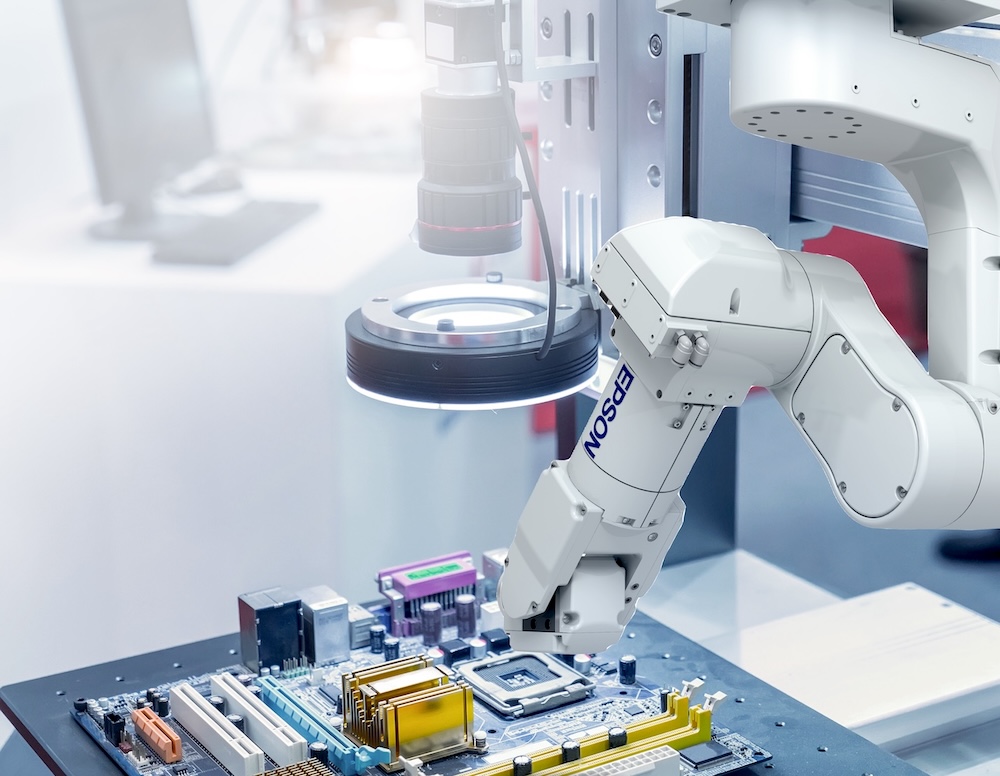
Factories today are looking for ways to produce more products faster while keeping quality high. But as machines become faster and more automated, one challenge remains: keeping production accurate despite the small movements and vibrations that happen during operations.
Even tiny vibrations can affect robots used in manufacturing, causing mistakes, lower-quality output, or delays. For industries that work with small and delicate parts, even a slight error can affect the final product.
“Through our expertise in quartz technology and robotics, Epson is helping businesses overcome this challenge by improving precision, reducing errors, and enabling more efficient production processes,” said Masako Kusama, president and director of Epson Philippines Corp. “Our goal is to help manufacturers achieve better outcomes while making the most of their resources.”
This challenge is becoming more important in the Philippines, where industries such as electronics manufacturing, semiconductor assembly and testing, medical devices, and automotive components play a key role in the country’s export sector.
To help manufacturers improve accuracy, Epson is applying its experience in quartz technology and robotics to develop automation solutions that help machines perform more reliably.
Known for developing the world’s first analog quartz watch, Epson has used its expertise in precision technology for industrial applications through its ultra-compact Gyro Sensors. These sensors detect small movements and vibrations in real time and can be installed directly on robot arms.
By monitoring movement, the sensors allow robots to automatically adjust when unwanted vibrations occur. This helps factories reduce errors, improve product quality, and increase production efficiency.
The technology can support industries where accuracy is important. In electronics manufacturing, robots handle small components that need to be placed correctly. In medical device production, consistent results are needed to meet strict quality requirements. In packaging and other large-scale production environments, reducing mistakes can help improve efficiency and minimize downtime.
Epson is also advancing force-sensing technology that allows robots to handle more delicate tasks. Available on selected SCARA and 6-axis robots, these sensors help robots detect pressure and adjust their movements when working with fragile parts or performing detailed assembly.
By combining vibration control and force sensing, Epson aims to help manufacturers improve production quality and make automation more effective.
“Precision has always been at the core of everything Epson builds,” said Kusama. “As more businesses in the Philippines explore automation, our goal is to provide practical and reliable solutions that help address real manufacturing challenges while supporting long-term growth.”
