


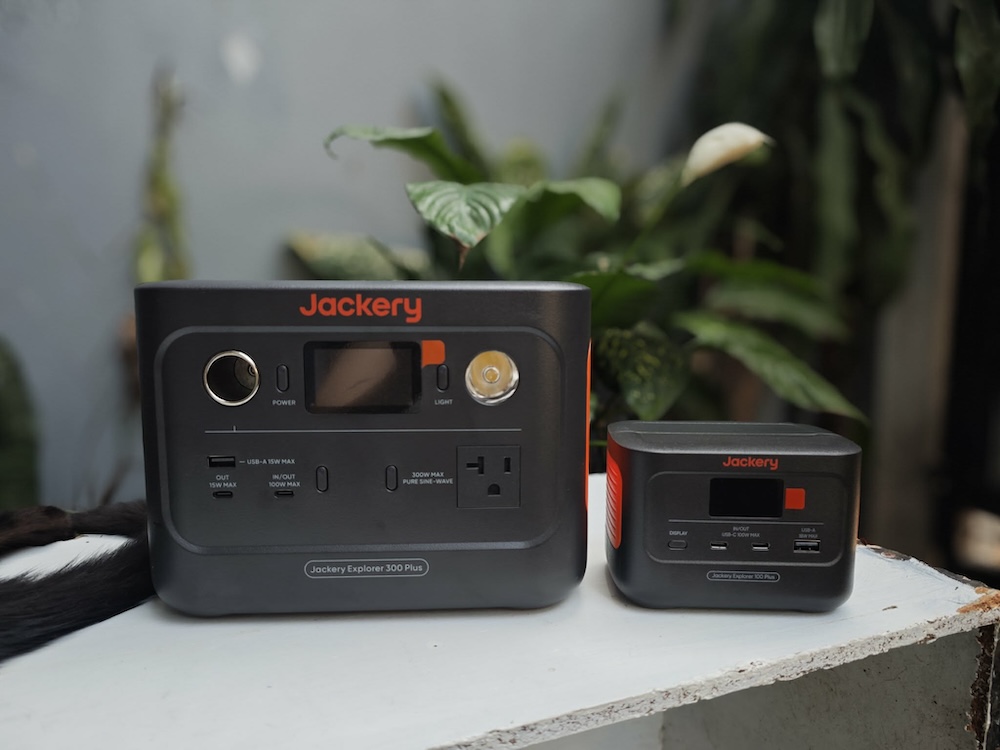
Power interruptions, electricity bill shocks, and the growing need to stay connected have quietly changed how people think about power. It is no longer just about what comes out of the wall. It is about having control, flexibility, and a backup plan that does not involve candles or noisy generators. That is where portable solar power stations come in, and brands like Jackery have become increasingly visible in this space.
We look at three products in that ecosystem, in order: the Jackery Explorer 100 Plus, the Jackery Explorer 300 Plus, and the Jackery SolarSaga panels. Each one targets a slightly different use case, but together they form a practical, modular approach to everyday power needs.
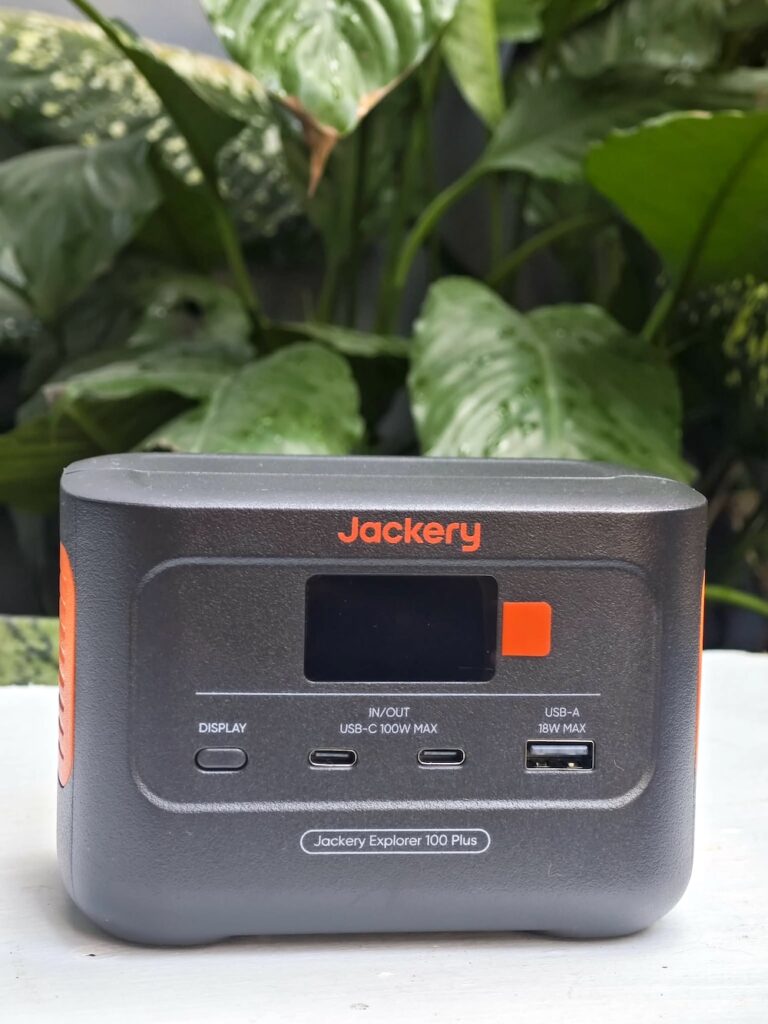
Jackery Explorer 100 Plus
The Explorer 100 Plus is compact enough to fit into a small bag, making it feel more like a power bank than a “power station.” But that comparison can be misleading. This device is built to handle more than just topping up your phone.
With a capacity suited for small electronics, the 100 Plus is ideal for daily carry or short trips. Think smartphones, wireless earbuds, compact cameras, or even a tablet. It is particularly useful in situations where you do not want to rely on public charging points, such as long commutes, field coverage, or travel days.
It is the kind of device you bring along and only notice when you need it. That reliability matters more than raw specs for most people.
Charging can be done through a wall outlet or via solar panels. The solar option is slower, as expected, but it adds a layer of independence that typical power banks cannot offer. In a country like the Philippines, where sunlight is abundant but infrastructure can be inconsistent, that flexibility becomes a real advantage.
The 100 Plus is not meant for heavy loads. You are not going to run appliances on this. It is strictly for personal electronics. But within that scope, it does its job well, and it does it without adding bulk or complexity.
Specs:
Battery capacity: 99Wh (≈31,000mAh)
Output: 128W max
Battery type: LiFePO4 (≈2,000 cycles to 80%)
Ports:
- 2× USB-C (up to 100W)
- 1× USB-A (18W)
Weight: ~0.96 kg
Charging:
- Wall (USB-C): ~1.8 hours full
- Solar: ~2 hours (ideal conditions, 100W panel)
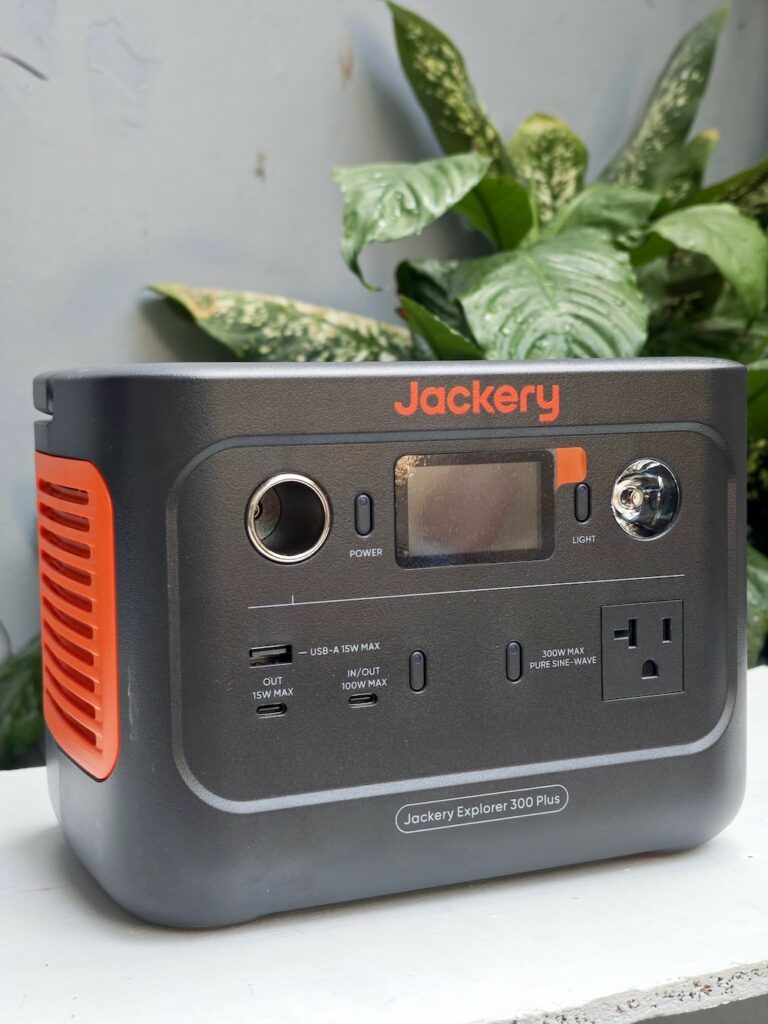
Jackery Explorer 300 Plus
If the 100 Plus is about portability, the Explorer 300 Plus is about capability. This is where the product starts to feel like a true backup power solution rather than an accessory.
The jump in capacity means you can now power more demanding devices. Laptops, small fans, routers, and even some low-wattage appliances are within reach. This makes it particularly relevant for work-from-home setups, where a sudden outage can disrupt productivity.
The 300 Plus can keep your internet running, your laptop charged, and your phone topped up during a blackout. That combination alone covers the essentials for many people. It is more than just about comfort, it is about continuity.
Despite the increased power, the unit remains relatively portable. You can carry it without much effort, which makes it suitable not just for home backup but also for outdoor use. Camping, road trips, or even mobile work setups benefit from this level of flexibility.
It offers several output ports. You are not forced to choose between devices. You can charge multiple gadgets at once, which aligns better with how people actually use technology today.
Traditional generators are loud and require fuel. The 300 Plus operates silently, which is a significant advantage in residential settings. There is no disruption, no fumes, and no maintenance in the usual sense.
Of course, it still has limits. You cannot run high-power appliances like refrigerators or air conditioners for extended periods. But that is not its purpose. It is designed to bridge gaps, not replace the grid entirely.
Specs:
- Battery capacity: ~288Wh
- Output: ~300W AC (with surge higher)
- Battery type: LiFePO4 (long cycle life)
- Ports:
- AC outlet(s)
- USB-C (100W class)
- USB-A
- DC/car port
- Charging:
- Wall: ~2 hours (fast charge class)
- Solar: supported (via SolarSaga panels)
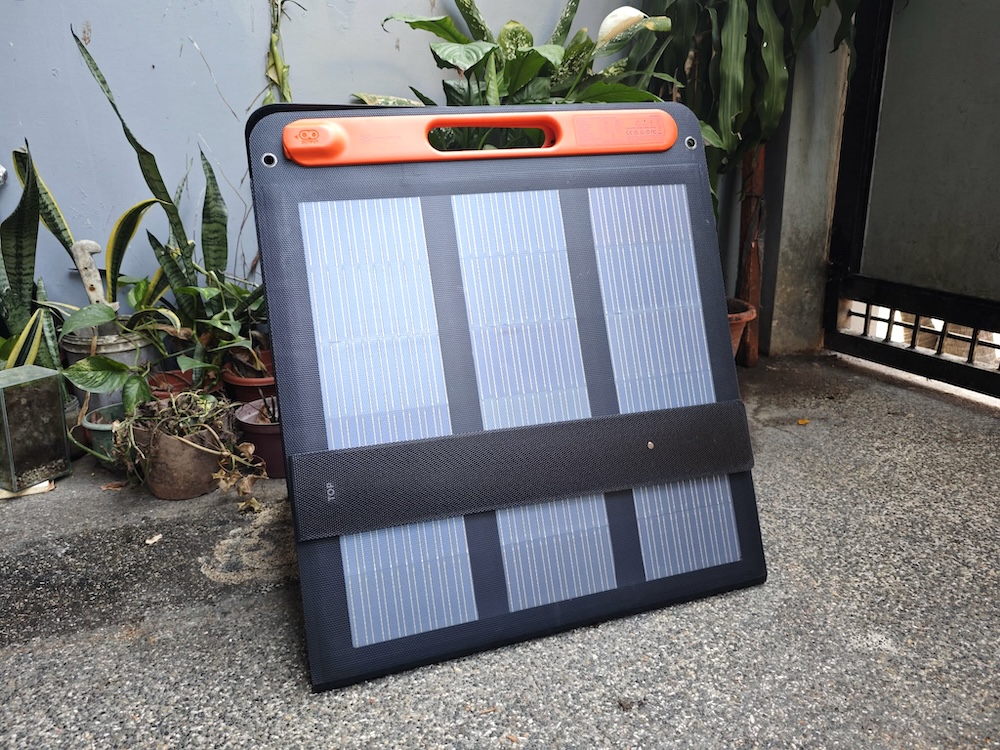
Jackery SolarSaga
The SolarSaga panels complete the picture. Without them, the Explorer units are still useful, but they remain tied to the grid for recharging. With solar panels, the system becomes more self-sufficient.
The idea of generating your own power, even on a small scale, is becoming more relevant. Electricity rates are surging, and outages are not uncommon. Solar offers a way to offset both issues, even if only partially.
The SolarSaga panels are designed for portability. They fold down for storage and can be set up quickly when needed. This makes them practical for both home use and outdoor scenarios. You do not need a permanent installation to benefit from solar energy.
Performance depends heavily on sunlight conditions, which is expected. On a bright day, the panels can provide a steady input to recharge the Explorer units. It is not instant, and it requires some patience, but it works.
What makes this setup appealing is the sense of independence it provides. You are no longer entirely dependent on the grid. Even during extended outages, as long as there is sunlight, you have a way to generate power.
For everyday users, this does not mean going completely off-grid. It means having a backup that does not rely on fuel or availability of outlets. It is a subtle but meaningful shift.
Specs:
- Rated output: 100W
- Conversion efficiency: up to ~23–25% (panel efficiency range)
- Type: foldable, portable panel
- Output ports: DC (for power stations), USB (varies by model)
- Setup: kickstand-style, fold-out
The appeal of solar-powered portable energy is not just about technology. It is about context.
More people are working remotely. Internet connectivity has become essential, not optional. At the same time, extreme weather events and infrastructure limitations can disrupt power supply. In that environment, having a reliable backup is no longer a luxury.
There is also a growing awareness of energy consumption. People are starting to think about where their power comes from and how they use it. Solar solutions, even small ones, offer a way to engage with that idea without requiring a full-scale installation.
For ordinary users, the value lies in practicality. The Explorer 100 Plus handles personal devices on the go. The Explorer 300 Plus supports essential home or work setups during outages. The SolarSaga panels add a renewable charging option that reduces dependence on the grid.
These products are not meant to replace traditional power systems. Instead, they complement them. They fill gaps, provide backup, and offer flexibility.
That combination is what makes them relevant today. Not because they are trendy, but because they solve real, everyday problems in a way that feels accessible.
In the end, it is not about having the most powerful setup. It is about having enough power when you need it, and knowing you are not completely at the mercy of the next outage.
