


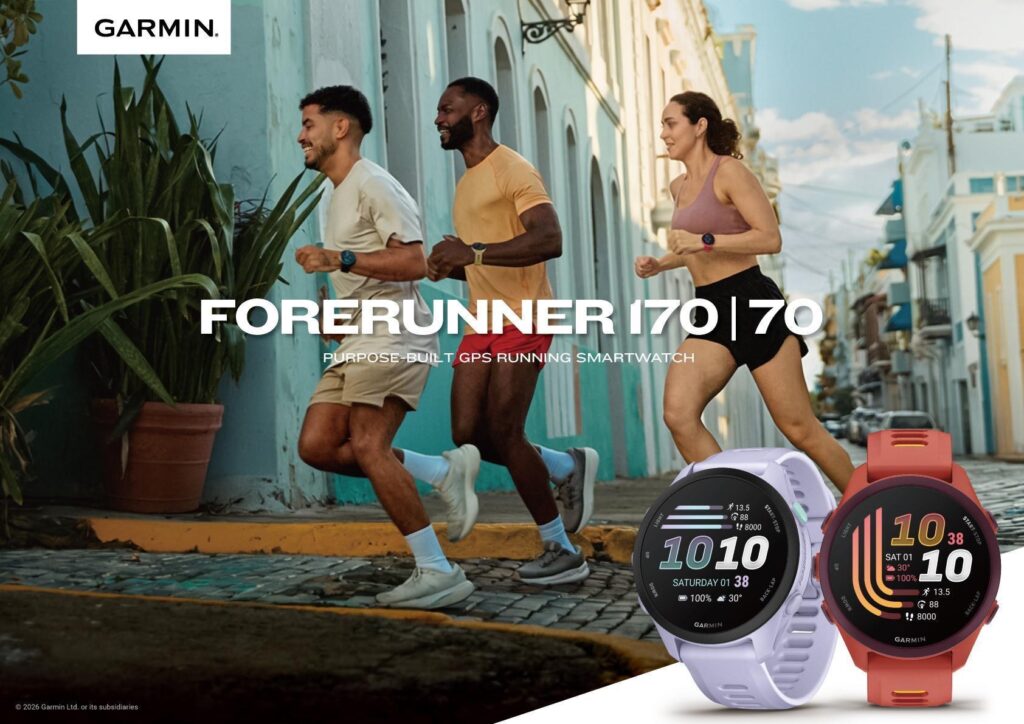
Garmin recently announced the Forerunner 70 and Forerunner 170, the arrival of Garmin Pay in the Philippines, and the continued expansion of the Garmin Run Marathon Series.
Garmin aims to build a connected ecosystem for runners rather than simply releasing new hardware. The idea is to provide everything from the tools to train, races to join, recovery insights to improve, and now even the ability to pay for purchases, all within Garmin’s growing platform.
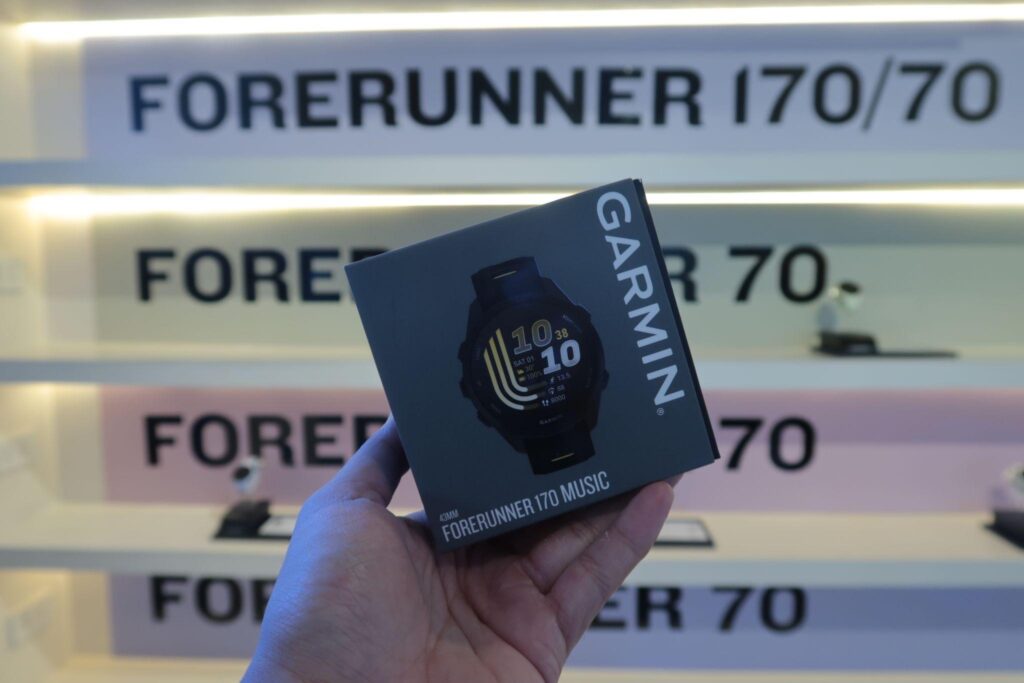
The Forerunner 70 and Forerunner 170, two entry-level GPS running smartwatches built for runners of varying experience levels. The Forerunner 170 serves as the more feature-rich option of the two and is positioned as the successor to the Forerunner 165. The Forerunner 70 acts as the successor to the Forerunner 55, offering a more straightforward experience for those beginning their running journey.
Specs: Forerunner 70 vs Forerunner 170
Forerunner 70
- AMOLED touchscreen display
- Built-in GPS
- Garmin Coach training plans
- Daily suggested workouts
- Recovery and wellness tracking
- Up to 14 days of battery life
- Successor to the Forerunner 55
- Php 15,990
Forerunner 170
- AMOLED touchscreen display
- Garmin Pay support
- Music storage and playback
- Garmin Coach and advanced training tools
- Training Readiness and recovery insights
- PacePro pacing strategies
- Advanced health and sleep tracking
- Up to 11 days of battery life
- Successor to the Forerunner 165
- Php 19,290 (non-music), Php 22,290 (music)
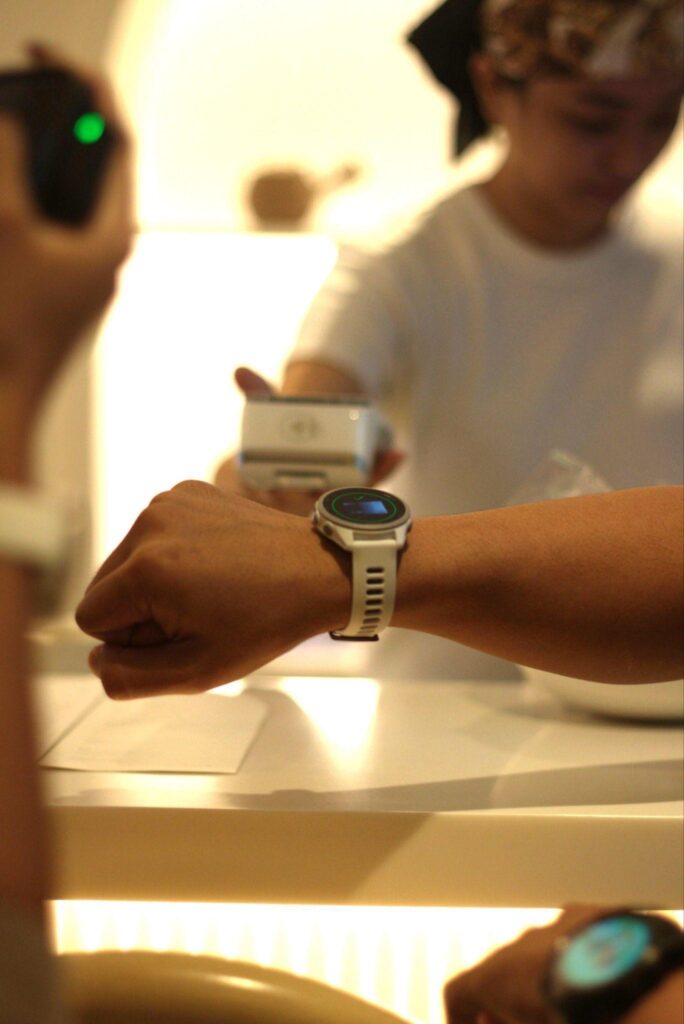
Garmin also officially introduced Garmin Pay in the Philippines through partnerships with GoTyme Bank and EastWest Bank, allowing compatible Garmin watches to make contactless payments through Visa and Mastercard networks. For runners, that means being able to leave the wallet behind while still having access to purchases before or after a workout.

Rounding out the announcement was the Garmin Run Marathon Series, Garmin’s global race circuit that returns to the Philippines on Oct. 25 at the SM MOA Complex with 5K, 10K, and 21K race categories.
With the announcement came a new Forerunner 170 on my wrist, giving me the opportunity to put Garmin’s ecosystem approach to the test.
Faster, smoother, and easier to use
I was signing up for the half marathon category of Garmin Run Philippines this October, and coincidentally, I was also preparing for the Animofest Fun Run 10K taking place just a few days after receiving the watch.
For the past year since starting my inconsistent running journey, my primary running watch has been a second-hand Garmin Forerunner 945. It served me well through training sessions and races, but after spending a week with the Forerunner 170, the difference was immediately noticeable.
The first thing I noticed was speed.
Menus loaded faster. Workouts synced quicker. Navigating through training data felt more responsive and intuitive. The overall experience simply felt smoother than what I was used to. There were no laggy menus, finicky controls, or moments where the watch felt like it was struggling to keep up.
More importantly, it felt approachable.
One of the challenges with dedicated running watches is that they can often overwhelm users with information. Pace metrics, recovery scores, heart rate zones, training readiness, cadence, race predictions, and dozens of other data points can quickly become intimidating.
The Forerunner 170 still provides plenty of information, but it does a better job of making those metrics easier to understand and act upon.
Removing the guesswork with Garmin Coach
That became especially apparent once I started using Garmin Coach.
With the Garmin Half Marathon still months away, I used Garmin Coach to build a structured training plan. Instead of wondering what workout I should be doing each day, the watch provided guidance based on my goals, fitness level, and training schedule.
Despite already owning a Garmin watch, I had never fully committed to Garmin Coach. After using it for a week, I finally understood its appeal. It removes much of the planning involved in training and simply tells you what to do next.
The watch wasn’t simply telling me how I performed. It was helping answer a much more important question:
“What should I do next and why?”
For newer runners, that’s a significant advantage. Even for more experienced runners, removing some of the guesswork can be surprisingly helpful.
A 10K test run
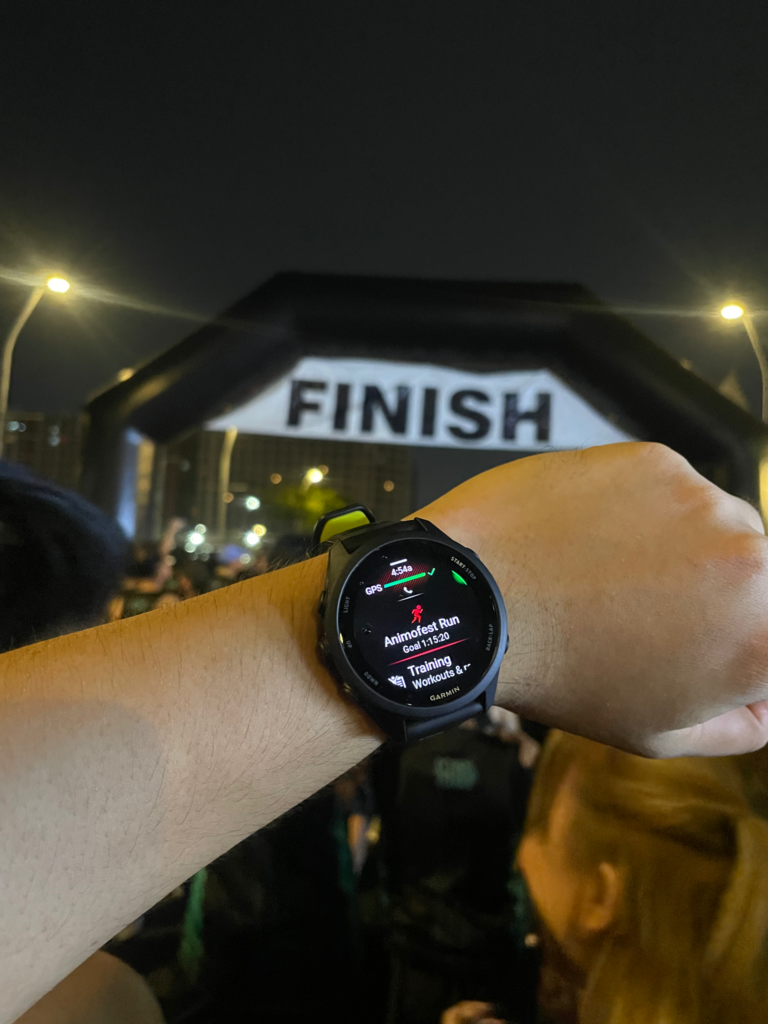
A few days into testing came my first opportunity to put the watch through an actual event.
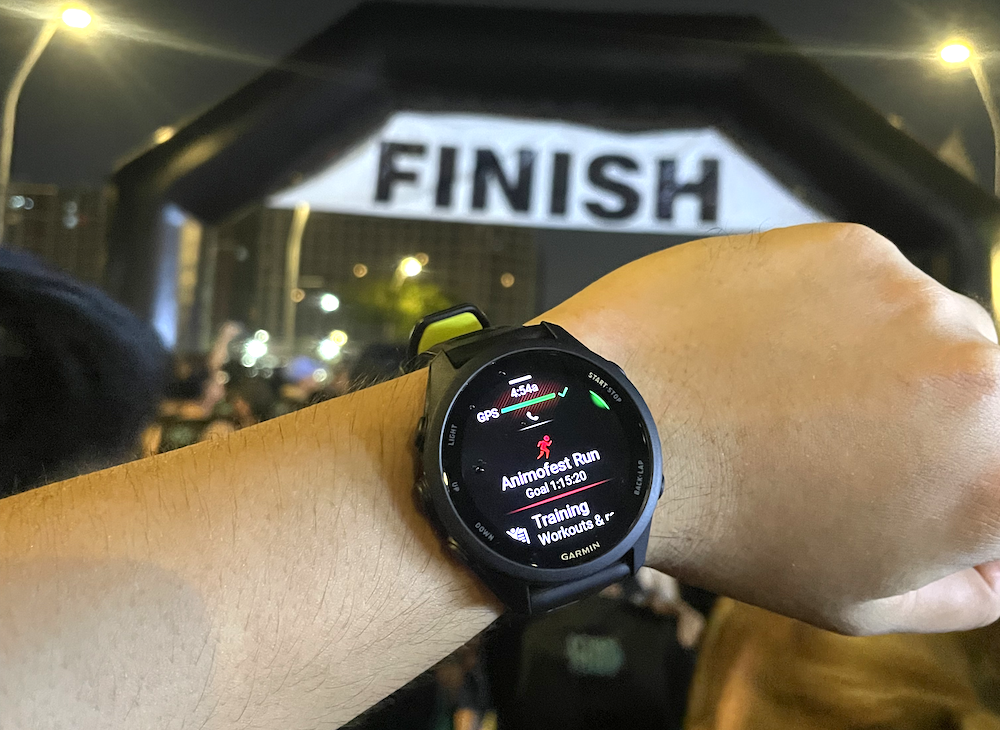
The Animofest Fun Run 10K came up, and I decided to use the race as an opportunity to test several of the Forerunner 170’s features.
Prior to the race, I created a PacePro strategy through the Garmin Connect app. PacePro essentially builds a pacing plan based on your target finish time, helping manage effort throughout the run instead of relying purely on feel.
I also loaded my playlist onto the watch and relied on the onboard music support throughout the event.
When race day arrived, the combination worked seamlessly.
Having pacing guidance available directly on my wrist made it easier to avoid going out too fast during the opening kilometers. Meanwhile, the onboard music support helped keep things simple without constantly reaching for another device.
The result was a new personal record in the 10-kilometer distance.
No smartwatch magically makes someone faster, but the Forerunner 170 provided something equally important: structure.
It helped organize my training, guide my pacing, and surface useful information when I actually needed it. That’s ultimately what stood out most during my first week with it.
Beyond race day
Outside of running, I’ve continued wearing the watch daily. Battery life has been reliable, GPS tracking has remained accurate, and the overall experience has been easy to live with.
The health tracking features have also made me more conscious of my daily habits. I’m paying more attention to my sleep, activity levels, recovery, and overall energy throughout the day. As someone who spends a large portion of the day sitting in front of screens, those reminders and insights have been just as useful as the running features themselves.
It doesn’t feel like a watch built exclusively for elite athletes chasing podium finishes. It feels designed for the much larger group of runners who are simply trying to improve.
People training for their first 5K.
People chasing a personal best.
People preparing for a half marathon months away.
People like me.
A week isn’t enough time to fully review a training watch. The real test will come over the next several months as I continue preparing for the Garmin Run Philippines Half Marathon in October.
But first impressions matter, and after one week of training, one 10K race, and one new personal best, the Forerunner 170 has already made a strong one.
A few days into testing came my first opportunity to put the watch through an actual event.
The Animofest Fun Run 10K came up, and I decided to use the race as an opportunity to test several of the Forerunner 170’s features.
Before the race, I created a PacePro strategy through the Garmin Connect app. PacePro essentially builds a pacing plan based on your target finish time, helping manage effort throughout the run instead of relying purely on feel.
I also loaded my playlist onto the watch and relied on the onboard music support throughout the event.
When race day arrived, the combination worked seamlessly.
Having pacing guidance available directly on my wrist made it easier to avoid going out too fast during the opening kilometers. Meanwhile, the onboard music support helped keep things simple without constantly reaching for another device.
The result was a new personal record for the 10-kilometer distance.
No smartwatch magically makes someone faster, but the Forerunner 170 provided something equally important: structure.
It helped organize my training, guide my pacing, and surface useful information when I actually needed it. That’s ultimately what stood out most during my first week with it.
Beyond race day
Outside of running, I’ve continued wearing the watch daily. Battery life has been reliable, GPS tracking has remained accurate, and the overall experience has been easy to live with.
The health tracking features have also made me more conscious of my daily habits. I’m paying more attention to my sleep, activity levels, recovery, and overall energy throughout the day. As someone who spends a large portion of the day sitting in front of screens, those reminders and insights have been just as useful as the running features themselves.
It doesn’t feel like a watch built exclusively for elite athletes chasing podium finishes. It feels designed for the much larger group of runners who are simply trying to improve.
People training for their first 5K.
People chasing a personal best.
People preparing for a half marathon months away.
People like me.
A week isn’t enough time to fully review a training watch. The real test will come over the next several months as I continue preparing for the Garmin Run Philippines Half Marathon in October.
But first impressions matter, and after one week of training, one 10K race, and one new personal best, the Forerunner 170 has already made a strong one.
