


Year after year, millions of people participate in the same ritual.
A new line of smartphones is announced. The camera is better. The processor is faster. AI is smarter. Reviews from your favorite tech YouTubers flood your feed, comparisons dominate social media, and before long, perfectly functional devices begin to feel old. You start wondering whether your current phone is still enough.
Whether it actually isn’t is another question entirely.
The cycle has become so normal that many of us rarely stop to question it.
The idea that companies intentionally encourage consumers to replace products sooner than necessary has existed for decades. Planned obsolescence has become almost synonymous with the consumer technology industry, where annual product launches and increasingly difficult repairs have conditioned many people to believe replacing a device every few years is simply part of modern life.
The more important question today isn’t whether planned obsolescence exists. It’s whether we’re finally willing to acknowledge it and do something about it.
More than just products that break
Planned obsolescence is often misunderstood as companies deliberately designing products to fail after a certain number of years. While that has certainly happened throughout history, modern technology is usually more subtle than that.
Sometimes it’s hardware that becomes difficult or impossible to repair because components are glued together or replacement parts are unavailable. Other times its software support ends while the hardware itself continues functioning perfectly. Even changing charging standards or limiting certain software features to newer devices can encourage consumers to upgrade long before their existing devices have reached the end of their usable lives.
The result is ultimately the same.
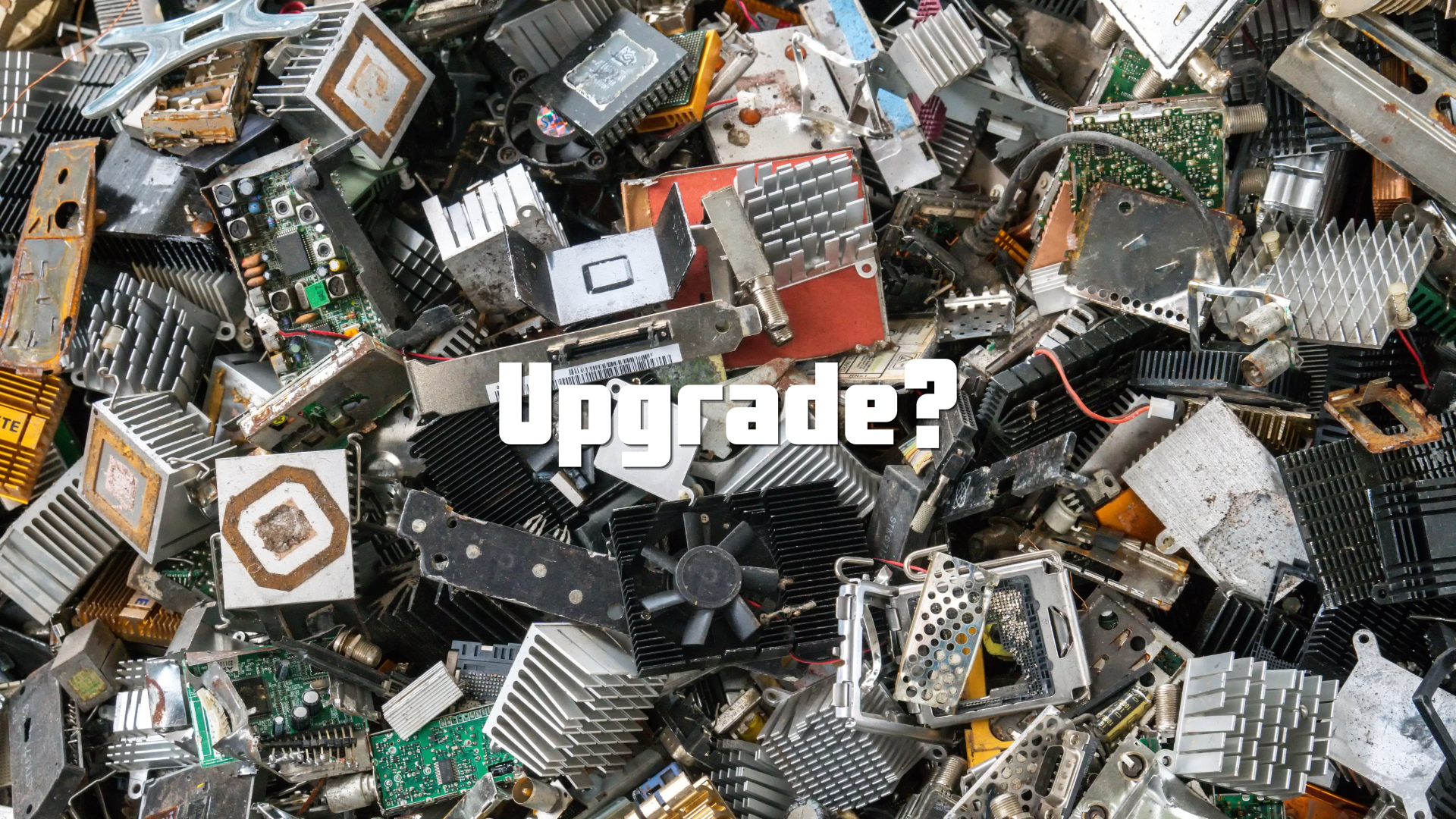
Consumers replace devices earlier than necessary, generating growing amounts of electronic waste while spending money on products they arguably didn’t need yet.
According to the United Nations’ Global E-waste Monitor, the world generated more than 62 million metric tons of electronic waste in 2022, and that number is expected to continue increasing if current consumption trends continue.
Much of that waste still contains perfectly functional components that end up in landfills and tech wastelands nonetheless.
Businesses respond to incentives
It’s easy to point fingers solely at manufacturers. After all, companies benefit every time consumers purchase another device.
But businesses also operate within the incentives society creates.
For years, those incentives rewarded thinner devices, sealed designs, rapid upgrade cycles, and annual product refreshes. Consumers often prioritized aesthetics, novelty, and new features over repairability, while regulations rarely required manufacturers to provide replacement parts or support devices for extended periods.
Everyone played a role in creating today’s upgrade culture.
Companies simply optimized for what the market rewarded. That doesn’t excuse questionable design decisions, but it also wasn’t a problem manufacturers created alone.
Fortunately, that’s beginning to change.
Across Europe, lawmakers have introduced Right to Repair initiatives requiring manufacturers to make spare parts, repair information, and longer software support more accessible. Some energy labels now even include repairability scores, helping consumers make more informed purchasing decisions.
Perhaps the biggest change arrives in 2027, when the European Union will require most smartphones and tablets sold within the bloc to feature batteries that users can replace using commercially available tools instead of specialized equipment.
It’s a dramatic reversal from an industry that spent years convincing consumers sealed devices represented progress, premium design, and engineering excellence.
People are getting replaceable batteries back.
Whether every manufacturer welcomes these changes is another matter. But once regulations change, companies have little choice but to adapt.
Policy shapes business.
Companies proving another model can work
One of the biggest arguments in favor of planned obsolescence is that companies need constant upgrades to remain profitable.
Yet a growing number of manufacturers are proving longevity and business success don’t have to be mutually exclusive.
Framework has built its identity around repairability, producing modular laptops that allow users to replace storage, memory, batteries, displays, ports, keyboards, and even the motherboard instead of replacing the entire computer.
Dutch smartphone maker Fairphone follows a similar philosophy by designing phones that prioritize repairability, long software support, and readily available replacement parts.
Even some of the industry’s largest players have begun moving in that direction. Apple now offers Self Service Repair in several markets, while Samsung, Google, and Lenovo have expanded repair initiatives and committed to longer software support for many of their devices.
We used to make things that last a long time; we just became so used to it being the other way around that it seems unfathomable to work out nowadays. But consumers are willing to pay for products that last, provided companies actually build them that way.
Changing incentives, and a future that shouldn’t be disposable
Government regulation alone won’t eliminate planned obsolescence, but consumer pressure alone won’t either.
The biggest changes in recent years have happened because both forces have begun working together. Right-to-repair legislation, longer software support commitments, USB-C standardization, and the European Union’s upcoming replaceable battery mandate are already reshaping how manufacturers design future devices.
Consumers still have an important role to play.
Keeping a phone for another year, repairing instead of replacing, and supporting companies that prioritize longevity all send signals to the market. Companies respond to demand, while governments respond to voters.
Technology doesn’t have to become disposable to remain innovative.
If the industry becomes more repairable and sustainable over the next decade, it won’t be because companies suddenly stopped caring about profits.
It will be because consumers demanded better products, governments changed the incentives, and businesses realized that building devices designed to last could also be good business.
