


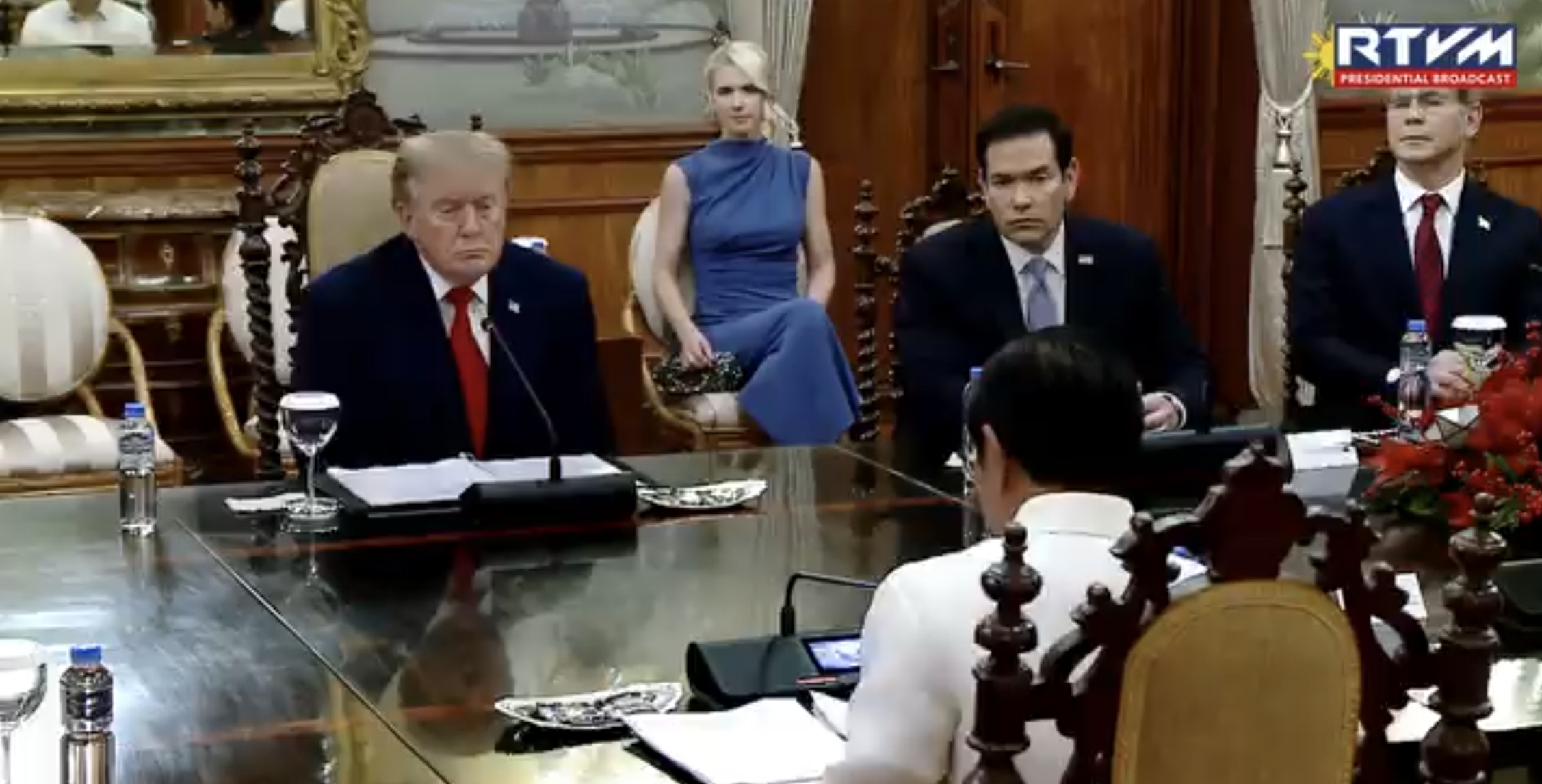
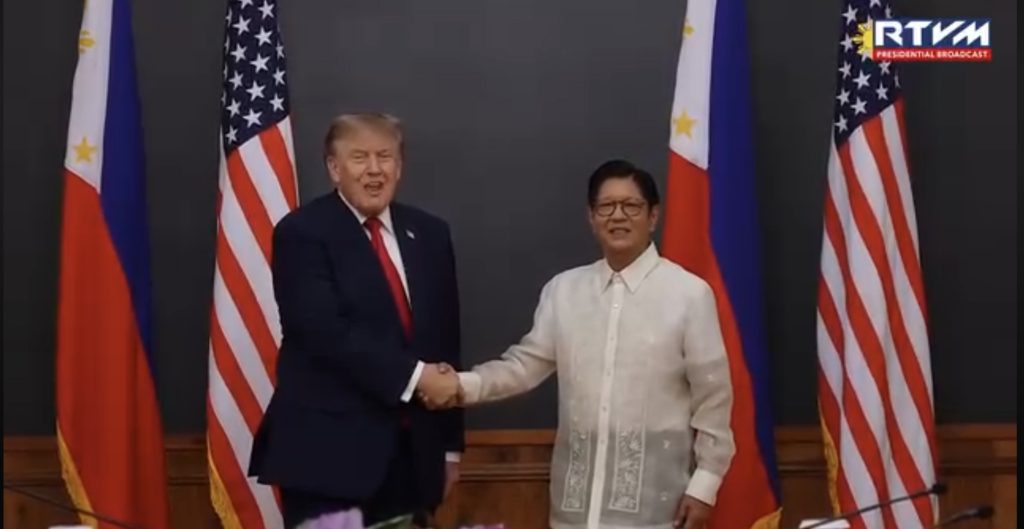
The Philippines and the United States will not sign the framework agreement for the proposed Pax Silica technology hub in New Clark City during US President Donald Trump’s state visit.
“There is no signing,” US Ambassador to the Philippines Lee Lipton said on Wednesday, Nov. 18, after a reporter asked Trump whether the deal tied to the Luzon Economic Corridor would be signed that day.
“No, not on this trip,” President Ferdinand Marcos Jr. said, affirming Lipton’s response.
Trump arrived in Manila on Tuesday, Nov. 17, to attend the 49th ASEAN Summit and Related Summits ahead of Wednesday’s state visit.
The proposed 4,000-acre economic security zone in New Clark City, Tarlac, is part of Pax Silica, a US-led initiative that aims to strengthen the supply chains for semiconductors and artificial intelligence. The Philippines joined the initiative in April this year.
According to the Bases Conversion and Development Authority (BCDA) in a Palace press briefing in July this year, the initiative could generate more than 130,000 jobs and attract $40 billion to $70 billion in investment once fully developed.
Activist and youth-led groups gathered along Claro M. Recto Avenue and in Mendiola on Wednesday to protest the proposed Pax Silica hub and Trump’s participation in the ASEAN Summit.
Leaders of several progressive groups burned American flags during a rally near Malacañang.
Bagong Alyansang Makabayan (BAYAN) in a Facebook statement raised concerns that the proposed hub could displace Indigenous communities and farmers.
“Any agreement to be signed related to Pax Silica or critical minerals will spark more protests,” the group said.
At a Sept. 21 forum, then-BCDA chief Joshua Bingcang disputed reports that the project could displace 20,000 Aeta residents. He estimated that about 200 people lived on the site and said they might not need to relocate, as reported by ABS-CBN News.
