


SINGAPORE — Rising cyber threats, geopolitical tensions and rapid advances in artificial intelligence (AI) are putting international cooperation to the test as governments confront an increasingly complex cybersecurity landscape.
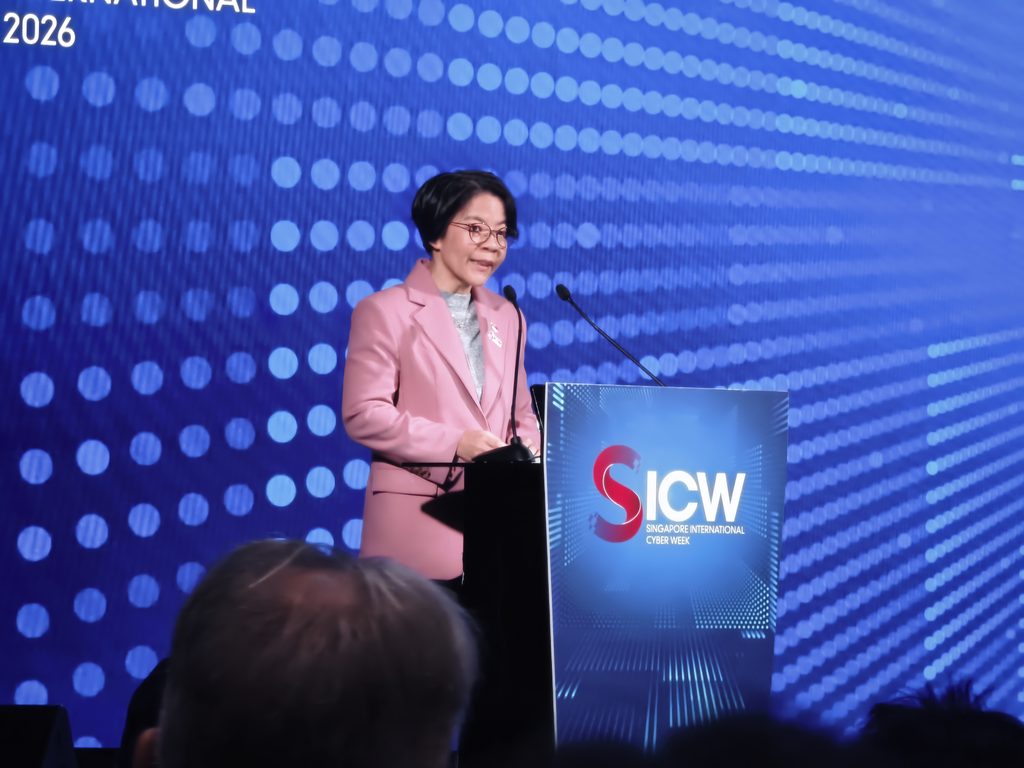
Cyber Security Agency of Singapore (CSA) chief executive Gwenda Fong raised these challenges during the opening of the 11th Singapore International Cyber Week (SICW) on Oct. 13 at Marina Bay Sands, emphasizing the need for stronger cooperation among governments, technology companies and critical infrastructure operators.
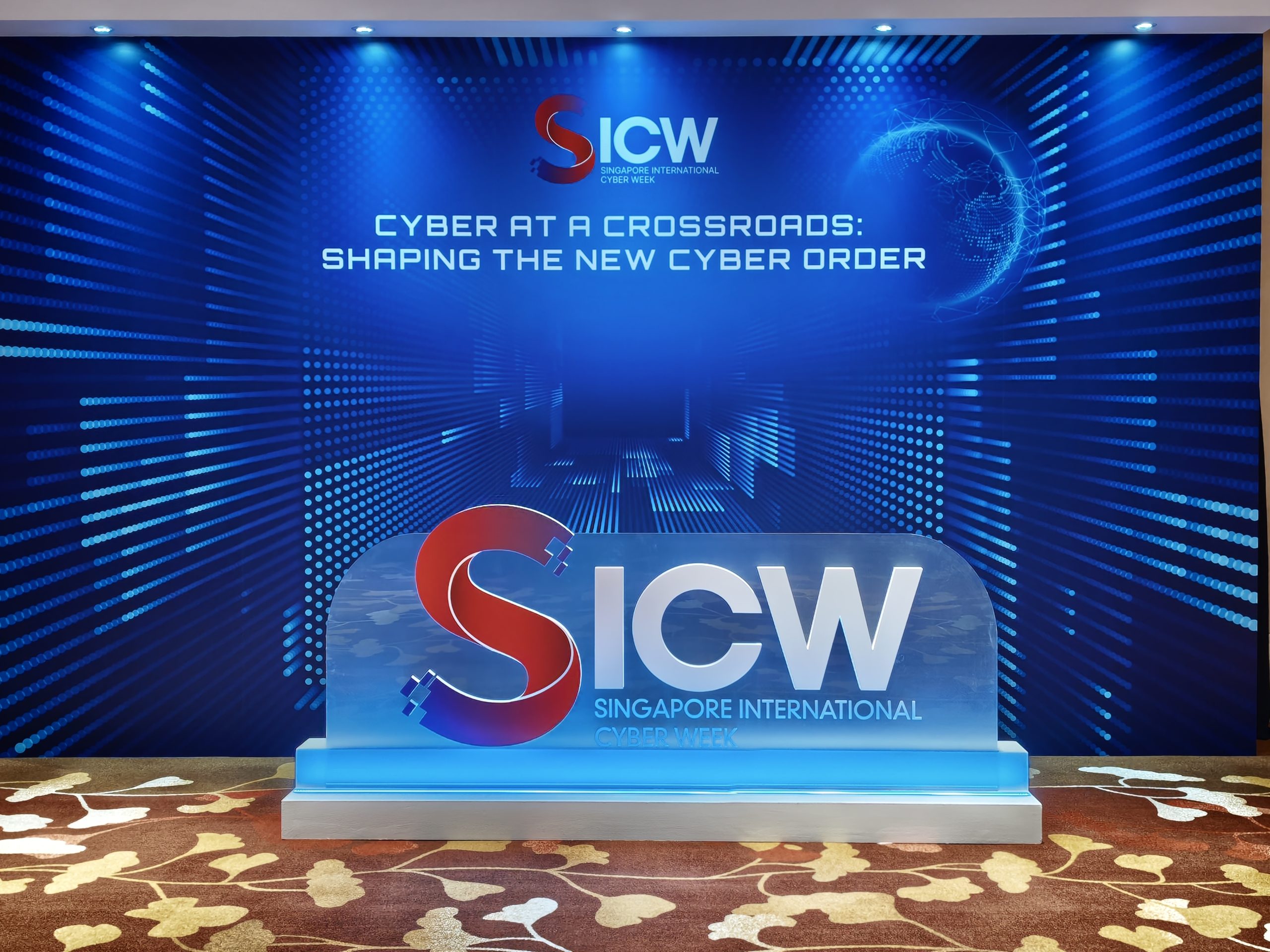
The conference carries the theme “Cyber as a Crossroads: Shaping the New Cyber Order,” reflecting the growing challenges countries face in securing interconnected digital systems amid geopolitical competition.
Fong, who is attending her first SICW as CSA chief executive, said no single government or organization has complete visibility of the global cyber threat landscape, as sophisticated cyber campaigns increasingly operate across multiple networks and jurisdictions.
She said the growing use of AI has further complicated cybersecurity efforts, allowing defenders to detect threats more efficiently while also giving malicious actors greater speed and scale.
The emergence of agentic AI systems, which can independently perform tasks and interact with applications, has also introduced new vulnerabilities as these technologies gain access to sensitive data and critical systems.
Fong emphasized that international cooperation must extend beyond discussions and agreements to include practical coordination in responding to cyber incidents.
It has become particularly important as geopolitical competition makes cooperation among countries more difficult.
“We may not agree on everything, but disagreement need not prevent dialogue, and competition need not preclude practical cooperation,” she said.
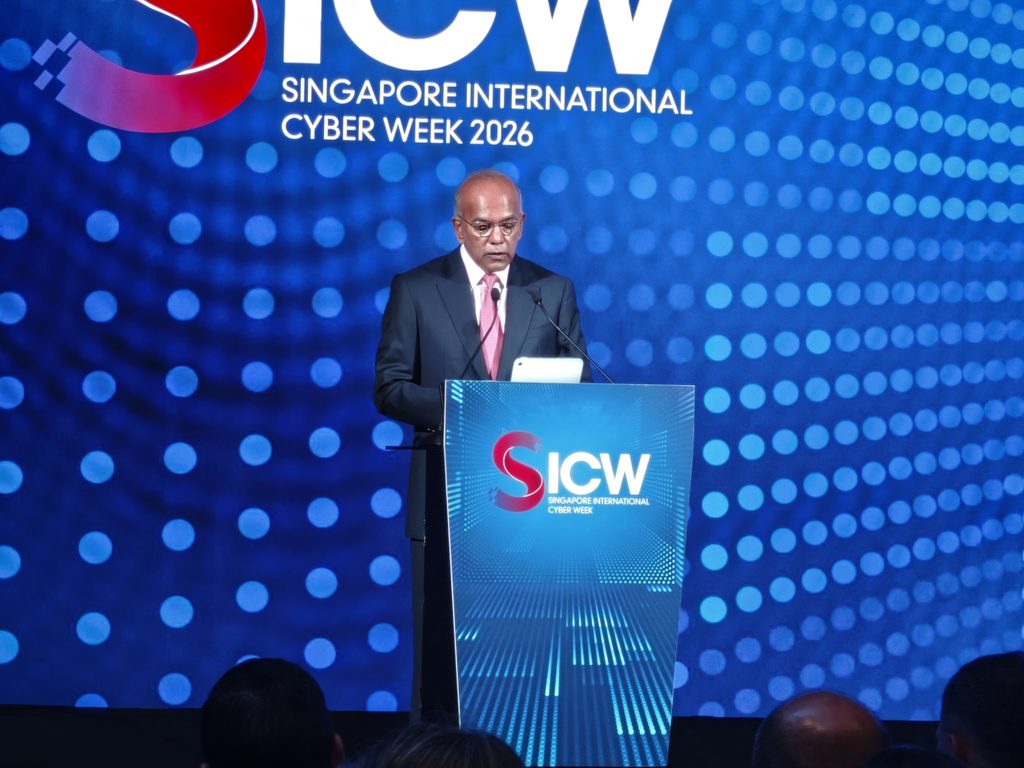
Singapore Senior Minister and Coordinating Minister for National Security K. Shamugam likewise stressed the need for countries to maintain cooperation despite growing competition over critical technologies, including AI, semiconductors and telecommunications.
He said countries were increasingly taking steps to safeguard their national interests, but pursuing isolated approaches could fragment the global digital ecosystem.
“No country, however capable, can secure the digital domain on its own,” Shamugam said.
He cited recent cyber incidents involving critical infrastructure, including coordinated attacks against more than 30 wind and solar energy installations in Poland in December 2025 and a major data breach affecting nearly 27 million users of South Korea’s largest mobile carrier.
Shamugam also pointed to Singapore’s experience with UNC3886, an advanced persistent threat group that targeted the country’s telecommunications infrastructure and prompted its largest cybersecurity response operation to date.
He said these incidents demonstrated the ability of sophisticated threat actors to infiltrate critical systems for espionage and disruption.
“AI-enabled cyber threats are really not a matter of if, but when,” he said.
Singapore unveils new cyber strategy
Against this backdrop, Singapore launched its Cybersecurity Strategy 2026, which seeks to strengthen national defenses through continuous threat monitoring, AI-enabled capabilities and closer coordination between government and industry.
Shamugam said the strategy would shift Singapore’s cybersecurity approach toward identifying threats earlier, responding at the national level and acting at the speed of emerging threats.
A key component is the National Cybersecurity Command Center, which will consolidate threat intelligence from government agencies, critical infrastructure operators, cybersecurity companies and international partners.
The center will support continuous monitoring of critical infrastructure, early detection of sophisticated threat actors and coordinated responses to major cyber incidents.
Singapore also plans to develop a national protective domain name service to block connections to known malicious domains before threats reach users.
Regional cooperation in focus
The conference also highlights efforts to strengthen regional cybersecurity cooperation, particularly within ASEAN, as emerging technologies introduce new challenges for governments and industries.
Fong cited the ASEAN CERT Incident Drill, which has brought national cyber response teams together since 2006 to practice responding to cross-border incidents.
As part of SICW 2026, CSA is partnering with Google to conduct an agentic AI cybersecurity scenario exercise for international partners.
The agency is also working with the AI Safety Hub on a frontier AI governance workshop for officials from ASEAN and the wider Asia-Pacific region, while Cloudflare will conduct AI-enabled cyber defense training for critical infrastructure operators.
Fong said these initiatives aim to translate international cooperation into practical responses to emerging cybersecurity threats.
Shamugam said SICW provides a platform for countries with differing interests to discuss their differences and identify areas where cooperation remains possible.
“We must have these conversations, which at times may be difficult, and we have to have them now so that we can try and avoid more difficult consequences later,” he said.
