


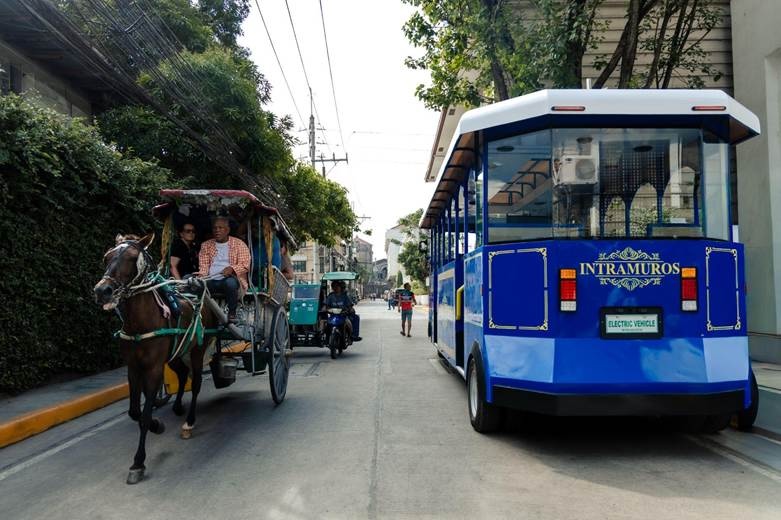
A new electric tram designed and built by Filipinos is now giving free rides around Intramuros, offering a cleaner and quieter way to explore one of the country’s most historic areas.
The 18-seater e-tranvia, developed through a partnership between the Department of Science and Technology (DOST) and the Intramuros Administration, runs on batteries instead of diesel, cutting down smoke and noise along the narrow streets of the Walled City.
Built to match the look of old tranvias from the late 1800s, the vehicle blends in with Intramuros’ heritage setting while using modern technology underneath. It is part of the efforts to make tourism in the area more sustainable and visitor-friendly.
Several universities helped build the e-tranvia. The University of the Philippines Diliman worked on the electrical system, including the battery, motor, and charging setup. Cagayan State University (CSU) handled the design and structure of the vehicle.
The body of the tram also uses a locally developed material made from abaca fiber, created by the Industrial Technology Development Institute. This makes the vehicle lighter and highlights the use of Philippine-made materials.
“This collaboration reflects the strength of partnerships between the government and the academe in delivering practical and people-centered solutions,” said Atty. Joan Padilla, administrator of Intramuros. “May this continue to inspire similar efforts to promote greener mobility, smarter tourism systems, and a more sustainable future for our cities.”
The electric tram is meant to eventually replace diesel-powered tourist vehicles in the area. Each unit costs about ₱2.5 million to build.
“Developing it ensures that electric mobility becomes practical, reliable, and accessible for all Filipinos,” said Science and Technology Secretary Renato Solidum.
For now, only one unit is operating in Intramuros. Three additional units are expected to be deployed in the area, with others planned for South Cotabato, Cagayan, and Malacañang, according to Arthur Ibañez, president of CSU.
“By reimagining a symbol of our history through Philippine engineering and sustainable technology, we are breathing new life into the walled city, making it more accessible, more inclusive, and more responsive to the needs of the future,” said Romelen Tresvalles, regional director, DOST-NCR.
The free ride follows a set route around key landmarks, including Fort Santiago, Centro de Turismo, Museo de Intramuros, Foro de Intramuros, Baluarte de San Diego, and the Pasig Esplanade.
With its mix of old design and new technology, the e-tranvia shows how local innovation can improve tourism while helping reduce pollution in the city.
