


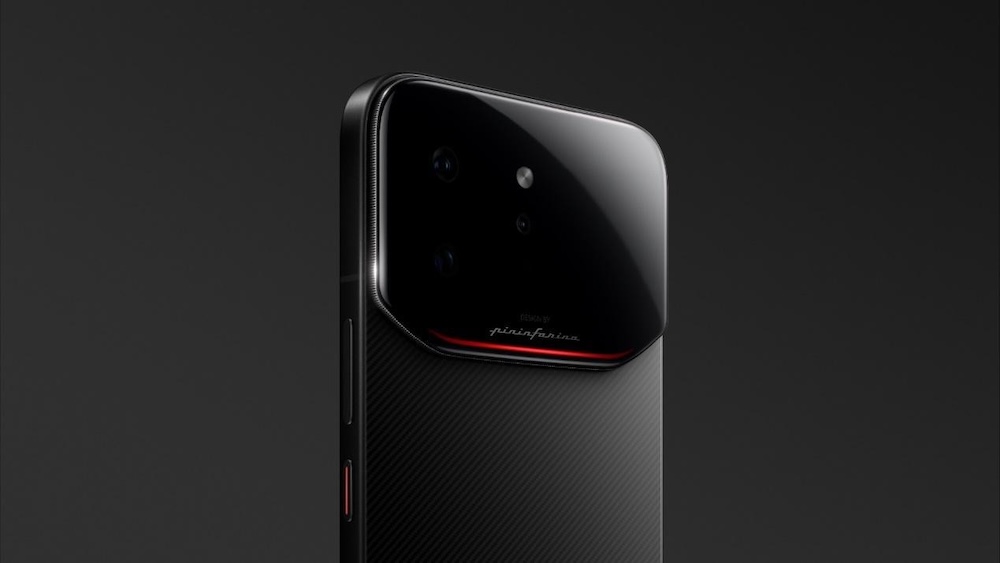
Infinix and Italian design firm Pininfarina are challenging long-held ideas of what a premium smartphone should look and feel like with the NOTE 60 SERIES, led by the NOTE 60 Ultra, a device that blends automotive-inspired design with mobile performance in a single continuous form.
Most co-branding in the industry stays on the surface, usually limited to colors, textures, or logos. Here, both companies said they went deeper, rethinking how form and function should work together and treating the smartphone as a designed object, not just a set of parts.
For Infinix, a brand long associated with emerging markets, the project signals a push toward the premium segment. For Pininfarina, known for its work with brands such as Ferrari and Alfa Romeo, it marks its first smartphone exterior design collaboration in its 95-year history.
From the outset, Infinix pushed for what it called its most disruptive flagship yet. That ambition led to a design process focused on structural integration rather than incremental styling changes, with Pininfarina invited to reinterpret what a flagship smartphone should represent visually and physically.
“It was a challenge we welcomed with open arms. Pininfarina has a rich history in designing cars and in breaking barriers by tackling projects outside of our comfort zone. That is how we stayed relevant and at the forefront of innovation even after so many decades,” said Matteo Fioravanti, SVP Design at Pininfarina Shanghai.
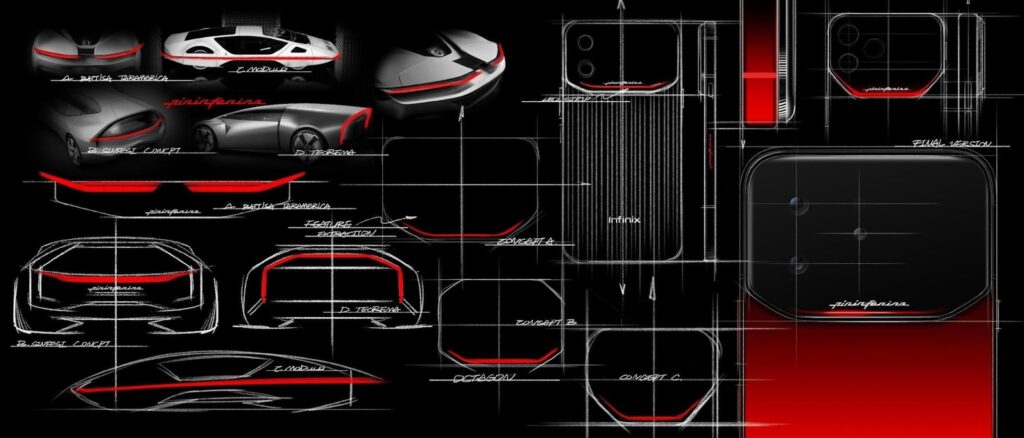
Redefining the “Ultra” look
In most smartphones today, high-end models tend to follow a similar design logic. As cameras become more advanced, modules grow larger and more visually dominant, often resulting in thick camera bumps and segmented rear layouts. Over time, this has shaped a common perception of “Ultra” phones as heavy, technical-looking devices focused more on hardware than design elegance.
Infinix said it sees a different direction emerging among younger users in regions such as Southeast Asia, the Middle East, and Latin America. For these consumers, “Ultra” is not just about maximum specifications, but also about identity, style, and emotional connection.
“What we want to create is an ‘Ultra’ that truly belongs to young people. It must have powerful performance, but the way it presents itself should not be aggressive. It should be desirable and elegant, with a sense of strength without showing off,” Infinix said.
Pininfarina’s design approach aligns closely with that idea. The firm is known for emphasizing proportion, simplicity, and fluid surfaces in automotive design, where speed and power are expressed through shape rather than visible complexity. That philosophy was carried over into the NOTE 60 Ultra’s body design.
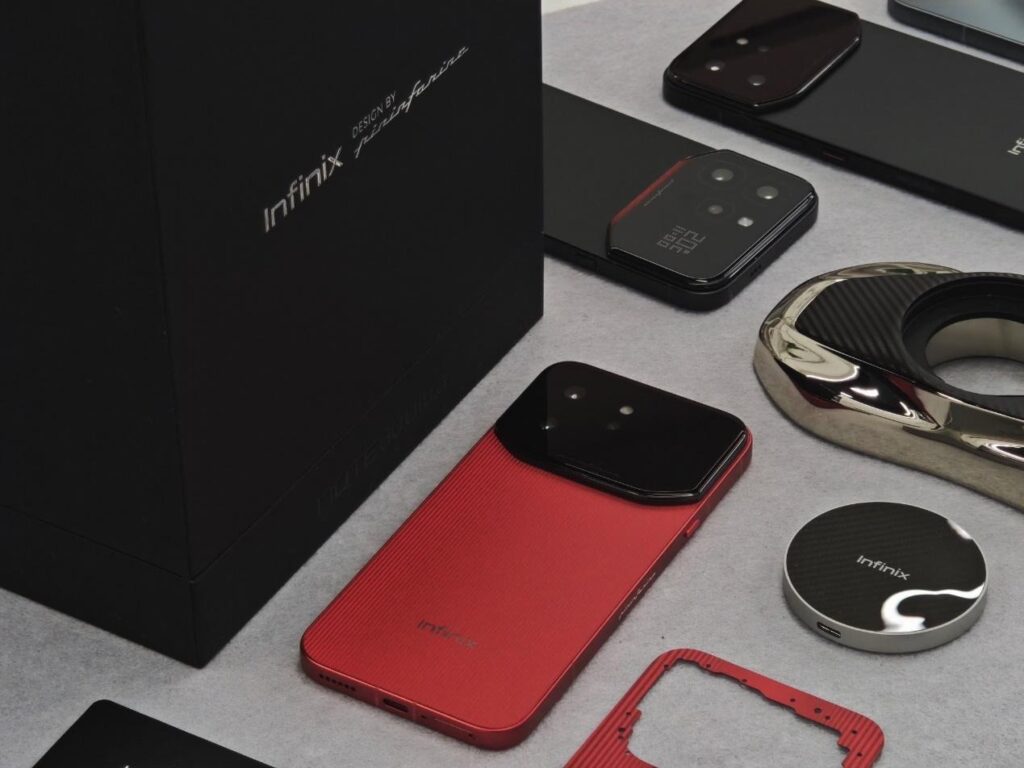
Uni-Chassis design removes visual fragmentation
A key design shift in the NOTE 60 Ultra is what the companies call the Uni-Chassis camera system. Instead of treating the camera cluster as a separate module, the design integrates it into the phone’s body under a single high-strength glass panel that covers the upper back section.
This approach removes visible breaks around the camera lenses, creating a smoother surface that makes the rear system appear to float rather than protrude. The goal, according to the designers, was to reduce visual fragmentation while maintaining usability and durability.
“We do not want the NOTE 60 Ultra to look like a box crammed with components. It should feel like a continuous living entity,” said Fioravanti.
The glass surface itself is not flat or uniform. The upper section is shaped to give a sense of stability, while the lower section introduces subtle geometric segmentation inspired by automotive rear-wing design. Polished edges and metal detailing further blend the surfaces together, while a discreet Pininfarina signature marks the collaboration.

Lighting system inspired by automotive design
Beyond structure, the NOTE 60 Ultra also borrows from automotive lighting design. A multi-zone lighting system on the back of the phone introduces a red light strip integrated beneath the rear wing-like structure. When powered on, the lighting activates to create a visual effect similar to an engine ignition sequence in high-performance cars.
The phone also includes an Active Matrix system, which can display animations, including a customizable Pixel Pet or user-defined visuals. The feature is designed to add personality and interaction, turning the back panel into a dynamic display rather than a static surface.
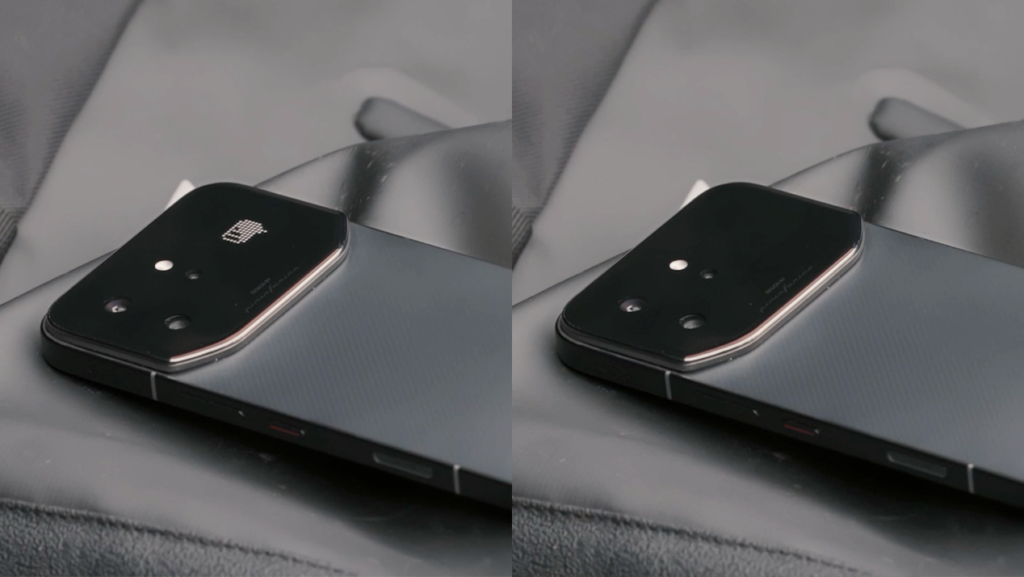
Hidden complexity under a minimalist surface
Despite its clean exterior, the NOTE 60 Ultra integrates multiple advanced components beneath the glass, including a 200MP main camera, a 50MP telephoto lens, additional sensors, flash units, and lighting systems.
To achieve a seamless look, Infinix and Pininfarina opted to visually conceal these elements when the phone is not active. This required precise control over material coating, light behavior, and color matching across multiple back panel variants.
“The essential design does not mean simplicity. It means that after countless iterations, we arrive at the right balance between aesthetics and function,” said Fioravanti.
The engineering process included repeated adjustments across the supply chain to ensure consistent light behavior across different color finishes, addressing challenges such as light interference and visibility control.
The result is a system where the lighting elements remain hidden until activated, preserving the minimalist appearance while enabling dynamic effects when in use.
Recognition and positioning
The design approach has received recognition from industry reviewers and award-giving bodies, including a 2026 iF Design Award. Technology publications have also highlighted the collaboration, noting the level of design integration between automotive and mobile industries.
The companies frame the device as part of a broader shift in what “Ultra” means in smartphones, moving away from purely technical signaling toward products that combine performance with design intent and emotional appeal.
The Infinix NOTE 60 Ultra is available in the Philippines through major online platforms, including Shopee, Lazada, and TikTok Shop.
