

As more companies use artificial intelligence (AI) in everyday work, a new concern is growing: how can businesses take advantage of AI while keeping their important information safe and under their control?
Many organizations have relied on cloud services to store and manage data. But with AI now being used for tasks such as analyzing documents, finding information, and automating processes, businesses are becoming more careful about where their data goes and who can access it.
This is driving interest in private data platforms, where companies can use AI tools within their own systems instead of sending sensitive information to outside services.
“Built for both AI and enterprise demands, enabling private AI workflows with full governance, fleet-scale management, and the security controls IT teams need for regulation and compliance requirements,” Bie-i Chu, EVP of the Synology NAS Group during the company’s media briefing at Computex 2026.
The change is an indication of a bigger shift in how companies view their data. Instead of treating data as something that is simply stored, businesses are looking at it as a resource that can help them make better decisions, improve operations, and create new ways of working.
However, using AI also brings new concerns, as always. Companies need to make sure their information remains private, follows industry rules, and is protected from unauthorized access.
This is where private data platforms come in. These systems allow businesses to run AI-powered tools using their own information while keeping control of the data inside their organization.
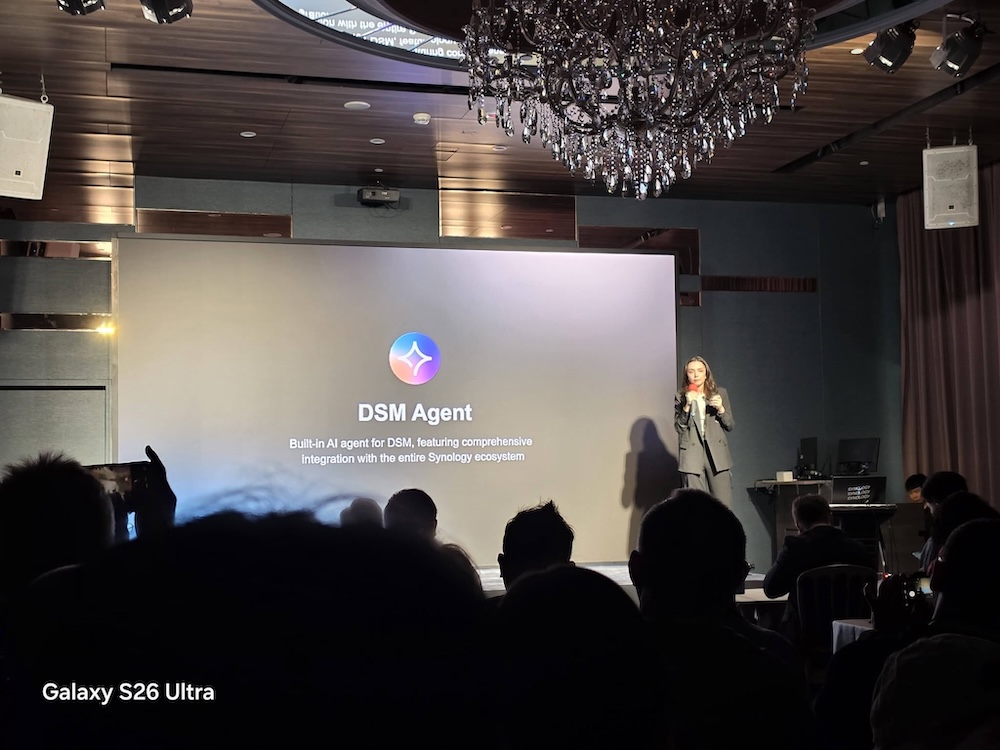
Synology, a Taiwan-based network-attached storage (NAS) and data management solutions provider, highlighted its next-generation DiskStation Manager (DSM) as part of this shift. It is expanding its offerings from basic storage tools so companies can actually use their existing files, system data, and business information in AI-driven workflows instead of just storing them.
For businesses, this means AI can become more practical. Instead of starting from scratch, companies can use the information they already have to help employees find answers faster, automate routine tasks, and improve productivity.
The need for easier technology management is also increasing as companies operate more systems across different locations. Businesses are looking for ways to manage multiple devices, control access, and monitor activity without adding more complexity for IT teams.
As AI becomes more common in business, the priorities are shifting from simply adopting new tools to making sure those tools are used responsibly. Companies want the benefits of AI, but they also want to maintain control over their information.
The future of AI adoption may not only depend on how powerful the technology becomes, but also on how well businesses can manage and protect the data that powers it.
