


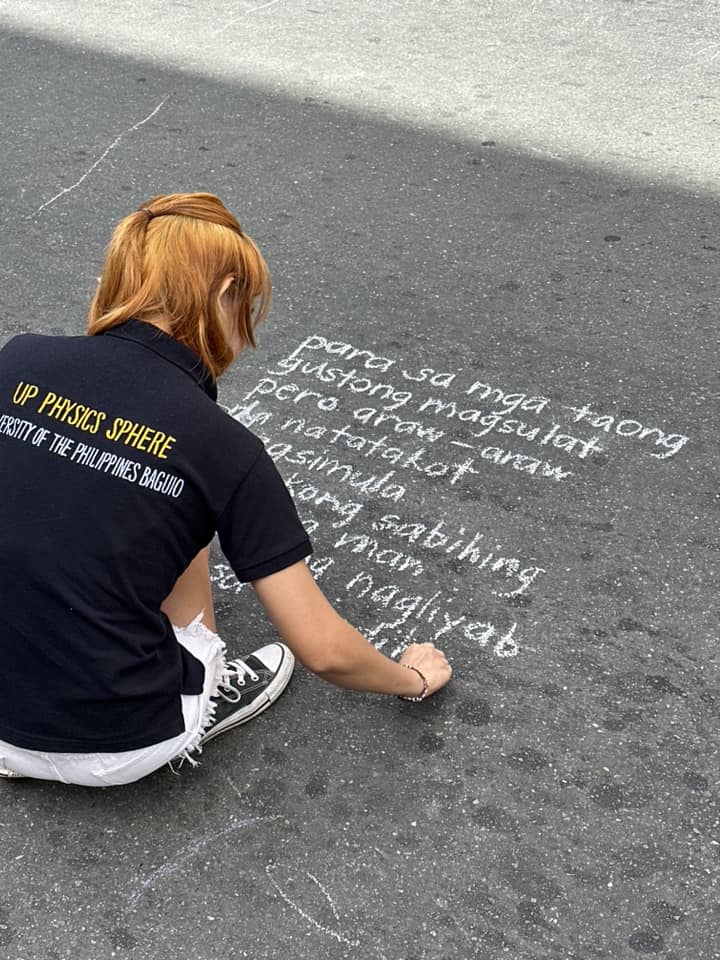
I began writing at the age of eight, when phone keypads were much larger than screens. It was the era when beating your high score in the game Snake on your Nokia 3310 phone felt like the biggest accomplishment you could make.
We did not have a digital camera back then and I captured the things I wanted to remember through words–by keeping a journal and describing how each day went.
Back then, I didn’t know you could make a living out of writing.
I was an eight year old kid who did not know that “writing” is a thing. As an elementary student who was leaning more in mathematics and sciences, I did not know that I was good at writing because I was not aware that people can be good at it.
I am twenty-two now and after fourteen years, my poetry page, Malamaya, has recently been eligible for monetization on Facebook. Since then, my words had to adjust to the trend to continuously earn money and put food on the table.
How tech chooses relatability over honesty
With the introduction of digital technology and social media, the writing and artistic landscape changed dramatically.
Algorithms control every aspect that a struggling artist badly needs to earn money–from visualization, engagement, and finally, profitability. When I started to share my poetry on Facebook, I was doing it for the love of words and the bridges they could build between me and my readers.
Yet, as Malamaya grew in popularity and monetization became available, something has to change with the way I craft my words.
Tech platforms love content that’s either relatable or shareable. This means that artists have to adjust to what an algorithm thinks people should see.
Intricate, deeply personal pieces fall behind compared to more generic, universally appealing ones. This is a very humbling realization: it means that in order for me to make a living off my art, sometimes I have to think more about something being relatable rather than just being honest on what I want to write.
As I reflect on this, I think of the words I shared on my page: “My words put food on the table—but not every day.”
I have to be prepared during the days that I will choose honesty over relatability because as long as a piece is not likable and shareable, it won’t earn as much.
Pixels Over Paper
Digital marketing has, in a manner of speaking, changed how works of art are consumed and valued.
This transformation does have its merits: it reaches out to the audience in split seconds all over the world and you can earn money by just using your phone. But like we always say and believe, everything comes at a price.
Digital platforms are ephemeral. The life of a post depends upon the continuous, relentless scroll of a newsfeed.
All of that—the feel of the book in one’s hands, smelling its pages, feeling its weight—goes lost in the digital realm.
Art’s Algorithm
In today’s digital age, artists are now dependent on algorithms.
Invisible, convoluted codes dictate who is seeing our work and how often it might pop up in their feeds. The more an artist bends to its wishes, the more their work is shown. At one end, this heaps a tremendous amount of pressure on artistic integrity, where commercial success resides.
The loneliness of creation stands in such sharp contrast to the publicity involved in sharing on digital platforms. Sure, algorithms do help us pierce a wider circle, but with their demands, they likewise dilute the true essence of our art by forcing us to feed them with their preferred content.
Finding the middle line
While technology did undeniably democratize art and gave voice to many more that otherwise would remain unheard, it provided a platform for far too many artists from all walks of life to share their work with the world.
Whenever I think about it, one of the reasons why it took me fourteen years to monetize my art is because the rise of technology did not align with the rise of my words. There was no way I could monetize a piece through my mother’s Nokia 3310.
I retain hope, though, that authenticity will eventually prevail. That is to say, it is those real, heartfelt pieces that make the readers move most and leave a lasting impact.
Art in the age of technology—the double-edged sword that it is—begets unprecedented opportunities for reach and recognition but at a cost to the honesty of the creative process.
The artist’s goal is then to guarantee that there is as little bitterness as possible in the manner he expresses his passion while seeking profit in the digital age.
