


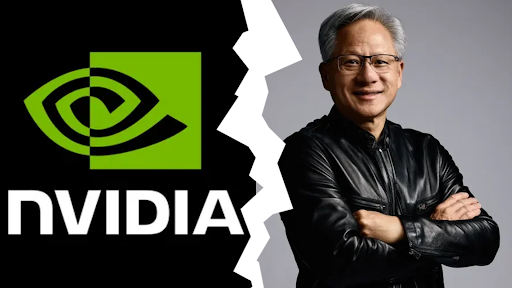
Less than a week after Jensen Huang publicly admitted to being unfaithful to his wife, the man who co-founded NVIDIA in 1993 and spent 33 years turning it into the tech powerhouse it is today is no longer its CEO.
NVIDIA announced on November 12 that Huang had resigned as president, chief executive, and board member effective immediately. During this transition, longtime CFO Colette Kress will serve as interim CEO, while Harvey C. Jones has been appointed as the company’s first board chair.
The resignation caps off a turbulent week that initially began with Huang’s admission of infidelity.
Looking at how quickly things moved, the timeline alone shows just how fast the situation escalated.
On November 8, Huang admitted he had been unfaithful while NVIDIA’s board simultaneously opened an independent investigation into reports that he had been targeted by a foreign intelligence operation. Reports linked the affair to Alice Huang, a businesswoman and former Megaspeed executive whom U.S. officials reportedly suspect of gathering intelligence for China. NVIDIA said at the time that it had no reason to believe company secrets or U.S. national security had been compromised.
Then, on November 11, The New York Times reported that Huang had also had an extramarital relationship with Kimberly Powell, NVIDIA’s vice president of healthcare and an executive who reported directly to him. NVIDIA, Huang, and Powell did not publicly confirm that report. Soon after, reports emerged that NVIDIA’s board was meeting to decide Huang’s future.
By the next morning, he was out.
And the market was watching every step.
Before the initial scandal broke over the weekend, NVIDIA closed November 6 at $186.64. The first trading session afterward saw shares close at $178.67, down 4.3%, after falling as much as roughly 8% earlier in the day.
The stock dropped again to $168.89 on November 10 before recovering to $173.73 on November 11.
Then came the second affair report, along with reports that the board was considering Huang’s removal. After regular trading, NVIDIA shares fell around 8%, with late after-hours prices reaching roughly $158.78. It is difficult to separate how much of that movement came from the new affair report itself and how much came from fears that Huang was about to lose his job.
After NVIDIA formally announced his resignation on November 12, shares fell as much as 14% during the session before recovering. The stock eventually closed at $166.19, down 4.34% for the day and roughly 11% below its November 6 close.
As it stands, there is still plenty of uncertainty.
NVIDIA lost its CEO, as well as the person whose name, technical vision, and hands-on management style molded a lot of the company.
For the first time in 33 years, NVIDIA now has to prove what the company looks like without Jensen Huang running it.
