



Artificial intelligence (AI) infrastructure, governance, research and talent development are among the areas set to receive a boost from a Php 704-million European Union (EU) support package for the Philippines.
Equivalent to €10 million, the funding is part of the EU-Philippines Digital Economy Package (DEP), which supports technology, research and investment initiatives focused on AI policy, governance, infrastructure and talent development.
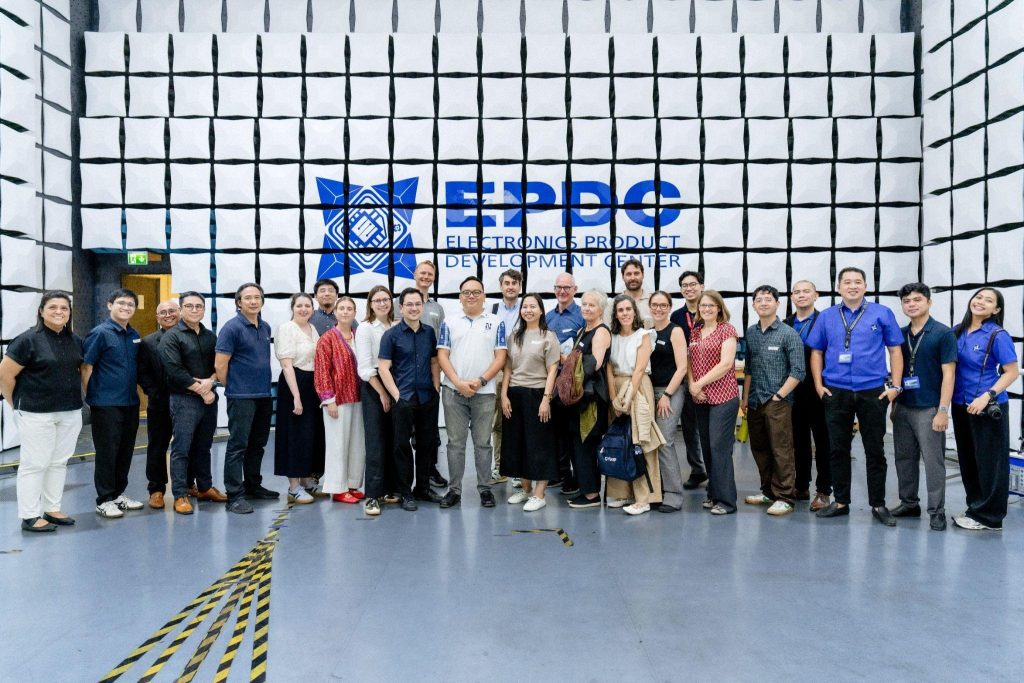
The package was highlighted during the three-day “EU-PH Advancing Research and Innovation on Artificial Intelligence Mission” held from July 28 to 30, bringing together Philippine and European experts, government officials and industry representatives.
The Department of Science and Technology (DOST) identified fragmented government data as a key weakness, saying isolated datasets cannot be easily integrated to create functional AI applications. The EU has indicated it could help address data interoperability.
DOST Secretary Renato U. Solidum Jr. said European expertise in responsible and human-centric AI could complement the Philippines’ talent pool and growing digital economy.
The department is looking at AI applications in climate action, health, agriculture, manufacturing, education and smart communities.
The cooperation will also complement the government’s AI initiatives such as the National AI Center for Research and Innovation (NAICRI), which was launched in February this year, as the country’s central hub for AI research and innovation
The partnership builds on the Philippines and EU’s work on the Copernicus Philippine (CopPhil) Mirror Site, established in 2017 to provide access to near-real-time satellite data.
EU investment under the DEP will help connect CopPhil to a national data lakehouse being developed through DOST’s Geospatial Analytics and Technology Solutions program.
The infrastructure is expected to support disaster risk management and other AI-powered applications in health, agriculture and disaster resilience.
The DOST is also seeking EU cooperation to develop an AI workforce through talent mobility, upskilling and reskilling initiatives involving government, academia and industry.
