


Portable power stations are no longer just for camping trips. As power interruptions become more common and more people work remotely, they are becoming an important backup for homes, small businesses, and outdoor activities.
For many Filipinos, a portable power source can mean staying connected during a brownout, keeping food from spoiling, or continuing to work even when electricity goes out. Unlike fuel-powered generators, portable power stations are quiet, rechargeable, and can safely power everyday devices such as laptops, Wi-Fi routers, smartphones, lights, and some home appliances.
To meet the growing demand for reliable backup power, Jackery has expanded its Explorer Series with three new portable power stations: the Explorer 300D, Explorer 500 V2, and Explorer 2000 V2. The new models are designed for different needs, from charging personal gadgets while traveling to providing backup power for homes during extended outages.
Sitting between the Explorer 100 Plus and 300 Plus, the new Explorer 300D is designed for people who are always on the move. Weighing just 2.5 kilograms, it is lighter than many portable power stations in its class.
Instead of traditional AC outlets, the Explorer 300D uses USB-C and DC ports for charging phones, tablets, cameras, drones, and other digital devices. This design reduces unnecessary power loss and improves efficiency. It offers a 288Wh battery capacity, a 300W total DC output, and includes a shoulder strap that also works as a 140W USB-C charging cable.
For remote workers and households, the Explorer 500 V2 offers a balance of portability and backup power. It packs a 512Wh battery and a 500W pure sine wave inverter into a body that is 29% smaller than the previous version and weighs 5.7 kilograms.
The unit includes an Uninterruptible Power Supply (UPS) feature that switches to battery power in less than 10 milliseconds. This helps prevent Wi-Fi routers and computers from shutting down during sudden power interruptions. Jackery said the Explorer 500 V2 can keep a Wi-Fi router running for up to 28 to 35 hours and recharge a work laptop four to six times. It can also recharge to full capacity from a wall outlet in about 80 minutes.
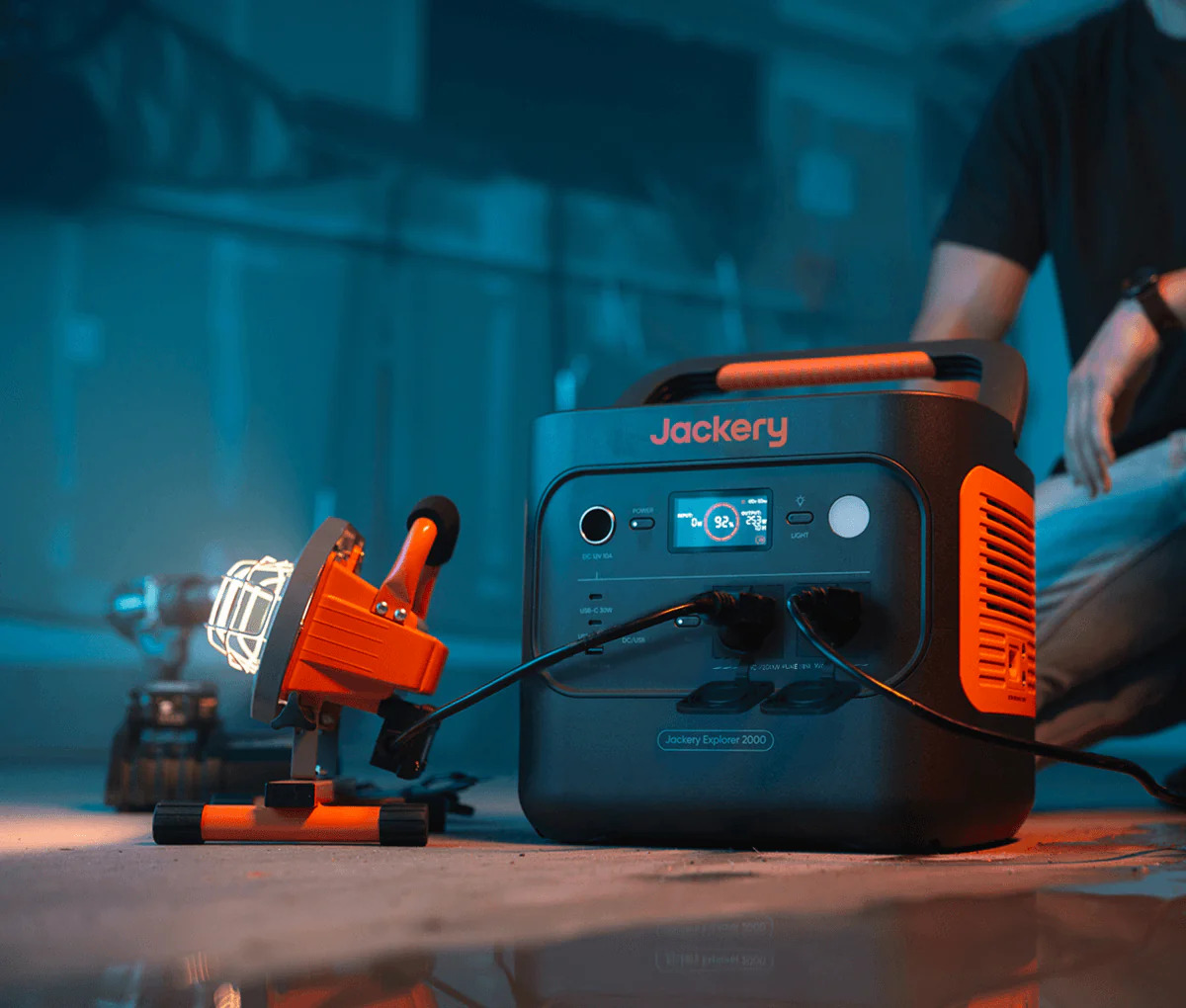
For longer outages caused by storms or other emergencies, the Explorer 2000 v2 is best used for bigger kitchen appliances. It has a 2,042Wh battery capacity and a 2,200W inverter while remaining smaller and lighter than many power stations in the same category.
According to Jackery, the Explorer 2000 V2 can keep a standard inverter refrigerator running for 11 to 14 hours, helping preserve food during prolonged brownouts. It can also power kitchen appliances such as rice cookers and microwaves for 1.5 to two hours of cooking and recharge fully in about 1.7 hours.
As more Filipinos rely on digital devices for work, study, and communication, portable power stations are becoming more than emergency equipment. They are increasingly seen as practical tools that help families stay productive, connected, and prepared whenever the power goes out.
