

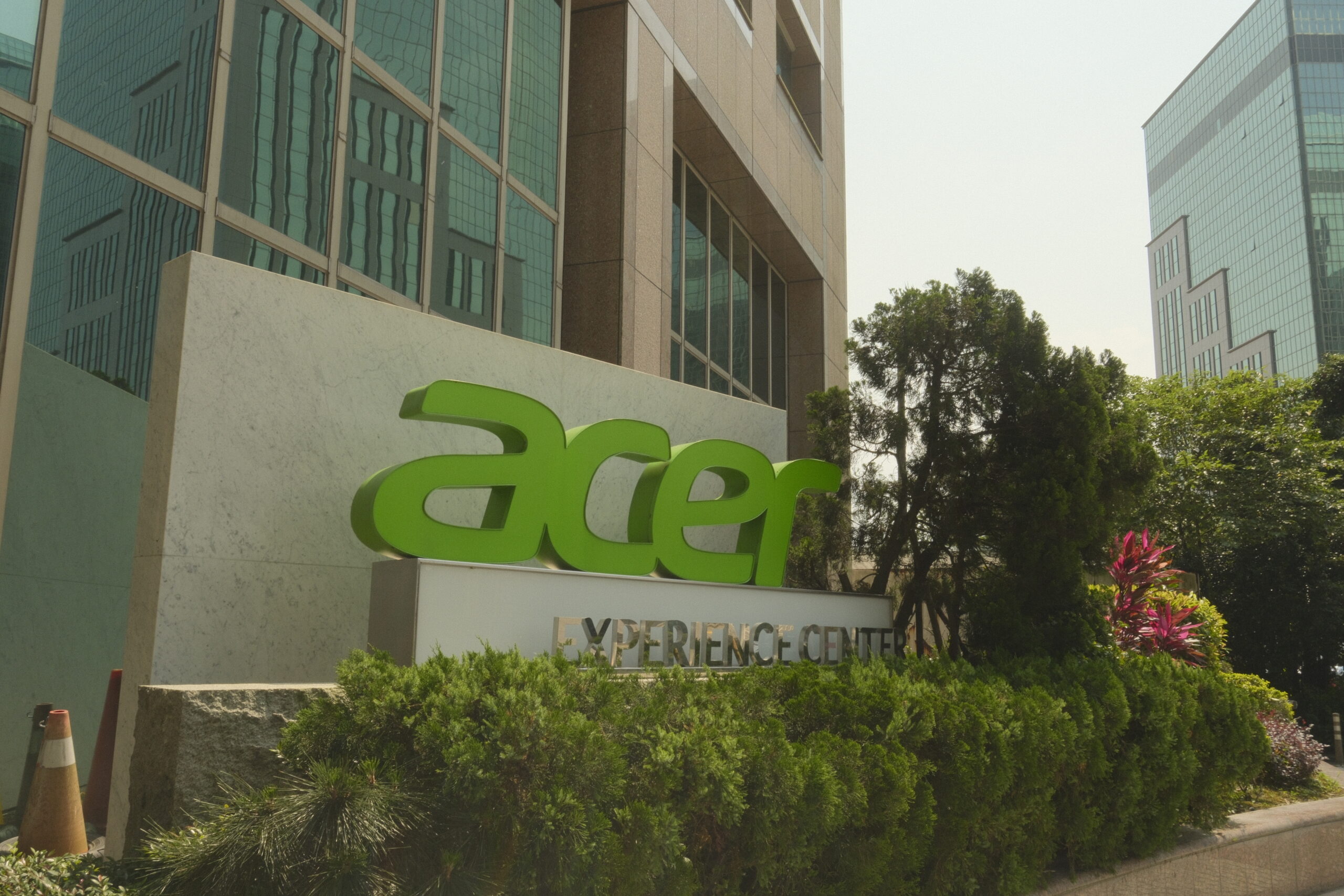
The story of Acer is, in many ways, the story of the personal computer. Yet as the Taiwanese technology giant celebrates its 50th anniversary, it is already looking beyond the industry that made its name.
“For the next 50 years, we have already decided we’re going for four different categories,” Andrew Hou, president of Acer Pan Asia Pacific, said during a media briefing at the company’s headquarters in Taipei during Computex 2026.
Those categories are industrial computing, healthcare, energy and home appliances, representing a future that stretches far beyond laptops and desktop PCs.
Founded in 1976 by Stan Shih and a group of partners in Taiwan, Acer entered an industry that was still taking shape. Personal computers were years away from becoming household staples. The internet did not yet exist in the form people know today. Smartphones, cloud computing and artificial intelligence belonged to the realm of science fiction.
Along the way, Acer became one of Taiwan’s most recognizable technology brands and helped establish the island’s reputation as a global technology powerhouse.
Now, at 50 years old, the question facing the company is how to remain relevant in a future where computing extends far beyond the traditional computer.
The Taiwanese ecosystem
Alongside companies such as Asus, MSI and Gigabyte, Acer belongs to a generation of Taiwanese technology firms that transformed the island into one of the world’s most important centers for computing innovation.
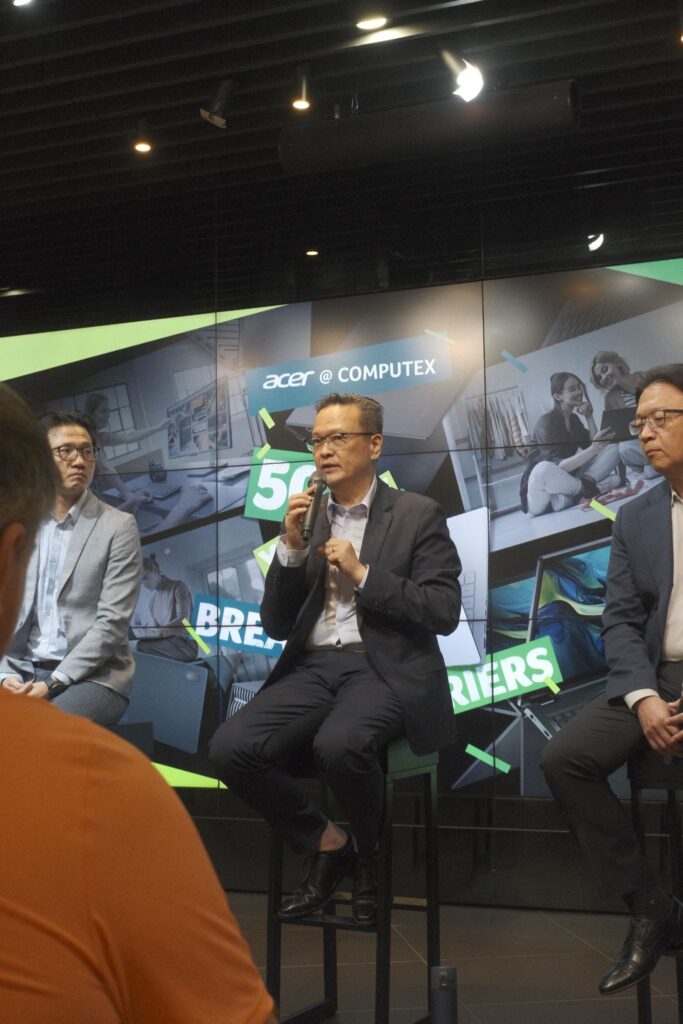
The companies may compete for market share, but Acer executives describe the relationship less as a rivalry and more as participation in a broader ecosystem that has helped shape the modern technology industry.
“We are all competitors, but we are also good friends,” Hou told the media.
Acer continues to work closely with technology partners such as Intel, AMD, Microsoft, Nvidia and Qualcomm, relationships that have helped the company navigate decades of technological change while maintaining the flexibility of an open platform.
That openness has become increasingly important as competition intensifies, particularly with Apple’s growing push into more affordable computing devices.
Rather than responding with a single competing product, Acer’s strategy is to widen consumer choice.
The company has expanded partnerships beyond traditional chipmakers, already working with Qualcomm on ARM-based notebooks while keeping a close eye on new entrants such as MediaTek and Nvidia as they move into the CPU market.
Education as a growth engine
While Acer is preparing for the next wave of computing, some of its strongest businesses today are rooted in areas it has spent years quietly building.
Education has become one of the company’s most important growth engines in Asia Pacific. What began as a strategy centered on supplying devices to schools has evolved into a broader effort to shape conversations around digital learning and emerging technologies.
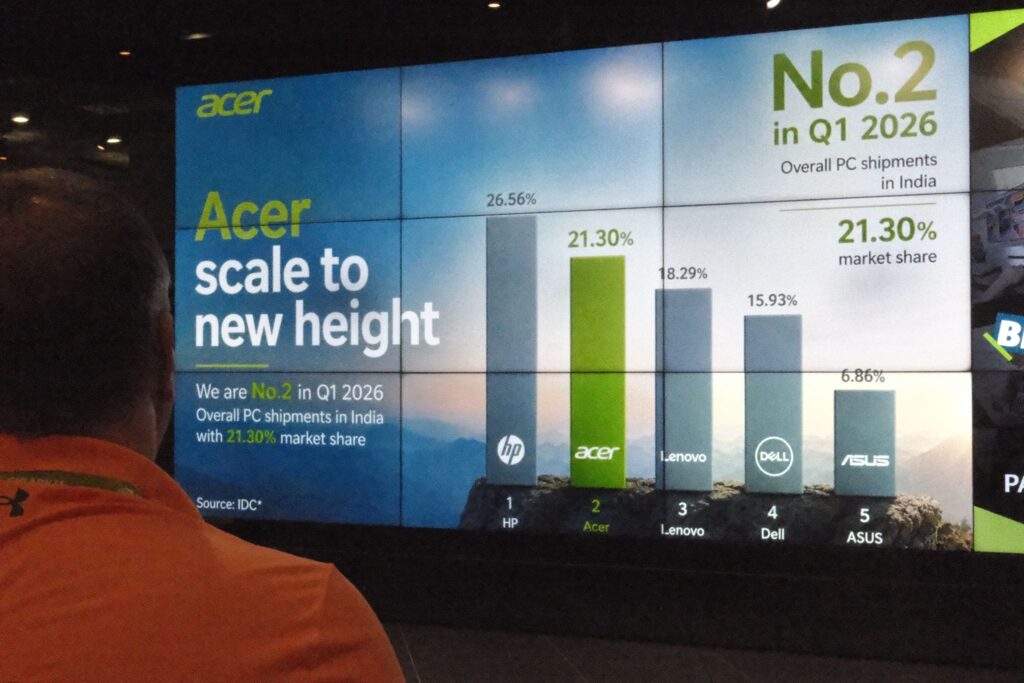
Acer says it now holds more than 40 percent of the education market across Asia Pacific, a position built through long-term partnerships with institutions and educators throughout the region.
The company has also expanded its role beyond hardware through initiatives such as Acer EduSummit. Acer has sought to bring together policymakers and technology leaders to discuss how classrooms are adapting to an increasingly digital and AI-driven world.
This year’s summit, held in Jakarta, Indonesia, focused heavily on artificial intelligence and the skills students will need as AI tools become part of everyday life.
According to Acer, education represents an opportunity to influence the next generation of technology users at a time when the definition of computing itself is changing.
The next 50
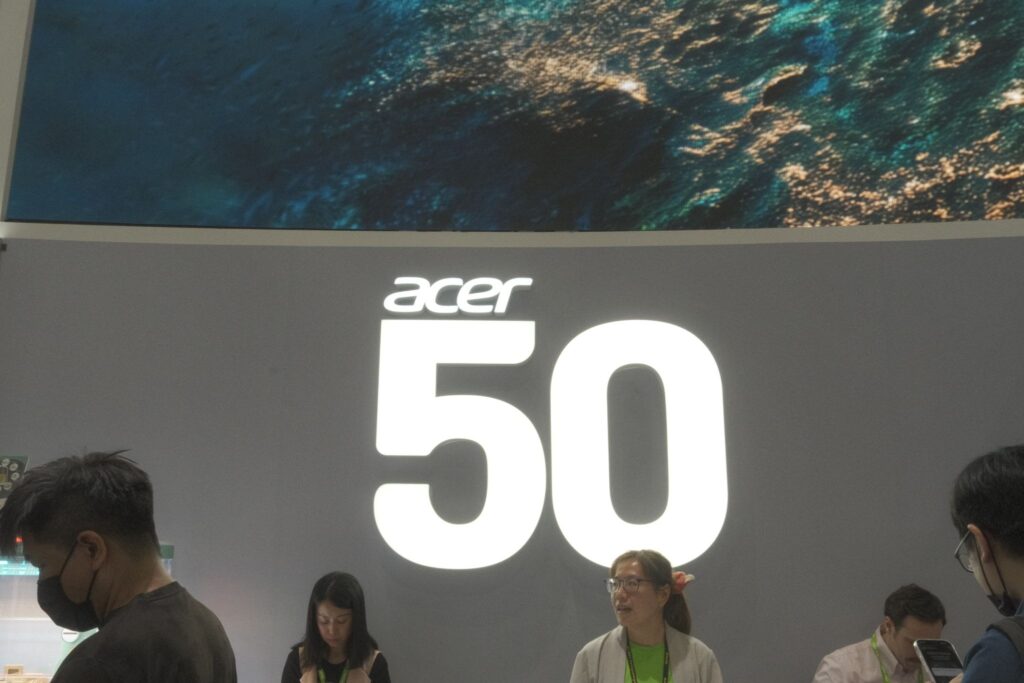
Personal computers remain at the center of modern life, and Acer continues to compete in a market it helped shape over the last five decades. However, the message emerging from Acer’s 50th anniversary celebrations pointed towas preaching about a future that will not be won by hardware alone.
Acer is preparing for a world where technology is increasingly woven into everyday experiences rather than confined to a single device.
For half a century, Acer adapted to every major shift in computing. Its next challenge will be proving that it can do so again.
