



As AI adoption dominates boardroom discussions, leaders must decide: when does adoption create real value… and when is it just FOMO?
It’s a truth universally acknowledged that the mass use of artificial intelligence is here to stay. Since November 2022, when ChatGPT was made accessible to the public, it has sparked an AI boom that continues to this day, affecting businesses from the creative sector to business process outsourcing (BPO) industries. Global capital investment in generative AI reached $49.2 billion in the first half of 2025, more than double the total investments made in 2023. Generative AI tools have since become the buzzword in business circles and summits, promoted across sectors as solutions for efficiency and cost-cutting.
But with more than a handful of generative AI tools now accessible, what should business leaders and decision-makers weigh when deciding whether to adopt—or resist—them?
In exploring this question, one challenge to leadership mindsets often stands out: the fear of missing out (FOMO). Yet effective AI adoption demands more than chasing trends. It must be deliberately aligned with the business, reinforced by security, and grounded in genuine care for clients—not driven merely by the lure of cost savings.
The AI FOMO: Hype versus Strategy
A global survey from the IBM Institute of Business Value , which polled 2,000 CEOs worldwide—including respondents from the Association of Southeast Asian Nations (ASEAN) and the Philippines—found that 63% said they prioritize AI use cases based on return on investment (ROI). However, only 23% of CEOs reported that their AI initiatives have delivered the expected returns so far. This highlights a growing gap between the intensity of AI investments and the actual results on the short term being achieved.

In an interview, Dr. Benito Teehankee, Professor of Management and Organization at De La Salle University Manila, emphasized that leaders should be cautious not about the pressures to adopt for cost-cutting, but rather about intentional integration that aligns with business strategy: “The pressure to adopt comes from the fact that you think: one, it can give you so-called efficiency advantages. But I think the most powerful driver is you think the others are doing it. In the history of business, FOMO has not been a very good reason to adopt anything.”
Teehankee also highlighted another challenge: the integration of technical features into customer-facing products without proper oversight. According to him, it is the responsibility of leaders to view the entire value chain and ensure accountability—such as by creating new roles, whether an AI consultant or an AI director, to oversee ethical and effective implementation.
While an organization’s data is key to unlocking the full potential of AI integration, execution strategies, such as establishing governance structures, should not rest solely on the technology side. CEOs must also take an active role in creating action plans and roles that provide oversight which includes data management and deployment. Integration for the sake of client security is non-negotiable.
When to Invest: The Tools Should Complement the Work
One example of an industry in the Philippines being disrupted by the growing pressure to integrate AI and client security is at risk is the Business Process Outsourcing (BPO) sector—one of the country’s largest industries contributing to 8–10% of the nation’s GDP. While BPOs are increasingly expected to adopt AI, they must also address rising concerns around client data privacy in the global outsourcing landscape.

This highlights a clear opportunity: to move beyond the fear of missing out (FOMO) and embrace strategic foresight in AI integration—ensuring that technologies are implemented in ways that complement human work, not replace it.
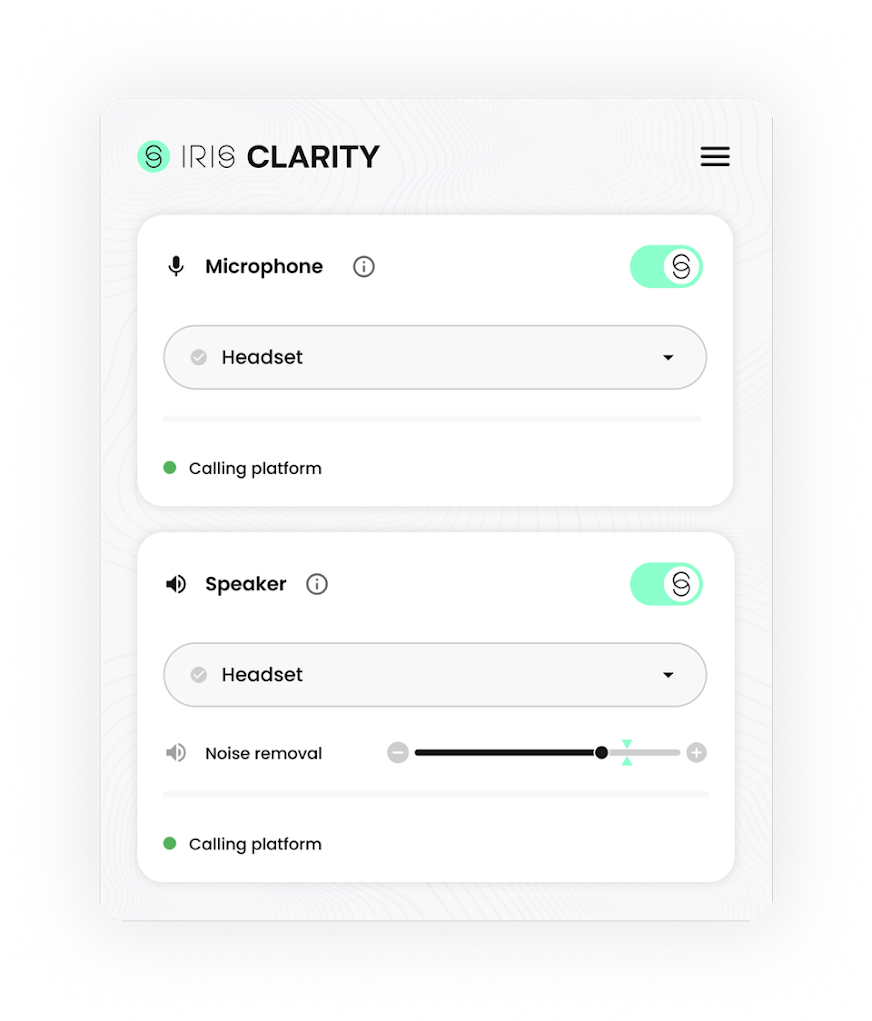
A compelling example of intentional integration is seen in IGT Solutions (IGT), a leading customer experience (CX) company. IGT partnered with IRIS Clarity, an AI solution focused on improving call quality and protecting customer privacy through its bi-directional voice enhancement technology. IRIS Clarity- which also provides AI Audio service to F1 Racing teams, is increasingly adopted by BPOs and financial services firms seeking to meet evolving data compliance standards.
When asked about AI adoption, IRIS Clarity’s CEO and Founder, Jacobi Anstruther, emphasized that implementation should be driven by responsibility as much as performance. “By advancing audio AI that enhances clarity, compliance, and human potential, we’re helping leaders turn AI into a true strategic advantage,” he says. “It’s up to leaders to decide which aspects of human potential can be best enhanced by technology.”
While the Philippines may not always compete on cost, it retains key advantages in service quality, cultural adaptability, and strong English proficiency. These are vital differentiators in markets such as the UK and EU, where compliance with strict data regulations—like the General Data Protection Regulation (GDPR)—is non-negotiable. Lapses in meeting these standards still occur, revealing an opportunity to leverage well-matched technologies that can keep the Philippines at the forefront of high-quality, secure service delivery.
Who to Invest: The Filipino Qualities that Wins

Turning to the country’s strategic advantage and the criteria of assessing when to adopt a new innovative technology, Raia Gomez, Business Development Consultant at IRIS, emphasized that human potential should be the start of an AI adoption. “There is an opportunity for the Philippines to adopt AI responsibly but rapidly—by leveraging technologies that enhance compliance, augment human strengths, and protect the cultural values that define our edge.” These cultural values such as our natural sense of empathy coupled with the strong proficiency in the English language are just some of the key Filipino qualities that cannot be automated, but can be augmented by AI.
Building on these opportunities that Filipino companies can maximize, Prof. Teehankee, who is also the Chairman of the Responsible AI and Analytics Council of the Analytics and AI Association of the Philippines (AAP), offered a cautionary note: since there are no AI laws yet in place in the Philippines, the responsibility now falls on business leaders—not only to use technology for efficiency but also to ensure the protection of their consumers.
In just three short years, AI developments and integration have disrupted industries and reshaped the future of work. Long-term strategy is key, and it may take a few more years before enterprises realize significant returns. What is clear, however, is that leadership stands at the helm: driving smart decision-making and choosing resilience over short-term FOMO hype.
