


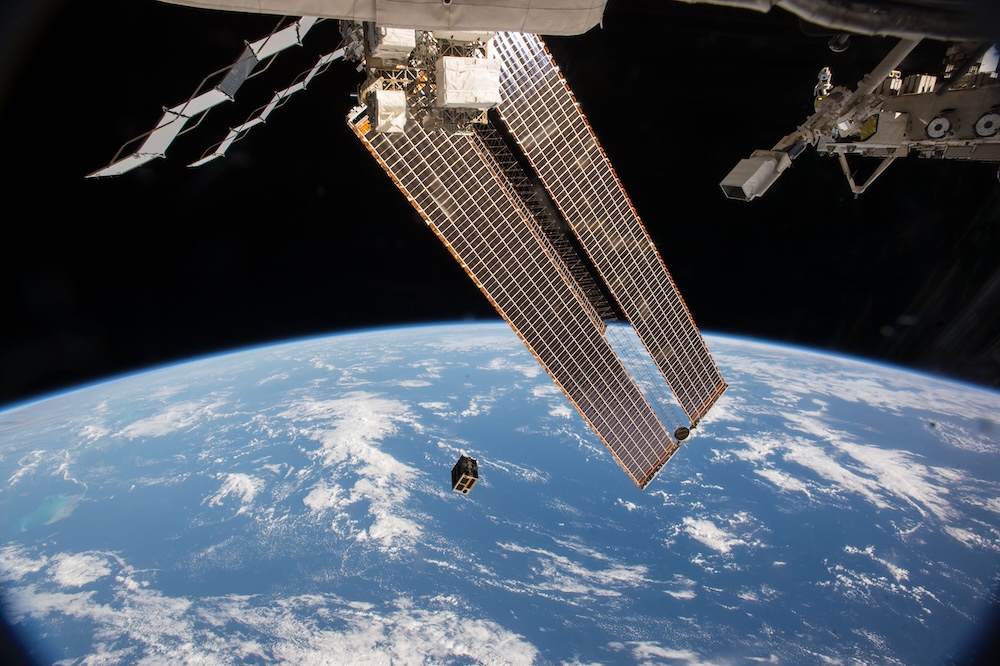
A decade after Diwata-1 microsatellite entered orbit, its most lasting impact is the disaster response capability it helped build on the ground.
The goal to develop a local satellite program came after Typhoon Yolanda (Haiyan) exposed a gap. In 2013, the Philippines struggled to access timely satellite imagery to assess damage and guide response, highlighting dependence on foreign data sources.
That gap led to a national effort to build homegrown capability. Filipino engineers were trained overseas to design and operate Earth observation satellites, culminating in Diwata-1’s deployment on April 27, 2016 from the International Space Station. The mission established the country’s entry into space and, more importantly, built end-to-end expertise, from satellite tasking to data processing.
“The Philippines established a presence in space through a satellite built and operated by Filipinos,” said Gay Jane Perez, now ad interim director general of the Philippine Space Agency.
While Diwata-1 has since completed its mission, the capabilities it enabled continue to support operations today. Satellite data processed by PhilSA is routinely used to generate maps for floods, landslides, fires, and oil spills, providing critical information to national agencies and local governments. Recent applications include assessing the extent and environmental impact of the Navotas landfill fire.
The program also created a pipeline of Filipino space engineers. Follow-on missions such as Diwata-2 microsatellite improved imaging and expanded applications, while Maya CubeSats trained new teams at lower cost.
Institutional backing came in 2019 with the formation of PhilSA, which now leads satellite development, international partnerships, and data services for disaster risk reduction and environmental monitoring.
The next step is the MULA satellite, targeted for launch by early 2027. The satellite is expected to deliver higher-resolution data and more frequent coverage for land and resource monitoring.
Ten years on, Diwata-1 stands as the starting point of a significant shift. What began as a response to disaster has evolved into a sustained national capability, with the Philippines now producing and applying its own satellite data where it matters most.
