

AI has made cyberattacks faster, more convincing, and harder to catch. Anyone already struggling to keep up is probably even further behind now, and it only seems to get more aggressive from here.
So naturally, the proposed answer is more AI.
It is 2026 after all.
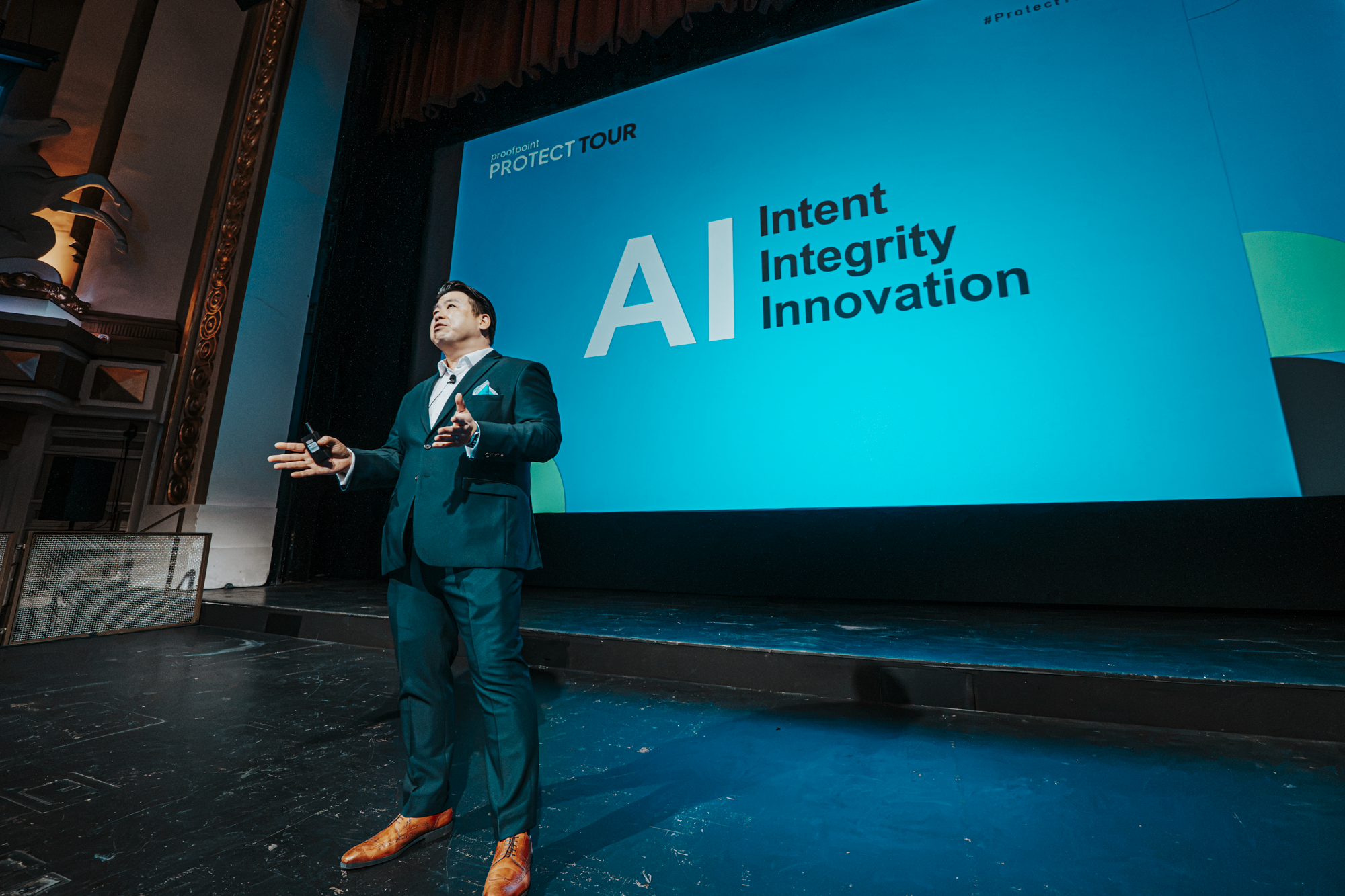
Cybersecurity leaders gathered at Proofpoint’s Protect Tour Singapore 2026 to discuss how agentic AI is beginning to change both sides of the attack-and-defense equation.
Speakers at the event said they are seeing spikes of newer, narrower attacks being created much faster than before, with signs of agentic AI showing up in attack code. More concerning is how much better those attacks are becoming at blending into normal behavior.
Much of modern cybersecurity has been built around spotting something unusual. Things like a login happening somewhere strange. A user suddenly downloads too much data. Someone starts behaving differently from the patterns the system expects.
Now add an agent whose job is to understand those patterns and look normal.
Staying ahead becomes much harder because you have no idea what to look for anymore.
One approach discussed during the event was intent-based protection. Instead of only asking whether an action looks unusual, systems look across messages, actions, and context to figure out what a person or agent is actually trying to accomplish.
So it becomes less about spotting a discrepancy and more about making an educated call on intent. You can argue it is basing it on assumptions, so take that as you will.
This approach requires a lot of context. Context, which can include communication patterns, permissions, user behavior, data access, and how agents interact with all of it. And that information has to keep moving as the threats do.
This is where the whole thing starts becoming AI versus AI.
During the media roundtable, Proofpoint Global Resident CISO Patrick Joyce described the situation as a “double-edged sword.”
“CSOs are expected to embrace AI… to help in their own efforts to defend their organizations and protect their organizations,” Joyce said. “But they’re also expected to defend against AI and malicious activity.”
That contradiction shows up in the numbers, as Proofpoint’s 2026 Voice of the CISO findings state 78% of CISOs surveyed globally consider GenAI a security risk to their organization. At the same time, 85% are looking to deploy AI-powered protection, while another 85% say the safe use of AI assistants is a top priority.
There is fear and reluctance, but the industry is still moving forward.
This is a pattern that history has seen before.
The panel pointed back to the arrival of the web, cloud, and mobile technology in workplaces. These tools were deployed quickly, while security controls often came later. The same pattern is appearing with AI, with companies under pressure to deploy first and work out the proper controls along the way.
This time it really is just coming in unprecedented speeds.
AI can help discover vulnerabilities faster, build attacks faster, and potentially respond faster too.
We are reaching a point where AI is being deployed partly because other AI is becoming too fast to deal with manually.
Across the industry, agents are being developed to automate investigations, identify risky users, recommend remediation, and work alongside other agents. The event also discussed the emergence of an agentic security operations center, or SOC, where more security processes could eventually run through AI agents instead of humans clicking through every step themselves.
They claim that this does not necessarily mean the cybersecurity team disappears; they will just mostly be asked to pivot to other things. As Joyce said, security teams are already being asked to handle more responsibilities without matching increases in staff or resources.
“Those jobs aren’t going to go away,” he said. “There’s more work to be done.”
The work itself may look very different, but it will not be removed.
Humans could spend less time reviewing every alert and more time setting guardrails, investigating exceptions and deciding what an agent should actually be allowed to do.
Taking into consideration that last part, we need to recognize that an AI defender trying to understand intent needs context. It needs visibility into behavior, communication, permissions, and potentially sensitive information moving around an organization.
The better the context, theoretically, the better the decision.
But how much context is enough?
How willing are we to give an autonomous system that much visibility if we are still figuring out how much agency these systems should have in the first place?
We want machines fast enough to catch machine-speed threats while making sure the defenders themselves do not get more access than they need.
Cybersecurity has always been an arms race, with attackers and defenders constantly trading places on who is ahead.
Agentic AI just makes both sides considerably faster.
So AI protecting us from AI sounds a little ridiculous, but with the way things are moving, it may also be the only thing fast enough to keep up.
