


Ateneo de Manila University has introduced a robotics-based system designed to assist archaeological excavation, combining robotics, sensing technologies, and machine learning to improve how researchers study and document early human activity in the Philippines.
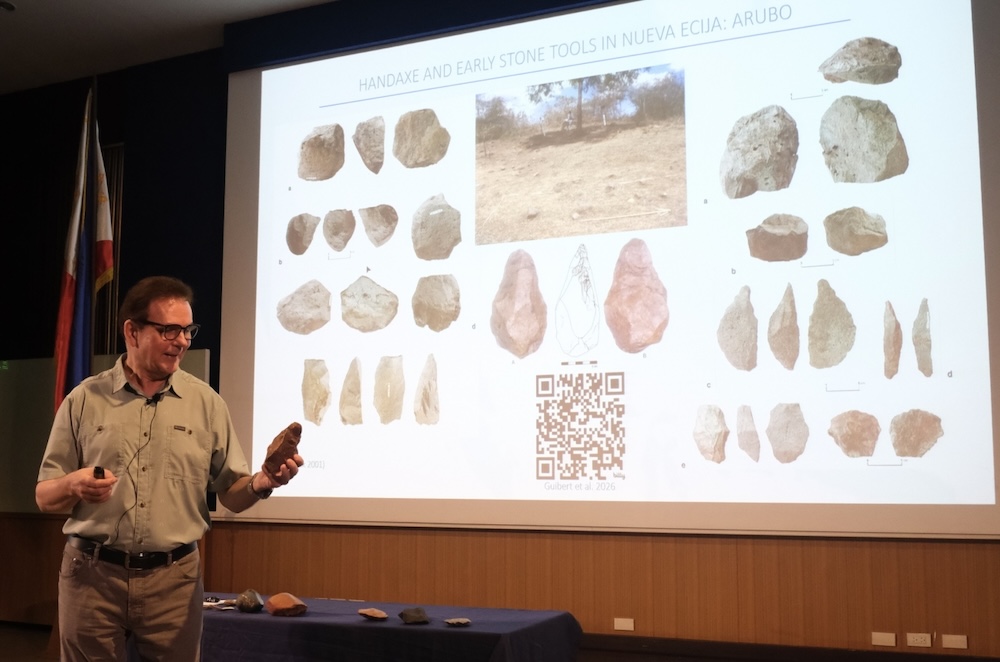
The system, called ArchaeoBot, was presented during the Ateneo Breakthroughs lecture. It was developed through collaboration between the Ateneo Laboratory for Intelligent Visual Environments and Dr. Alfred Pawlik, professor at the Department of Sociology and Anthropology of the university.
ArchaeoBot is designed to enhance precision in excavation work, reduce human error, and help identify subtle archaeological features that may be difficult to detect using manual methods. These include possible burial sites, hearths, and small artifacts that can be easily overlooked during fieldwork.
“We owe the anthropologists and their scholarship that we get a better picture of generations and civilizations to which we would otherwise have no access,” said Dr. Maria Luz Vilches, Vice President for Higher Education, in her opening remarks.
Dr. Pawlik said the concept behind ArchaeoBot emerged from the need to address the physical demands and limitations of traditional excavation practices. Archaeological digs often involve long hours, variable conditions, and multiple teams working across different areas, which can increase the likelihood of inconsistencies or missed observations.
The system is designed to function as a supportive tool rather than a replacement for archaeologists. It can assist in identifying features within excavation sites using sensors, recognize patterns in soil and context, and help retrieve objects with care to avoid damage.
Beyond excavation, ArchaeoBot is viewed as an additional support to fieldwork processes such as recording finds, organizing recovered materials, and maintaining documentation of artifacts. Its machine learning component is intended to allow the system to improve its performance over time by adapting to different excavation environments.
