

Global digital infrastructure company Equinix said its Philippine data centers are fully covered by renewable energy as demand for local digital infrastructure continues to grow.
Max Parry, vice president for growth and emerging markets at Equinix, said sustainability and access to renewable power play a key role when the company decides where to expand its data center footprint.
“Firstly, when we’re selecting sites for expansion, the availability of power and our ability to secure renewable power forms a really important part of our site selection process,” Parry said during an exclusive media briefing in Makati.
Equinix operates three data centers in the Philippines, including one in Makati and and two in Carmona, Cavite.
Parry said the company’s Philippine facilities are already covered in terms of our renewable energy. “And so this is a good site for us to be doing business in,” he said.
The company expanded into the country last year as part of its broader Southeast Asia strategy.
Parry said the Philippines had long been the “missing part” of Equinix’s regional platform, which already includes operations in markets such as Malaysia and Indonesia.
Despite the Philippines having some of the highest electricity costs in Southeast Asia, Parry said companies still need to deploy infrastructure close to users to maintain service quality.
“The cost profile of energy, cooling, and connectivity varies a lot from market to market. What doesn’t vary is the need for digital services to be deployed close to their users, if possible,” he said.
Equinix said the Philippine digital economy and local data center capacity are growing at around 20 percent annually, driven by cloud and artificial intelligence adoptions, and digital payments.
According to the Philippine Statistics Authority, the country’s digital economy reached P2.25 trillion, accounting for 8.5 percent of gross domestic product, as more businesses and consumers shift to online services.
“And so that’s why we’re going to see continued strong demand for local deployments here in the Philippines, as opposed to companies trying to do it completely offshore,” he said.
Parry also noted that governments worldwide, including the Philippines, are increasingly examining policy data sovereignty, which could require certain data to be stored within national borders.
He said Equinix’s infrastructure can support companies that need to host data locally while still connecting to global cloud services.
“What I would say is the services that we provide are custom built really to help enterprises and public organizations that want to deploy in that kind of way,” he said.
Parry added that regardless of how regulations evolve, Equinix will be able to facilitate them in building the infrastructure.
Equinix PH data centers 100% covered by renewable energy despite high power costs
 By Dawn Solano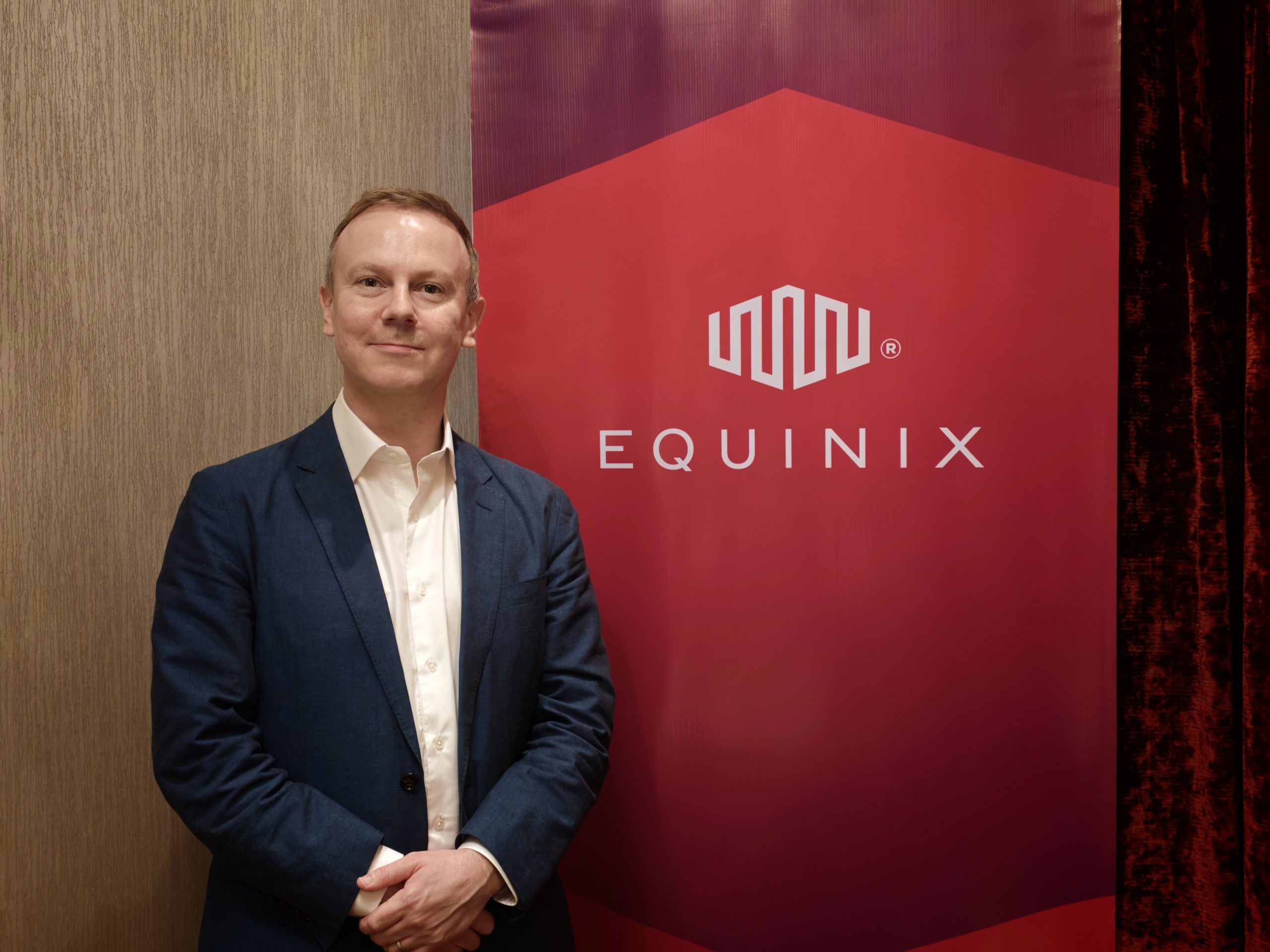
Equinix 's Max Parry sits down for an interview with Philippine media on March 5, 2026, at Shangri-La Hotel in Makati City. Dawn Solano/PhilSTAR Tech
