


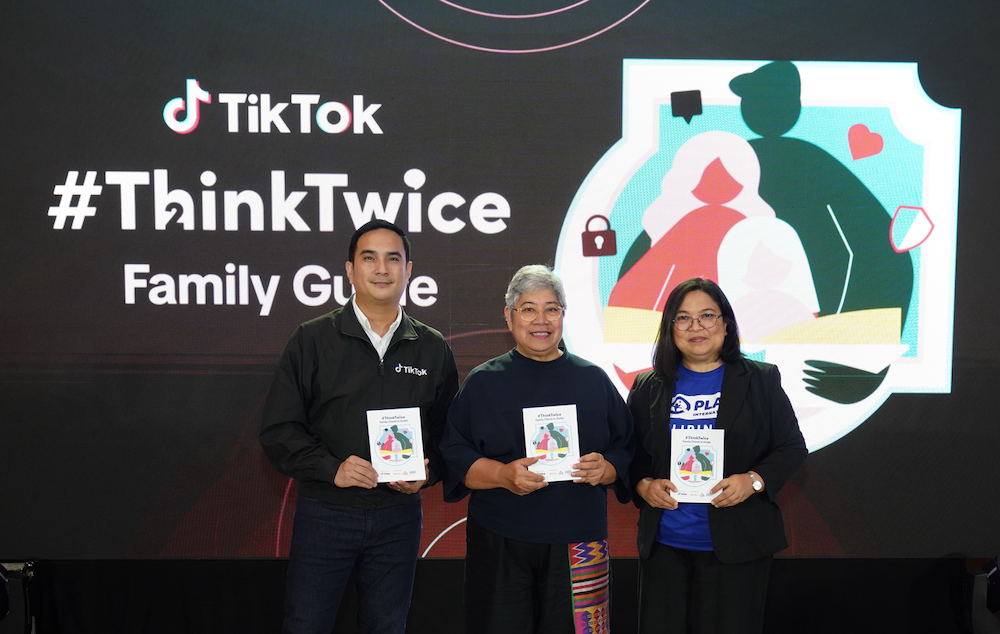
TikTok has launched the #ThinkTwice Family Guide in the Philippines to help parents and teens build healthier online habits through open conversations instead of strict monitoring.
Developed with Child Rights Coalition-Asia, Child Rights Network, and Plan International Pilipinas, the guide includes conversation starters, reflection activities, digital safety tips, and information on TikTok’s safety features. It is available through the #ThinkTwice Digital Check-In Hub, which users can access by searching “Think Twice” on the app.
The launch, held during the #ThinkTwice Troop Townhall in celebration of International Youth Day, supports TikTok’s existing safety measures for teens, including more than 50 preset privacy and security features, Family Pairing, private accounts, content restrictions, and a default daily screen time limit of 60 minutes.
“For many families today, digital life is no longer separate from everyday life — it’s where young people learn, socialize, create, and discover who they are,” said Yves Gonzalez, head of Public Policy for the Philippines at TikTok.”That’s why building healthier digital habits requires more than rules alone.”
Gonzalez also noted that these efforts require open conversations, mutual understanding, and practical tools that families can explore together.
Government officials and child advocates said protecting young people online requires support from families, schools, communities, government, and technology companies.
“Digital parenting is not about knowing every application or monitoring every click. Hindi po sila mga security guards or police ng digital spaces. Rather, it’s about building trust, maintaining open communication, and creating an environment where teens feel safe to ask questions, seek guidance, and report concerns,” said Undersecretary Angelo Tapales of the Council for the Welfare of Children.
The event also featured discussions with youth advocates, child rights groups, developmental and behavioral pediatrician Dr. Francis Dimalanta, and television host Kuya Kim Atienza, who shared practical ways families can talk about online safety.
“For parents, our goal is not to become technology police. We don’t need to know every app or every trend. What matters more is becoming a trusted digital guide — someone your teen can turn to when something uncomfortable or confusing happens online,” said Sheila Estabillo, program manager, Plan International Pilipinas.
“Building the link between the parent and the teen is something even before the digital conversation comes in,” said Amihan Abueva, regional executive director, Child Rights Coalition Asia. “So, if you have developed a good relationship with your teen, where they feel comfortable, hopefully that extends when they enter the digital world,” she said.
