


Sony recently shocked the industry and gamers around the world when it announced that starting in 2028, all new PlayStation games will be strictly digital-only. Meanwhile, Xbox is planning a similar transition, as insider information provided to Windows Central indicates the next-generation “Project Helix” console might not come with a disc drive at all and is also looking into disc-to-digital technology using the codename “Positron.”
There are now telltale signs that physical, tangible games might go the way of the dodo in the next generation. While storefronts like Steam have already changed the PC gaming world through their seamless, frictionless digital business model, this is the first time the console market has shown signs of fully adopting a discless ecosystem.
It’s clear that console manufacturers want to follow suit, and even though their decision sounds like they only want what’s best for their users, their recent track record means this is more like the death of consumer ownership and preservation and might even crash the industry in the process.
Digital downloads wouldn’t be as popular as they are today if they didn’t offer benefits. In consoles like the Nintendo Switch, while it’s nice to create a tangible collection of physical games, taking it outside would be so much easier if every game you own were ready to go, without having to switch the cartridge every time. You also won’t have to worry about disc rot and the save battery failing when you go digital.
Physical and digital versions have always cost the same, but the benefit of physical versions is that they often go for much cheaper thanks to clearance sales and second-hand markets. Our current landscape makes it easy to wait out new releases, find a cheaper copy online or at your local gaming store, and save yourself some money. Companies would then frequently discount digital versions of their games to drive more new sales. Consumers win in the end.
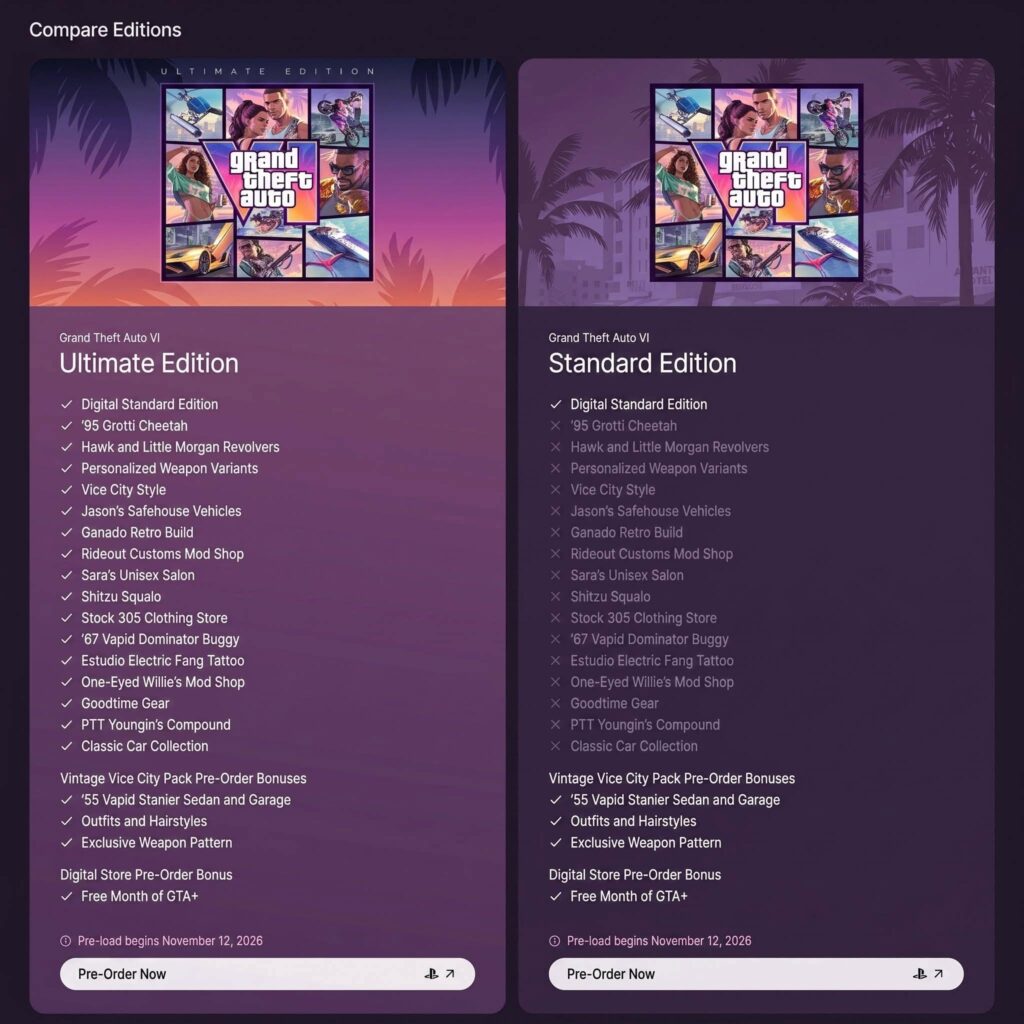
However, the highly anticipated Grand Theft Auto VI opened for preorders last June 25, and not only did Rockstar reveal that it would be digital-only, but also that the Standard Edition is $79.99, while the Ultimate Edition costs a whopping $99.99. Even if it ends up being the best game ever made, the hefty entry price and digital-only format will lock out a lot of possible consumers, who will instead turn to the ways of Blackbeard or resort to piracy.
Valve saw this when they first launched PC digital storefront Steam on Sept. 12, 2003. In an effort to make the transition to digital easier and combat piracy, Valve’s co-founder and president, Gabe Newell, wanted to give those people “a service that’s better than what they’re receiving from pirates” and then some.
By uniting the PC sphere into a single digital storefront, Valve eliminated the problem of PC CD-ROMs piling up and eventually failing, while also targeting people who choose to pirate through better accessibility. Twenty-three years later, all the best games are released on Steam.
It’s easy then to look at the latest news and think this would be good for the console economy. The only problem is that, time and time again, companies like Sony and Xbox don’t understand what made things like Steam work.
While it is the largest online PC game distributor, Steam still faces fierce competition from other platforms like Epic Games, GOG.com, and Humble Bundle, among others. But if console manufacturers like Sony and Microsoft remove physical discs, their digital stores will be the only option.

Sony recently issued a legal notice on June 26 stating that, due to a licensing agreement, PlayStation users will no longer be able to access previously purchased StudioCanal movies starting Sept. 1, 2026. Movies in that catalog include Apocalypse Now (Final Cut) and Terminator 2: Judgment Day.
Platform holders can charge whatever prices they want, offer no sales, and, evidently, all of a sudden pull the rug out from under users and their purchased content whenever they please. That’s a terrifying look into the future of gaming.
Back in 2013, gamers online also became critical of Xbox One’s initial release campaign. Back then, physical media were still prevalent, and Microsoft’s announcement that the latest console required constant internet connection and that game discs would be tied to Microsoft accounts was seen as anti-consumer.

Sony even released a humorous “tutorial” on how to share a game with your friend, which is just a 22-second video of Sony Computer Entertainment America Vice President of Publisher and Developer Relations handing a copy of Killzone: Shadow Fall to Sony Computer Entertainment Worldwide Studios President Shuhei Yoshida.
So it’s funny to look back at this video and realize that they were just late to the party. Today, the 22-second video is less of a marketing win and more of a last whimper — an obituary of a time when gamers had more ownership of the media and art form that changed lives.
Many, reacting to the news, showed off their stacks and shelves of discs and cartridges online, but when those copies deteriorate and there are no second-hand copies left, all we’re left with is high-priced temporary rental systems. With no other choice, people will turn to the high seas.
If corporate greed continues to drive up game prices to subsidize the industry’s ever-bloating development budgets, this digital monopoly will not only bring down gamers’ trust but also the whole industry along with it.
