


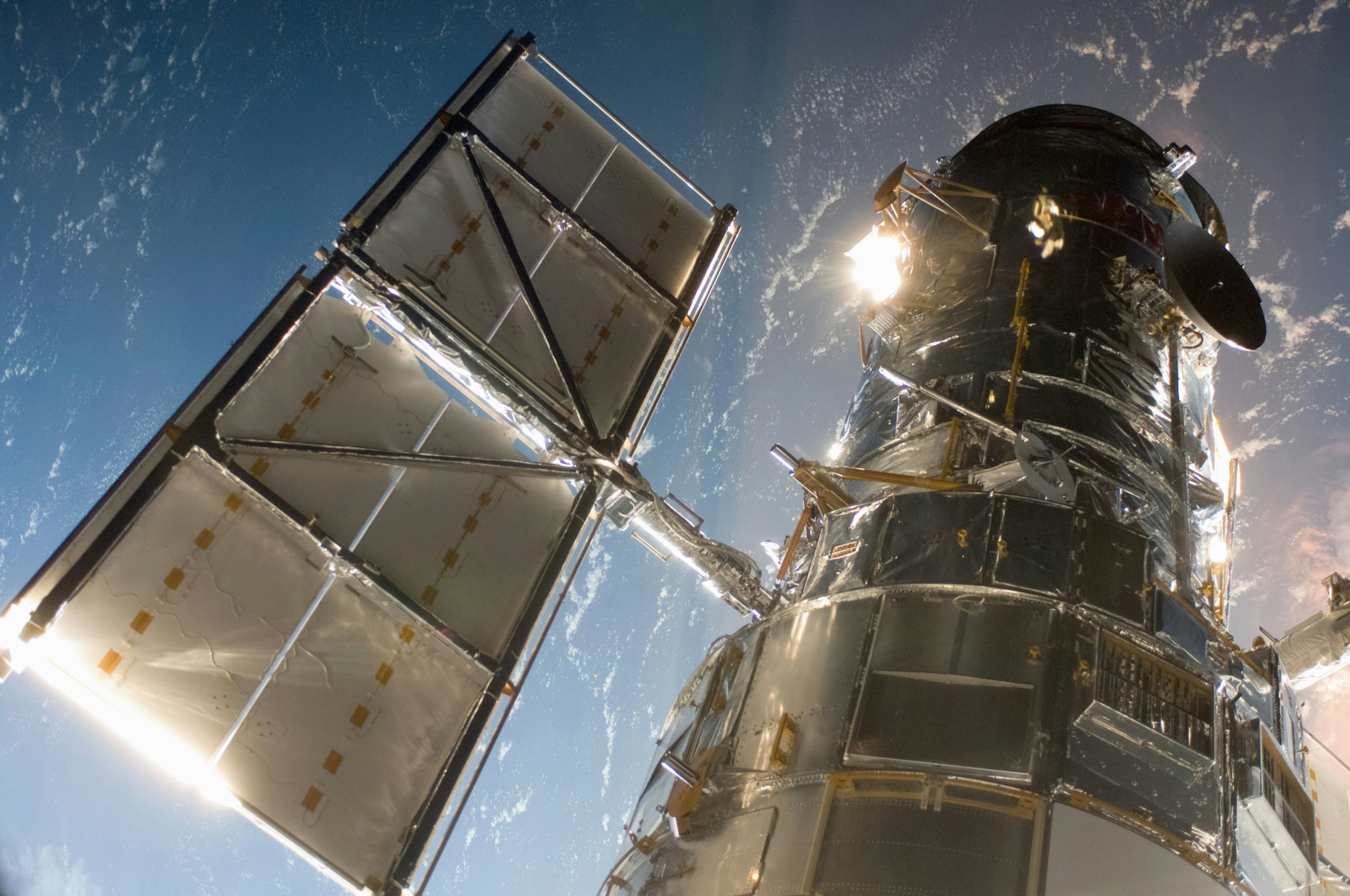
NASA is asking private companies for ways to raise the Hubble Space Telescope’s orbit and extend its working life as the observatory gradually loses altitude.
The US space agency issued a request for information on October 29 to assess whether commercial firms could boost Hubble into a higher orbit, service its equipment or help safely end its mission.
Atmospheric drag is slowly lowering the telescope’s altitude. Hubble has no propulsion system to maintain its own orbit, and NASA estimates it is likely to re-enter Earth’s atmosphere in 2033 or 2034.
The agency anticipates that a mission would need to take place by 2032.
“Hubble still has important science ahead of it, and we should be looking at every reasonable opportunity to keep it delivering for as long as possible,” NASA Administrator Jared Isaacman said.
Isaacman said the agency should explore innovative and cost-effective ways to extend the life of equipment already in orbit, allowing it to continue producing scientific discoveries.
NASA’s request also covers servicing that could improve Hubble’s capabilities. For the end of its mission, the agency is seeking information on a controlled re-entry into Earth’s atmosphere or orbital disposal.
Nicky Fox, NASA’s associate administrator for science, said commercial capabilities for capturing and servicing satellites in space have developed rapidly in recent years.
She said the agency wants to examine options for raising Hubble’s orbit while developing a future flagship mission.
Companies have until November 30 at 3 p.m. Eastern Standard Time to respond.
Hubble has operated for more than three decades and continues to make discoveries about the universe.
The telescope is a joint project of NASA and the European Space Agency, with mission management handled by NASA’s Goddard Space Flight Center.
