


Editor’s Note: This article was first published in Future Forward, Volume 1, No. 2.
For most Filipino households, home life is far less glamorous. “Tapos na ba ‘yung labada?” is what one family member would ask while another rummages through the refrigerator, looking for something to eat for a meal.
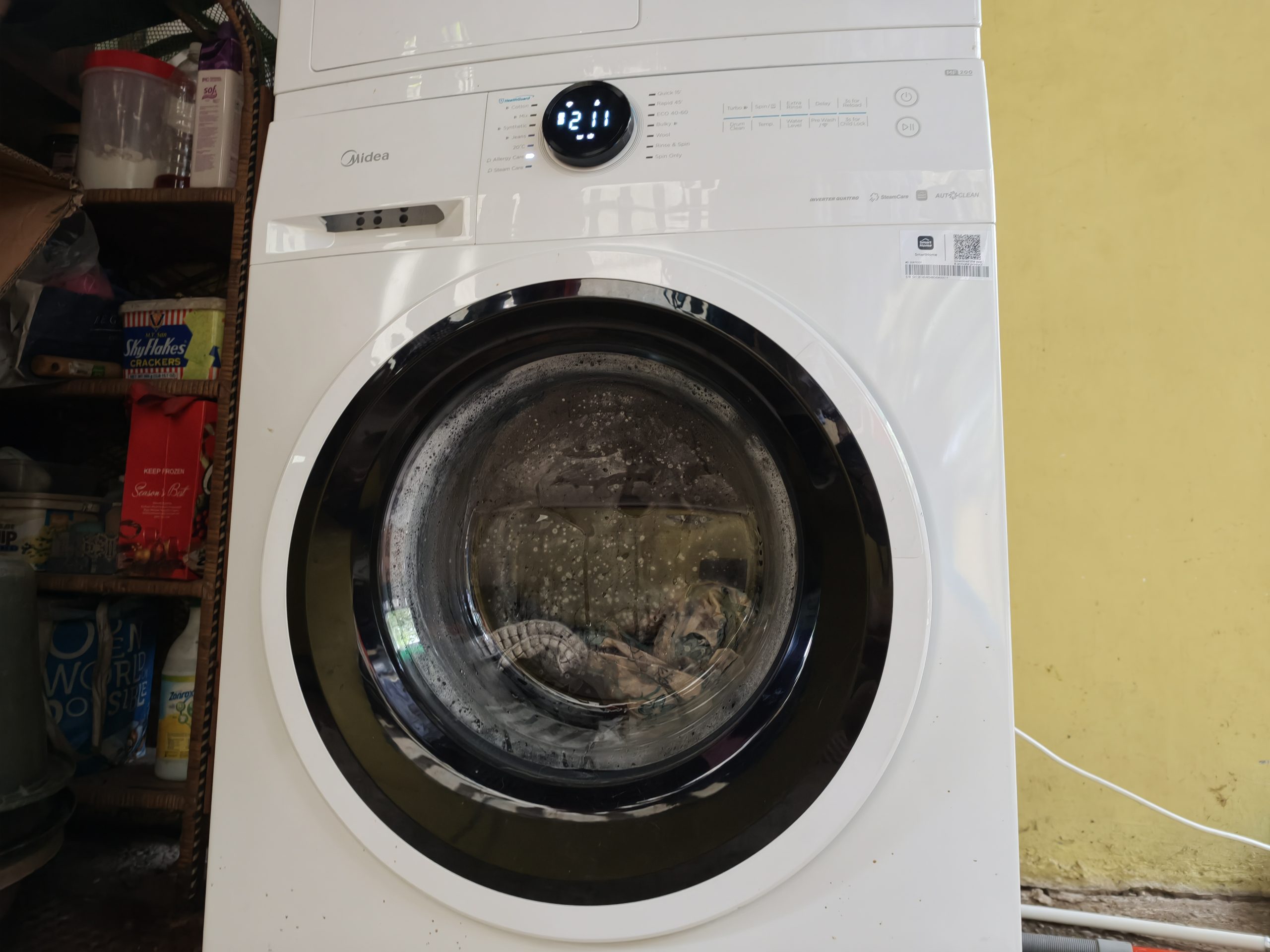
Our house is no different. For this review, Midea Philippines loaned us three of its smart home appliances for a two-week evaluation. The 10kg Luna Inverter Front Load Washer, the matching 10kg Heat Pump Dryer, and the 1,6-cu Side-by-Side Inverter Refrigerator became our newest additions to our household.
Installed in our home and used as part of our family’s daily routine, my aim is to find out whether connected appliances could make everyday life noticeable easier.
However, the first three days had me questioning myself whether I’d actually want to control my appliances from my phone.
Breaking old habits
The biggest adjustment during the first week had nothing to do with learning how the appliances worked, rather it was learning to trust them enough to stop checking on them.
Almost every household followed the same laundry-day routine. Loading, waiting, unloading. Repeat. Even after connecting both appliances to the Midea SmartHome app, I found myself instinctively walking toward the laundry area.
It took me about two days before I realized I was defeating the purpose of owning connected appliances.
The Luna washer and dryer continuously report their status through the SmartHome app. Remaining cycle times are visible in real time, while push notifications alert users once a wash or dry cycle has been completed.
Instead of interrupting work every few minutes, I began treating laundry as a background task. I could continue writing stories, editing photos or attending meetings while the appliances worked independently, only returning when my phone notified me that the cycle had ended.
However, there was one connectivity issue that came up during uses. Occasionally, when I changed the washing or drying program on the appliance, the SmartHome app didn’t immediately reflect the new setting. I had to pull down and refresh the app a few times before the updated program appeared.
The appliances themselves continued to work normally, so this wasn’t a problem with the actual laundry process. Yet it was a small point of friction in an experience that depends on the app keeping up with what’s happening on the machines. When the purpose of connecting an appliance is to let you monitor it remotely, the information on your phone needs to be reliably synchronized with the appliance.
While Wi-Fi connectivity is the Luna washer’s most visible feature, the hardware underneath deserves equal attention.
The machine carries a 10-kilogram capacity, comfortably handling several days’ worth of clothes, towels and bed linens for our household without requiring multiple loads. Powering the drum is Midea’s Inverter Quattro brushless DC motor, which precisely regulates drum speed during washing and spinning while minimizing vibration and mechanical wear.
Even during high-speed spin cycles, vibration remained controlled enough that conversations, television viewing and work inside the house continued uninterrupted. For households that often run laundry during evenings or weekends, lower operating noise becomes an advantage you’ll notice every time the machine is used.
The washer also offers Steam Care, which releases warm steam before the main wash. Midea says this can help achieve up to 99.99% sterilization, based on testing by CVC Testing Technology Co., Ltd., although its product guide notes that the claim varies by region.
Turbo Mode shortens compatible wash programs, while the 15-minute Quick Wash proved useful for lightly worn clothes that didn’t require a full cleaning cycle. Rather than relying on a single wash program for everything, we found ourselves selecting different modes depending on what was inside the drum.
Drying without waiting for the weather
The Luna Heat Pump Dryer became particularly useful because we had these units from late July to early August, when rainy days made drying clothes more difficult.
Having a dedicated dryer changed the routine of hanging clothes out and hoping they get enough sun before the next rain.
The MD200 uses heat pump technology to recirculate air while extracting moisture from clothes. Midea says this allows the dryer to use moderate-temperature air, reduce heat loss and dry clothes more gently than conventional high-temperature drying.
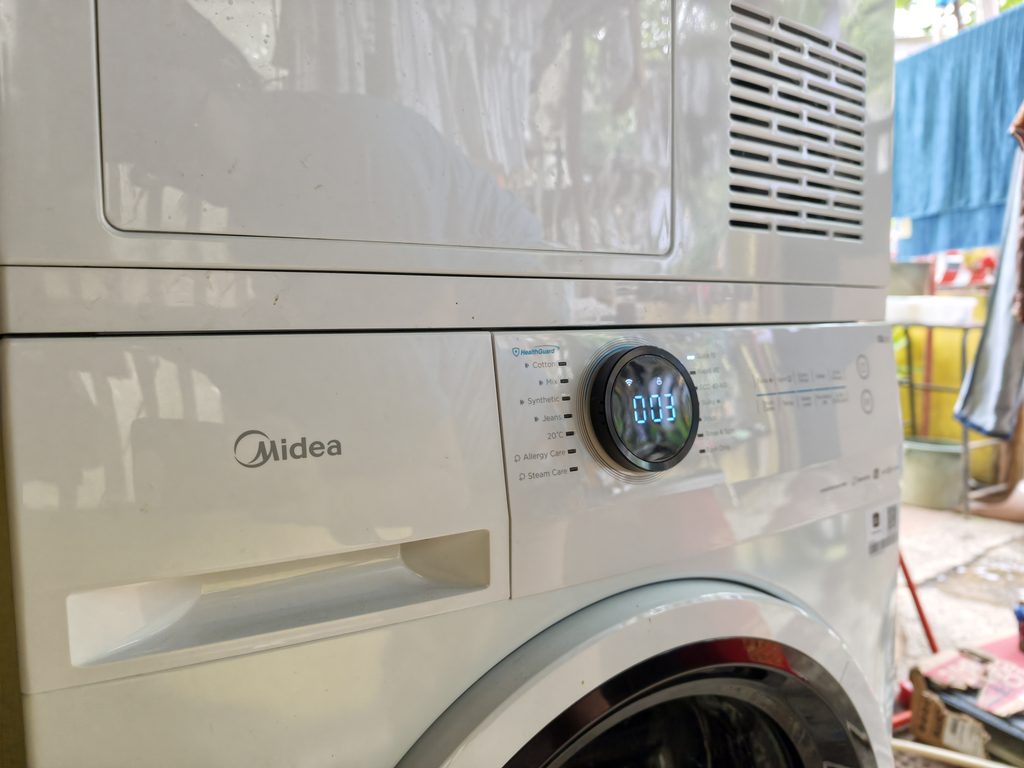
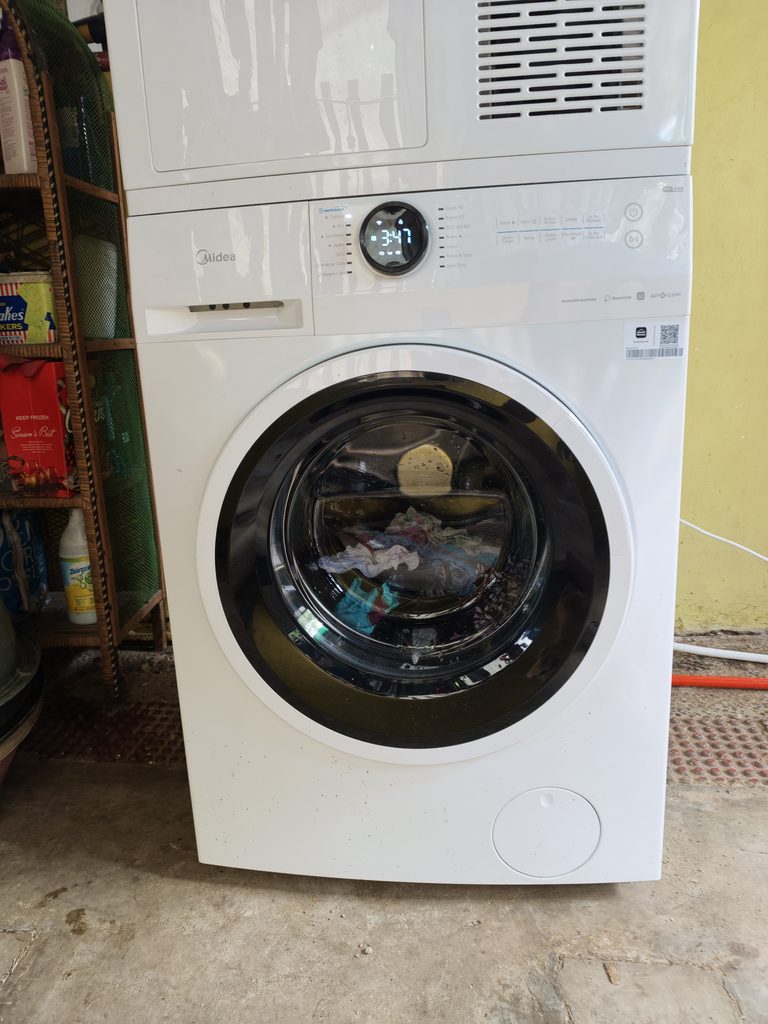
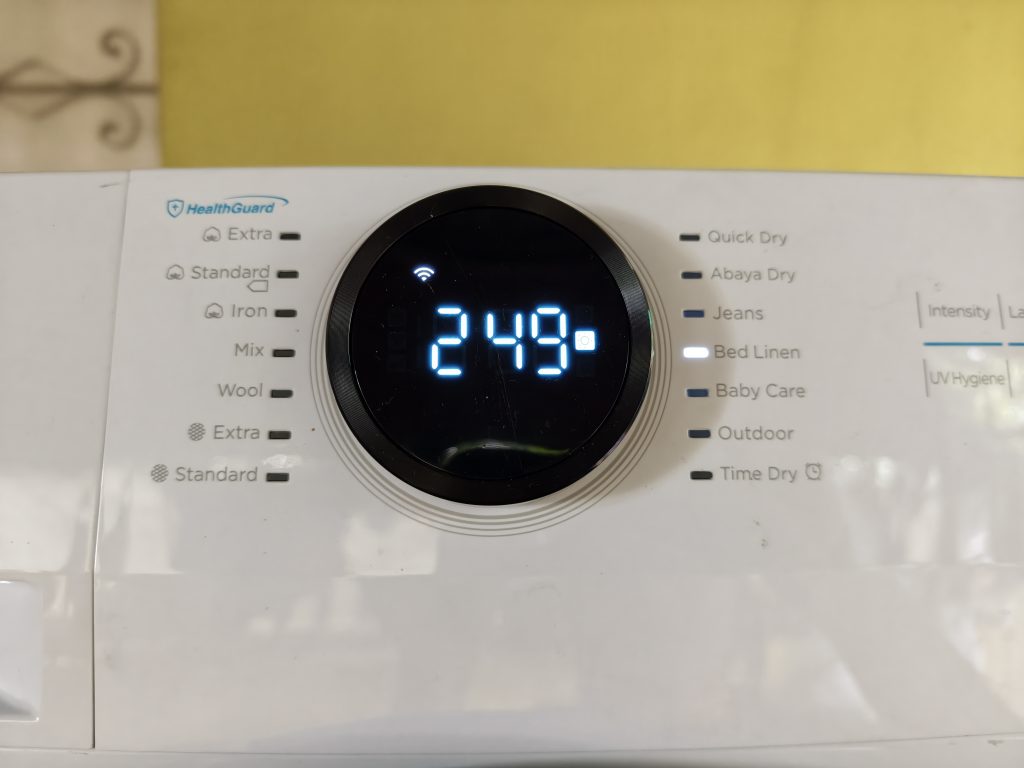
Clothes came out properly dry without feeling excessively heated, while the Anti-Crease function helped when we couldn’t immediately unload a finished cycle. This gave us more flexibility during busy days because we didn’t have to rush to the laundry area the moment the dryer stopped.
The dryer also has Quick Dry and Air Fresh modes for different situations, while Smart Control lets us monitor the cycle and receive notifications through the SmartHome app.
The convenience became especially apparent during the rainy season: instead of asking whether the weather would cooperate, we could simply decide when we wanted the laundry done.
More than just keeping things cold
The refrigerator was a different kind of test because, unlike laundry, it isn’t something we actively think about until we need it.
The 19.6-cu.-ft. Side-by-Side Inverter Refrigerator has enough storage for the household’s groceries without requiring us to constantly reorganize everything to make space. Its large-capacity design also includes multiple individual compartments, while the removable ice maker gives users some flexibility in how the freezer is arranged.
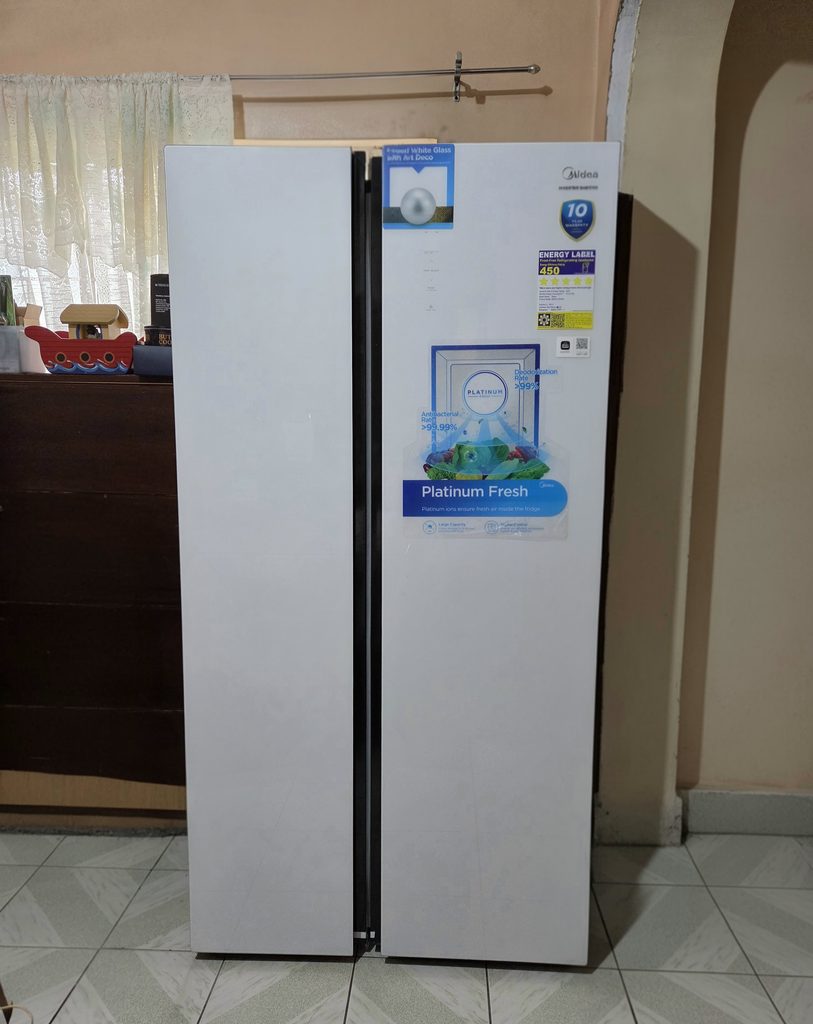
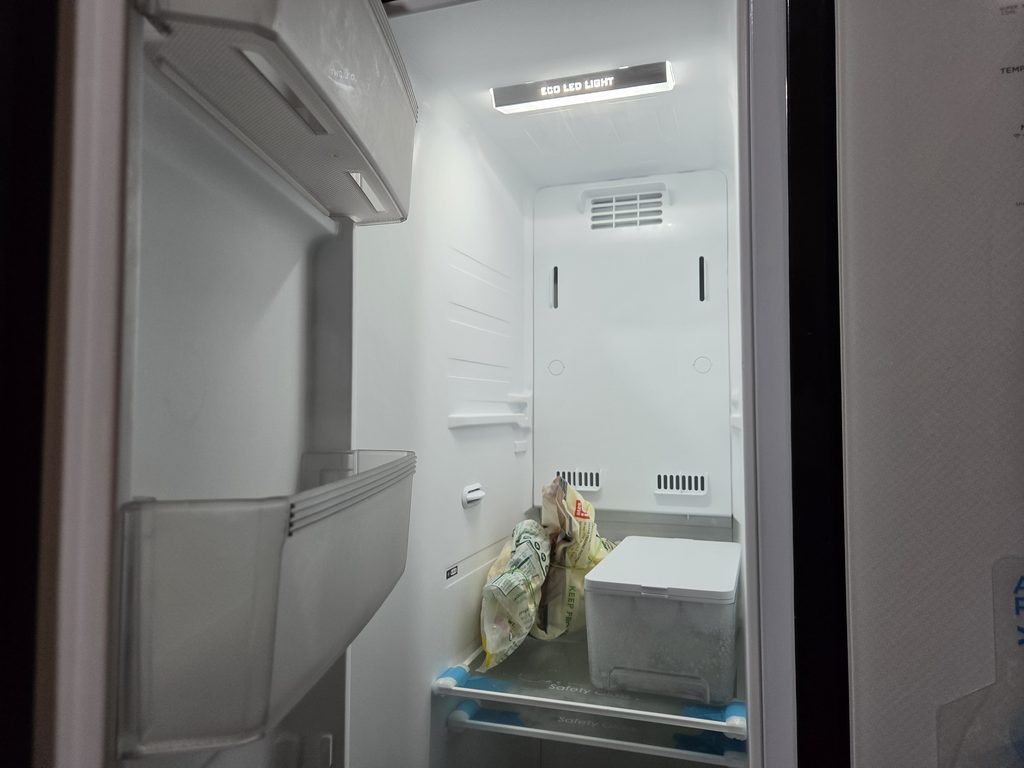
Over the course of the review, the refrigerator had to accommodate more than just our usual groceries. We also had to keep dried goods such as tuyo, while cakes and pastries started coming into the house as we celebrated my birthday. Suddenly, the refrigerator had to make room for everything from strongly scented dried fish to desserts that we obviously didn’t want picking up the smell of everything else inside.
At this point, Midea’s Platinum Fresh deodorization system became particularly relevant. The feature is designed to address bacteria, mildew and unwanted odors, with Midea citing a 99.1% removal rate for trimethylamine, a compound associated with pungent and fishy smells.
In our experience, the refrigerator didn’t develop the lingering tuyo smell that can easily take over a fridge. It became especially noticeable when we were also storing cakes and pastries. Nobody wants a birthday cake that smells like dried fish!
Midea designed the refrigerator with multiple individual compartments for frozen food, meat and fish, fruits and vegetables, drinks and other items. The extra-high storage area can accommodate items up to 30cm tall, which is useful for larger containers, pots and cakes.
Its cooling system is built around Multi Air Flow and an Inverter Quattro compressor. The multilayer air duct design distributes cold air through multiple layers, which Midea says helps maintain a consistent and even temperature throughout the refrigerator.
The compressor and fan use DC inverter technology, designed to respond quickly to cooling demand while reducing energy consumption and noise and keeping temperatures stable.
The refrigerator also has Digital Control for managing the refrigerator and freezer temperatures, as well as LED interior lighting that makes it easier to find food.
The smart home, even when I’m away
I had to leave home to cover something in Iloilo. I left my family with the appliances and took my phone with me. This turned out to be a better test of the smart home features than simply using them while I was at home.
My family continued using the washer and dryer, and I continued receiving notifications whenever their cycles finished. The washer would let me know when it was time to transfer the clothes to the dryer, while the dryer would notify me once the clothes were ready.
Even though I wasn’t at home, I could still keep track of the laundry without having to ask my family or check the machines myself. The SmartHome app supports laundry progress monitoring and completion notifications, along with access to wash programs and scheduling.
I received a notification when the refrigerator door was left open and another when it was closed again. It sounds like a very ordinary thing to be notified about, but that is precisely why it worked. Someone at home had simply forgotten to close the refrigerator, and the appliance was able to bring the problem to our attention.
It also made sense from an energy and cooling perspective. Leaving the door open allows warmer air into the refrigerator, which increases the cooling demand required to bring the internal temperature back to its target. Being alerted immediately gives someone at home the opportunity to close it before the problem persists.
The Midea refrigerator’s SmartHome integration is designed to go beyond remote temperature adjustments. Its product guide lists Home Care features including Smart Reminder, Home Away Mode and Custom Reminder. It also includes self-diagnostics, food management and energy monitoring through the app.
When smart becomes ordinary
The more interesting question after these tests is not whether I would go back to using ordinary appliances, rather it’s what I’d expect from them now.
What I would look for going forward is technology that makes everyday routines easier. If an appliance can tell me when something needs my attention, adjust itself to what I’m doing, or continue working without requiring me to keep checking on it, then it has earned its place in the home.
Connectivity should become more reliable, the information shared through the app should be more immediate, and different appliances should work together with less input from the user.
After this, I think I’ll have a harder time accepting appliances that make me wait and remember everything myself. If that’s where smart home technology is headed, then maybe the future of the smart home isn’t about doing more, but more about having less to worry about.
