


Apple is bringing Apple Pay to the Philippines, entering a market where digital payments accounted for 57.4% of all retail payment transactions in 2024, up from 52.8% a year earlier, according to the Bangko Sentral ng Pilipinas.
“The Philippines is among the most digitally savvy markets in Southeast Asia,” Jennifer Bailey, vice president of Apple Pay and Apple Wallet, told PhilSTAR Tech in a virtual interview.
She said the country’s young, mobile-first consumers and growing contactless payment infrastructure made it the right time to introduce Apple Pay.
The Philippines becomes Apple’s latest Apple Pay market in Southeast Asia, joining Singapore, Malaysia, and Vietnam.
Apple Pay launches in the Philippines with support from Chinabank, GoTyme Bank, Metrobank, and UnionBank. Customers of participating banks can add eligible credit and debit cards to Apple Wallet and use them to pay in stores, apps, and online.
Bailey said most payment terminals in the country already support near-field communication (NFC), allowing Apple Pay to work anywhere contactless card payments are accepted. She added that more Filipinos are getting their first credit and debit cards while already relying on their smartphones for many everyday activities.
“Filipino consumers have become naturally mobile-first,” Bailey said. “They’re already highly comfortable with mobile payments.”
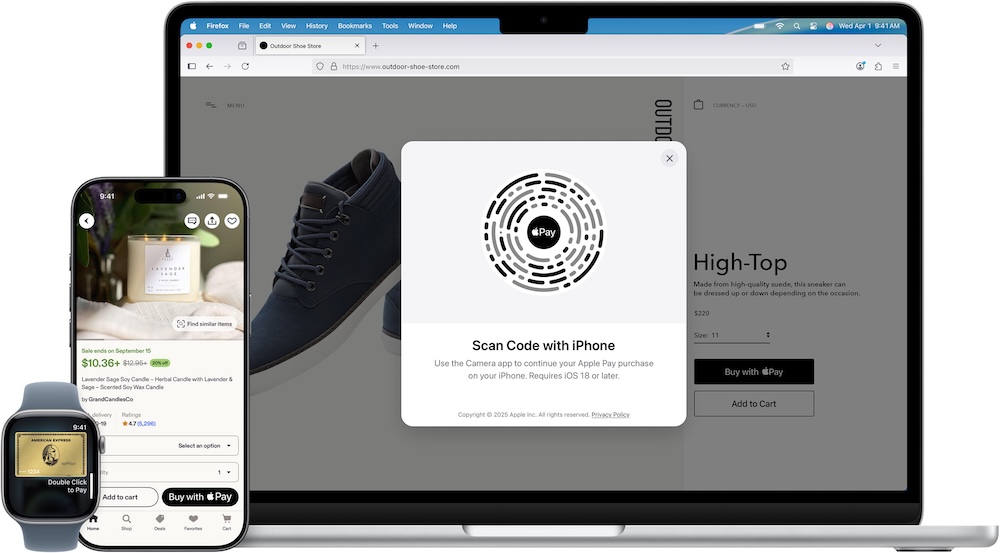
Apple Pay is built into its ecosystem of iPhone, Apple Watch, iPad, and Mac, allowing users to pay without opening a separate app or taking out a physical card. To pay in stores, users simply use their Apple devices, verify their identity using Face ID, Touch ID, or a passcode, and hold their device near a contactless payment terminal. Bailey said an internet connection is not required for in-store purchases.
In terms of security and privacy, Bailey explained that instead of sharing a customer’s actual credit or debit card number with a merchant, Apple Pay creates a unique encrypted device account number that is securely stored on the device. Every payment must also be approved, again, using Face ID, Touch ID, or a passcode.
Apple also does not keep transaction information that can be linked to individual users. If an iPhone is lost or stolen, customers can use the Find My app to locate the device, lock it, or suspend Apple Pay.
Bailey said these security features have helped Apple Pay prevent more than $1 billion in fraudulent credit and debit card transactions worldwide. She added that Apple Pay has reduced fraud by more than 60% compared with traditional card payments.
To help consumers understand how the service works, Apple is working with its banking partners to explain Apple Pay’s security and privacy features through bank communications, email, social media, and messages sent directly to customers’ devices.
Apple Pay is available in more than 90 countries and regions and works with over 11,000 banking partners worldwide. Bailey said Southeast Asia remains an important market for Apple because of its young and digitally connected population.
“Our goal is that every Apple customer in the Philippines is using Apple Pay five years from now,” she said.
Bailey added that Apple plans to expand support to more banks, merchants, and additional services such as transit payments.
