


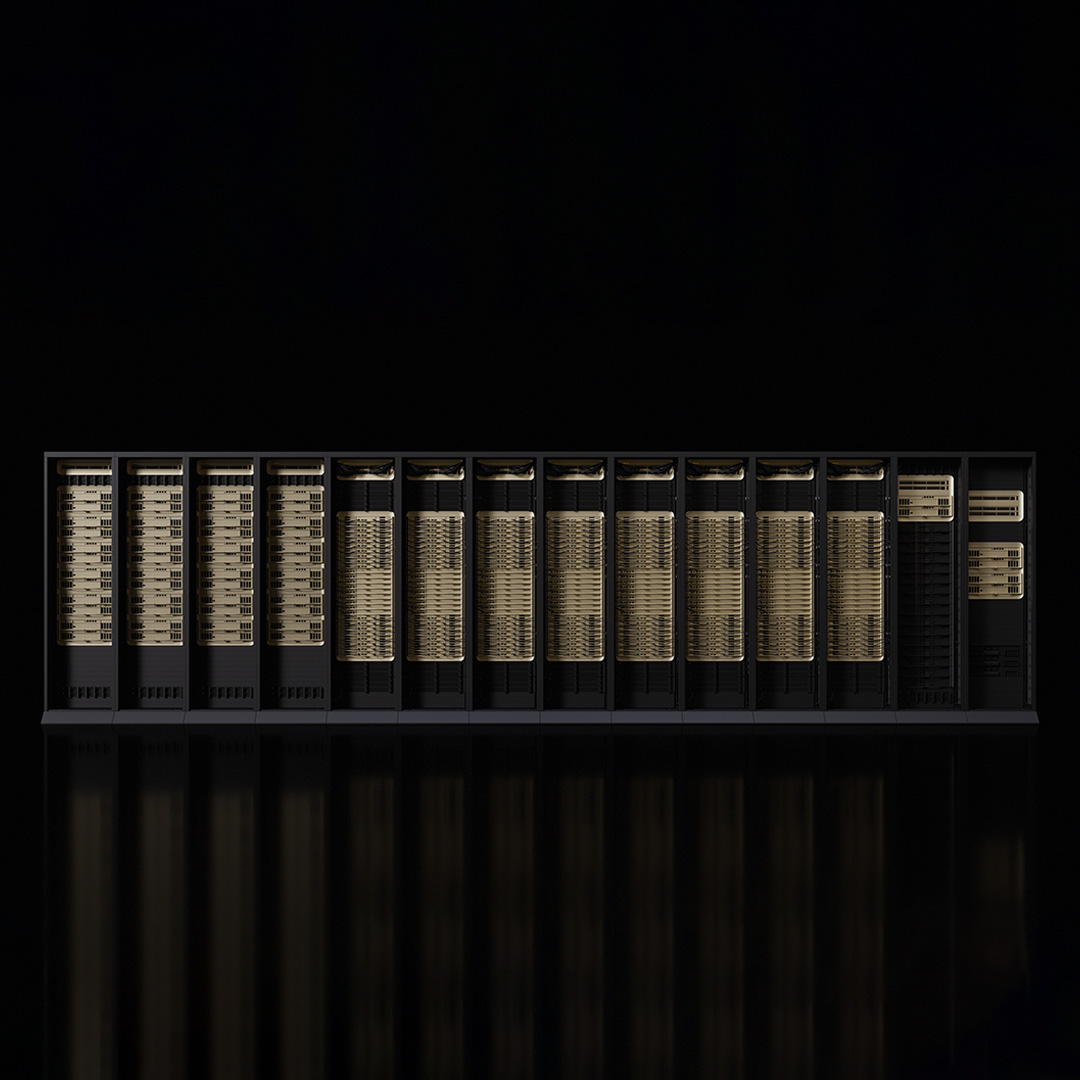
Global chipmaker NVIDIA has unveiled Vera Rubin, its newest artificial intelligence (AI) computing platform that marks the company’s next major step in building full-scale AI systems beyond traditional hardware.
The platform, unveiled at the Consumer Electronics Show (CES) 2026 and shared on NVIDIA’s official X (formerly Twitter) account, succeeds the Blackwell architecture.
Unlike traditional GPU-focused upgrades, Vera Rubin is a rack-scale system in which six interconnected chips operate as one, enabling faster, more efficient training and deployment of large-scale AI models.
The system integrates the Rubin GPU, Vera CPU, BlueField data-processing units, and Spectrum networking switches, all linked via NVIDIA’s latest NVLink and ConnectX interconnects.
Moreover, it is designed to deliver exascale-class performance, the computing level used by the world’s most advanced AI clusters, while consuming significantly less power than previous generations.
NVIDIA said Vera Rubin achieves up to six times better power efficiency and is already in full production. Large-scale deployments are expected to begin in the second half of 2026 through data-center and cloud partners.
The company’s X post described the platform as an integrated AI system optimized for long-context reasoning and high-memory workloads.
It quickly drew reactions from analysts and tech observers, many of whom highlighted the significance of NVIDIA’s shift from standalone chips to complete AI systems.
User @NexusCoOfficial called the launch “bigger than a chip launch,” saying NVIDIA is “building AI systems now, not just hardware.”
On another note, @GageTrades2026 said, “There is no way this is for the average consumer. They will likely market this to data centers who will then rent computing power to the consumer.”
Meanwhile @liangzhi_li noted the “6X better power efficiency” as a key metric for Wall Street, adding that higher efficiency translates to better returns on investment.
Analysts said the platform reinforces NVIDIA’s strategy of combining processing and software into a single scalable framework. The company remains the dominant supplier of high-end GPUs, and Vera Rubin is expected to strengthen its position amid competition from AMD, Intel, and cloud providers developing proprietary accelerators.
Furthermore, observers described the platform as part of a broader trend toward system-level optimization, where entire racks function as unified AI engines rather than discrete chips.
The design simplifies deployment and improves efficiency for applications ranging from generative AI to scientific research and simulation.
With production underway and commercial rollout scheduled for later this year, Vera Rubin positions NVIDIA at the forefront of AI infrastructure.
