


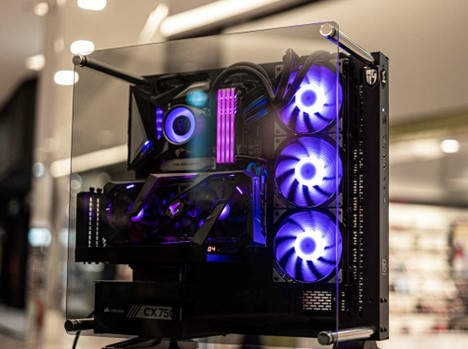
Regardless of the season, indoor heat is an issue in the Philippines. Offices and malls have their AC support, but what about at home? If you’re at your wit’s end trying to find solutions, look to the folk who care very much about proper space cooling: PC build enthusiasts!
The strategies that keep desktop rigs from burning out can also help us survive our tropical climate. Just think of your home as a PC case, as a lot of the cooling methods are very analogous.
Watch the local temperature
Any computer cooling strategy starts with paying attention to the temperature. Not knowing when our components are overheating increases the risk of them breaking. The same goes for us and when we might be at risk of heatstroke.
While weather apps and sites are good general references, it’s important to know exactly how warm it is in our specific environment. It may be warmer or cooler in our homes than it is outside. Wall-mounted thermometers are cheap, useful, and easy to get from hardware stores. Some digital clocks check temperature and humidity too if you prefer them.
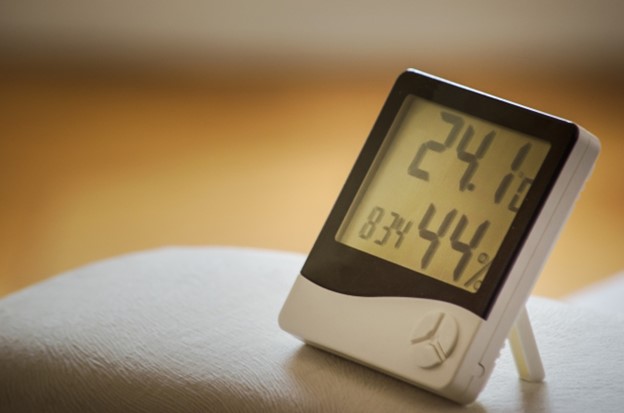
Just as there are individual temperature sensors for specific components, it’s a good idea to have thermometers in each area of our homes—even better if they have barometers. When one room is significantly muggier than the others, we can either focus our efforts on cooling it or keep ourselves, our pets, and any temperature-sensitive objects out of it.
Identify and separate heat sources
Every powered PC component generates heat, and that principle scales up for household appliances. We should take note of which items in a space run the hottest, whether they’re computers, TVs, audio systems, or such. Then, we can distribute them separately from each other as practically as we can because keeping them close together compounds their temperature.
If it’s possible, we should keep warm items on surfaces that disperse rather than retain heat: ceramic, marble, and metal surfaces are better than leather, fur, and cloth, for example. Unless a space is airconditioned, it’s better to avoid parking anything—including ourselves—on carpets or rubberized surfaces. The comfort and padding they provide aren’t worth the loss in heat dispersal if the weather is sweltering.
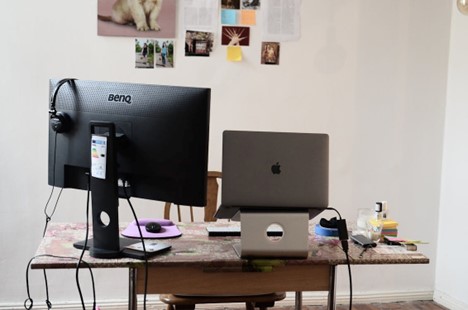
While not every computer has the room to separate components too far from each other, what all builds have in common is the presence of buffer zones to allow air to move around. Which leads us to our next point:
Create airflow
While keeping an area completely sealed is good if we have constant AC for it, that’s not always sustainable. A fully insulated space can become an oven within minutes just by having us in it.
Just as most PC rigs have fans that pull in cool air and expel hot air, we can do the same for our living spaces. It’s not enough to have a fan on and pointed at us if the hot air has nowhere else to go. That just means we’re in a giant air fryer. We increase our risk of heatstroke rather than diminish it if we let ourselves be bombarded by hot air.
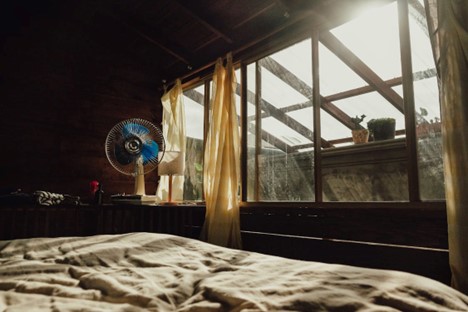
Ideally, we can position and aim our fans in ways that constantly replace the air in our non-AC spaces. For example, we can place a fan beside a window to bring in fresh air, and another fan pointed out the door to create an air corridor. Even if none of the fans are pointed directly at us, that continuous air refresh can do wonders for reducing the heat we feel.
The only problem with this strategy is the unavoidable intake of dust. Which then means:
Clean frequently
When dust builds up, it makes everything worse. It’s a clear complication for computers and their fans because, aside from diminishing airflow, it creates layers of dirt that prevent heat from being dispersed from components. We need to clean our computers often to make sure they can function properly and safely.
The same is true for living spaces. When filth obstructs our AC filters and our fan grills, not only does less air go through: it makes what little air that does pass through deliver even more dust onto everything, including us. Dirty skin leads to clogged pores, which means blocked sweat glands, which raises body temperature, and so on. Heatstroke once again, just because our homes are filthy. It all adds up.
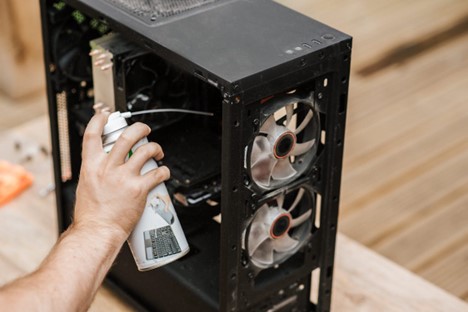
Keeping our spaces clean makes it easier for all our other cooling strategies to work. Leaving dust and grime all around, not to mention random junk blocking windows and doorways, just makes it that much harder manage the temperature. In the same way that we shouldn’t leave dirt and clutter in or around our computers, we should try to keep our homes clear of them too.
On a final note, one of our best tools to fight the heat does carry risks:
Use water wisely
Some PC builds use liquid cooling systems because of how quickly they can cycle heat. But they require very careful implementation so that the water or any other coolant doesn’t instead put the components at risk. Mismanaged builds can lead to leaks or moisture in a PC—guess what happens then.

In the same way, water can save us from the heat but not if we use it incorrectly. Fans that disperse mist, for example, can make humidity much worse and amplify the heat rather than reduce it. Water vapor cooling is great in outdoor areas with lots of circulation, but it’s often counterproductive in enclosed apartments or tight spaces.
Mist, sweat, and frequent showers work by taking our body heat, evaporating, and then taking that heat somewhere else. If that humidity has nowhere to go, then we’re just making things worse for ourselves. Just as we don’t want to live in an air fryer, we don’t want to live in a sauna, either. Make sure to vent the humidity quickly via airflow like we discussed earlier.
Or stick to using water to hydrate.

With everything we discussed, the basic idea is to just keep thinking of how to save our tech from overheating. We can explore ways to apply the same philosophies in our living spaces. Humans are essentially huge biological computers. We need all the advantages we can get, wherever we can get them, to not burn out.
