


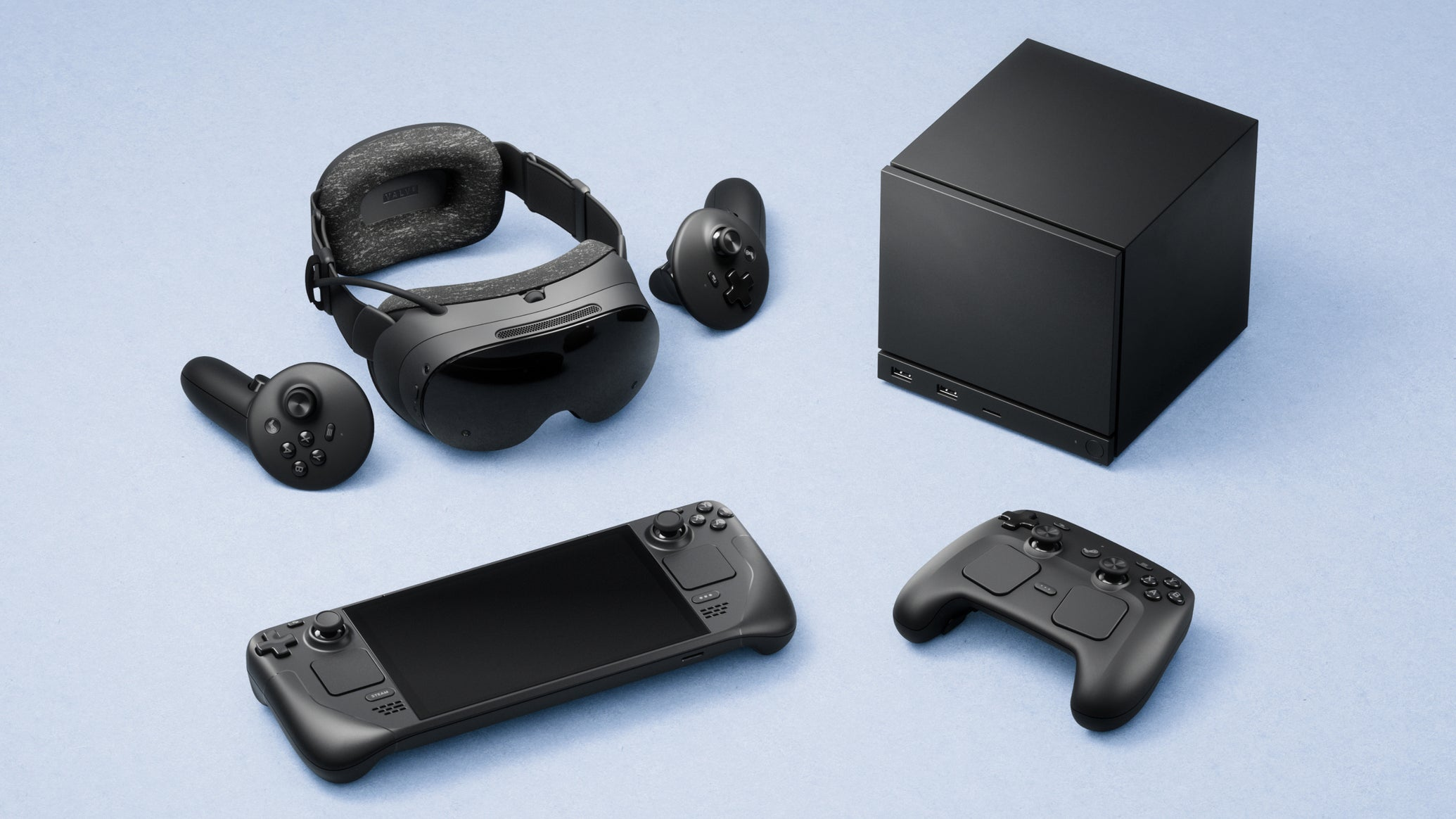
Valve seems to be in one of those moods again.
The kind where they quietly work on something for years, then suddenly reveal three pieces of hardware in one breath.
If you’ve been wondering what they’ve been cooking beyond Steam Deck updates, here’s a closer look at the new Steam Machine, the revived Steam Controller, and the intriguing Steam Frame headset.
#1 — Steam Machine – Valve’s new living-room console-PC

After years of letting the original Steam Machines fade into myth, Valve is giving the idea another try.
The new Steam Machine is built like a compact PC but behaves more like a console. Plug it into your TV, boot straight into SteamOS, and pick from your library without dealing with drivers or desktop menus.
Valve claims it’s more than six times faster than the Steam Deck, which puts it in a pretty comfortable spot for 4K living-room play.
Storage goes up to 2TB, and early previews mention a modest 200W power draw, a hint that Valve is aiming for efficiency and quiet operation.
There’s also a new “Steam Machine Verified” label so players know which games will behave well out of the gate.
It still doesn’t have a price, but the promise is that it won’t try to compete with high-end gaming PCs.
#2 — Steam Controller (new gen) – A second chance at a strange idea

The original Steam Controller had a small but passionate fanbase.
Mostly people who liked tinkering with layouts and bindings. Valve’s new controller looks far more conventional, while still keeping that “customize everything” philosophy.
Early details mention improved sticks using TMR sensors to reduce drift and a design that looks friendlier for long sessions. It’s meant to bridge the gap between mouse-heavy PC games and gamepad-style comfort, without forcing you to choose one or the other.
There aren’t many official specs yet, but Steam definitely wants a controller that finally feels good for both couch gaming and PC-specific genres like strategy, sims, and indie oddities.
#3 — Steam Frame – A VR headset that wants to do more than VR
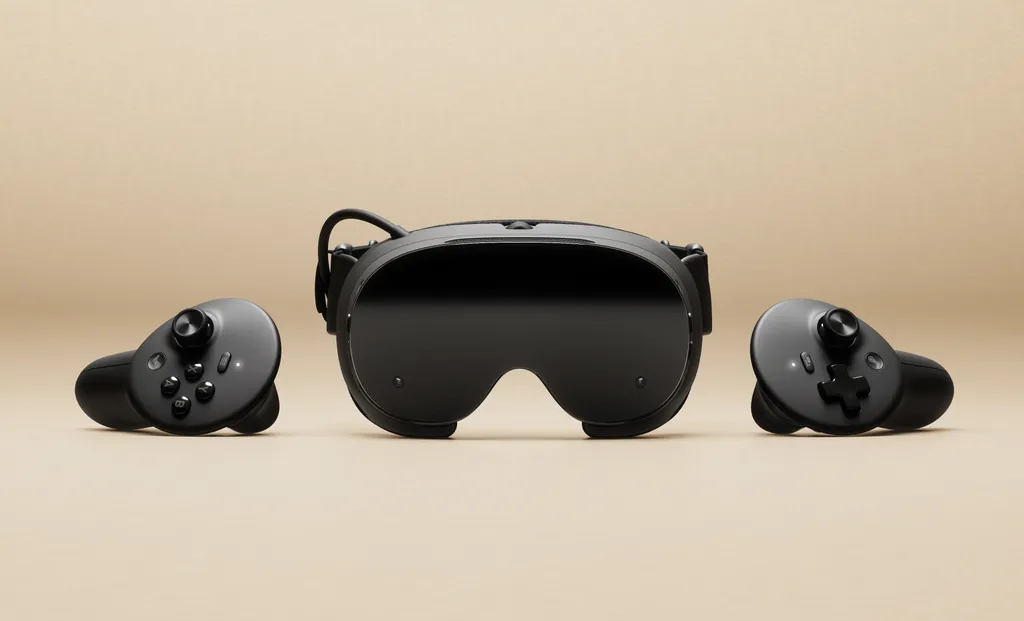
Steam Frame is the most unexpected part of the lineup.
It’s a wireless standalone VR headset that can also tether to a PC when you want higher fidelity. It uses slimmer pancake lenses and is aiming for sharp visuals, around 2160×2160 per eye in early reports.
Tracking is inside-out, so no need for base stations, and Valve is pitching it not just as a VR device but as a way to play your regular Steam games inside a virtual theater. That alone opens it up to players who might not be into full VR but like the idea of a giant “floating” screen.
It’s targeting an early 2026 release, with hints that it should cost less than the Valve Index. As always with VR, everything will depend on comfort, app support, and battery life but it’s interesting to see Valve take another swing at the space.
What this all means for gamers
The bigger story here is that Valve seems serious about building a whole ecosystem, where your games follow you from the couch to the desk to a VR space without much fuss.
Pricing will decide everything, but it’s been a while since Valve has felt this ambitious and it’s exciting to see them get interesting again.
