



After several years of extraordinary expansion, 2025 has been a year of stabilization and maturity for the e-commerce sector. Across Southeast Asia and in the Philippines in particular, online commerce has evolved from an experimental trend into a cornerstone of economic activity. Filipinos are now among the world’s most connected consumers, relying on mobile applications, digital payments, and social media platforms for everyday transactions.
The industry’s focus has shifted. It is no longer only about speed and volume, but also about sustainability, trust, and inclusion. The key question for both businesses and policymakers is no longer how fast digital retail can grow, but how well it can sustain that growth in a competitive and increasingly regulated global environment.
Short-video platforms and live-selling features have become essential components of online retail. From artisans in Cagayan De Oro to small entrepreneurs in Iloilo, a new generation of micro-sellers now reaches national and regional audiences through live-streaming, influencer partnerships, and short-form video content. Social media has effectively merged marketing, engagement, and transaction into a single consumer journey.
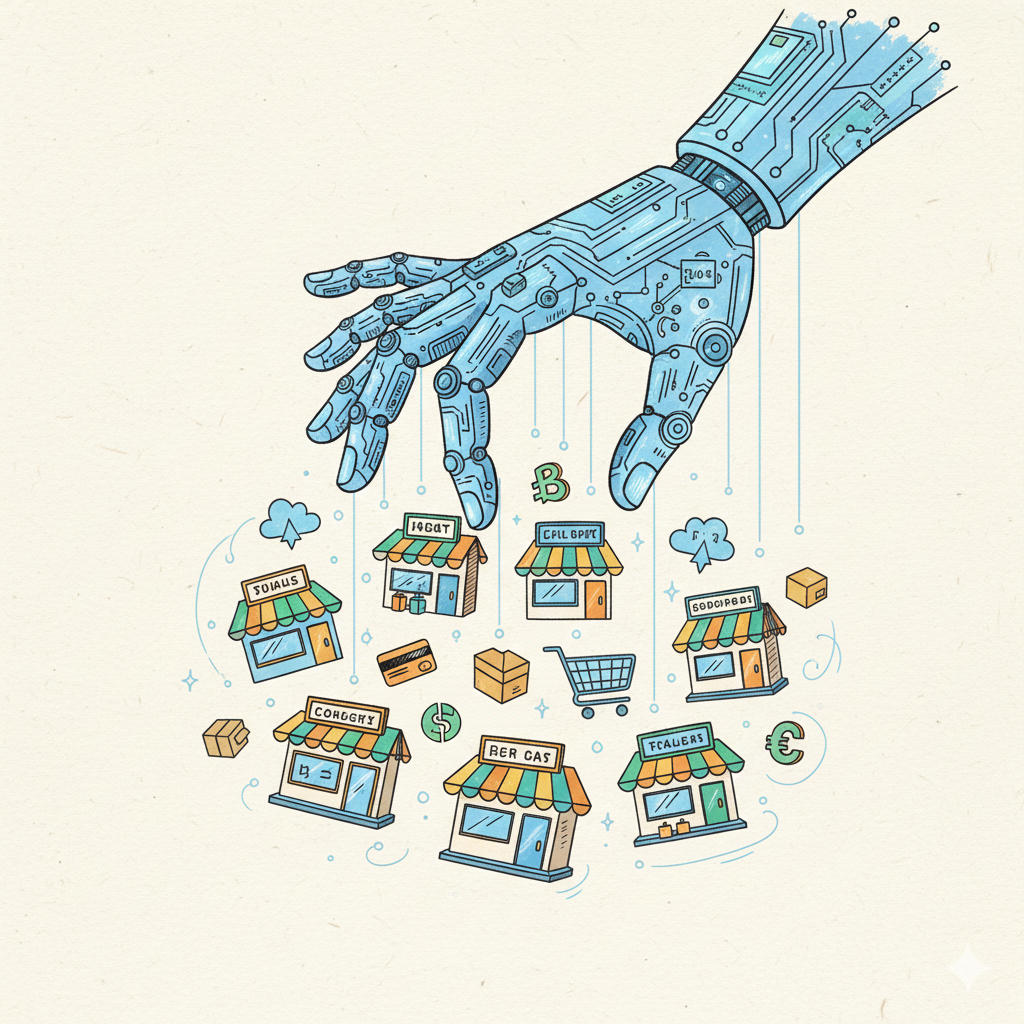
Artificial intelligence has also become an invisible but essential part of the industry. It now powers recommendation systems, pricing decisions, and logistics optimization. The World Trade Organization projects that the use of AI could increase global trade by up to 40% by 2040. This year marked the point at which AI shifted from being an experiment to being part of the foundation of commerce.
Digital wallets such as GCash, Maya, and GrabPay now facilitate the majority of online transactions. Data from the central bank show that more than seventy percent of Filipino adults have made or received digital payments in 2025, a milestone for financial inclusion. Unique buy now pay later (BNPL) users rose from about 20 million in 2023 to 28.4 million by end-2024, and the market value is forecast to exceed US$3 billion by 2025.”
The implementation of the Internet Transactions Act and the application of value-added tax on digital services have also formalized the online marketplace and provided a stronger framework for consumer protection.
As digital adoption deepened, cybersecurity emerged as a critical issue. Retailers experienced more phishing and fraud attempts than ever before. The Philippine cybersecurity industry, valued at about 1.3 billion US dollars this year, is growing steadily as firms invest in secure infrastructure and fraud prevention systems. The Department of Information and Communications Technology has begun preparing cybersecurity guidelines specifically tailored for e-commerce and financial-technology operators. Security has become an integral part of the customer experience.
The most influential development in 2025 has been the enforcement of the Internet Transactions Act, which requires online merchants to register with the Department of Trade and Industry and establishes clearer rules regarding liability for misleading listings. The DTI has also launched the Philippine E-Commerce Trustmark, a certification intended to strengthen consumer confidence. Across the region, ASEAN members are negotiating the Digital Economy Framework Agreement, which aims to standardize rules on data flows, digital taxation, and online payments by 2026.
While these regulations impose new compliance requirements, they also provide a structure that will make the digital marketplace more trustworthy. Stronger governance is expected to increase confidence among consumers and investors alike.
In parallel with the legal reforms, significant progress has been made in economic infrastructure. The government’s Digital Infrastructure Project, estimated at 288 million US dollars, is expanding broadband access and logistics capacity in provincial areas. Telecommunication companies and cloud-service providers are constructing new data centers to meet rising demand. Logistics companies such as J&T Express, Ninja Van, LBC, and others are automating their operations and building regional fulfillment hubs. These improvements are enabling entrepreneurs outside Metro Manila to participate more actively in the digital economy.
Compared with its neighbors, the Philippines distinguishes itself through its mobile-first consumers and strong social-commerce engagement, even though countries such as Indonesia and Vietnam lead in total market size. The nation’s English-speaking workforce, extensive business-process outsourcing sector, and growing pool of creative professionals position it well to become a service and innovation hub within Southeast Asia.
Internationally, there are models worth observing. India’s Open Network for Digital Commerce is creating an open, interoperable marketplace, while China continues to refine smart logistics systems that integrate artificial intelligence into warehousing and delivery. These initiatives illustrate how openness and efficiency can coexist in digital trade. The Philippines has the opportunity to adapt similar frameworks to strengthen its regional competitiveness.

Automation has changed the nature of work, but it has also opened new possibilities. E-commerce supports a large network of Filipino freelancers and microenterprises that provide digital services to both local and global clients. Platforms such as OnlineJobs.ph and Upwork report growing demand for virtual assistants, online store managers, content creators, and data analysts.
Government programs such as the Digital Cities initiative are expanding digital employment opportunities in cities like Davao, Iloilo, and Cagayan de Oro. To sustain this momentum, both public and private sectors must continue to invest in digital literacy, cybersecurity awareness, and lifelong learning. The future of e-commerce will depend not only on technology but also on human adaptability and creativity.
Preparing for the Future
Merchants must prepare for increased adoption of BNPL, including integrating installment-payment options at checkout, managing credit/risk partnerships, ensuring transparent fee structures, and embedding BNPL as part of omni-channel payment strategy.
Cybersecurity and data protection will become mandatory elements of business operations, particularly for platforms that handle financial information. Cross-border trade will become easier under new regional frameworks, but it will also bring stronger competition.
Sustainability will gain greater importance, with consumers preferring environmentally responsible packaging and carbon-efficient logistics.
The greatest challenge, however, will continue to be human capability. Companies that invest in skills, ethics, and digital inclusion will be the ones best prepared for long-term success.
Tomorrow’s consumers will expect brands to be fast, secure, and sincere. They will look for transparency in how data is used and for authenticity in the way brands communicate. Younger generations, particularly Gen Z, are motivated by values as much as by price or speed. Authenticity and sustainability are emerging as central elements of purchasing decisions.
The future of e-commerce will therefore be shaped not only by technological progress but also by social responsibility. Success will depend on how well companies can align innovation with ethics, efficiency with empathy, and convenience with conscience.
E-commerce is entering a new era defined by accountability, intelligence, and inclusion. The Philippines, with its young population, creative energy, and improving digital infrastructure, is in a strong position to thrive in this environment. The challenge now is to build systems that are also fairer and safer, and to develop human talent that can manage technology with integrity and purpose.
The future of e-commerce will belong to those who can combine transparency with innovation and progress with empathy. It is no longer simply about growing online sales; it is about building digital trust, social inclusion, and long-term confidence in the digital economy.
(Editor’s Note: Art used was generated by AI using Google Nano Banana)
